




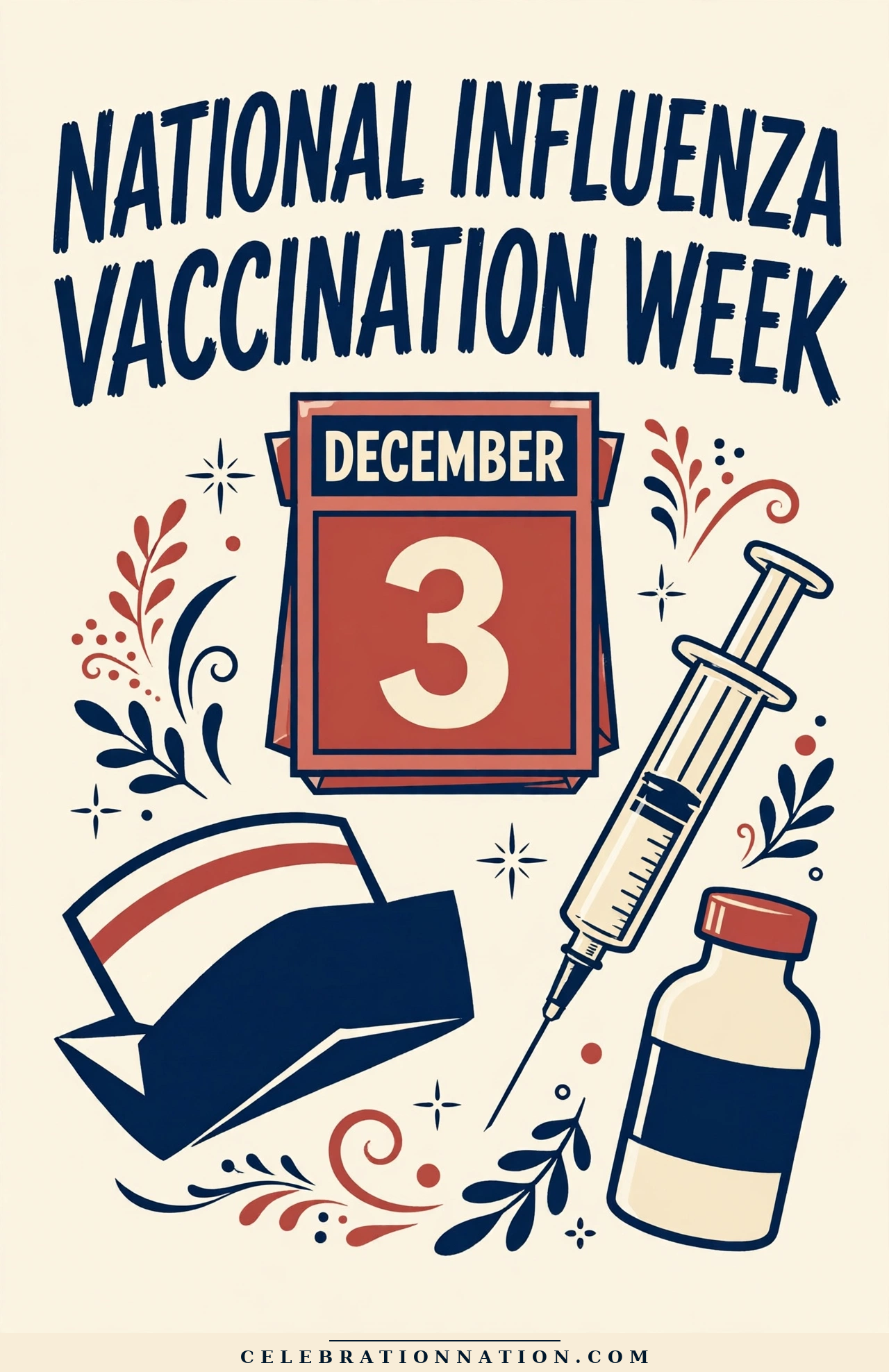
National Influenza Vaccination Week
This week serves as a crucial reminder that vaccination is key to preventing flu outbreaks.
- Roots
- Established by the CDC in 2005
- Vibe
- Promotes community health and safety
- Hashtag
- #NationalInfluenzaVaccinationWeek
Fast facts
The story
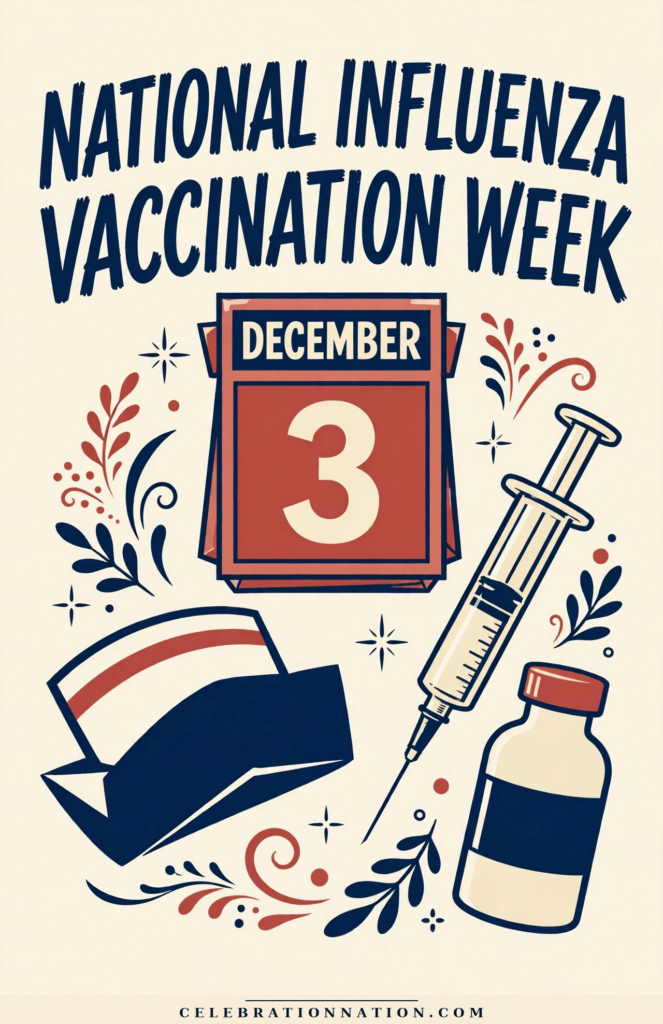
National Influenza Vaccination Week (NIVW) is recognized from December 3 to 9 each year, emphasizing the importance of flu vaccinations as we enter the winter season. This initiative, spearheaded by the Centers for Disease Control and Prevention (CDC), aims to remind individuals and families that flu shots are essential for everyone aged six months and older. With the flu virus circulating more widely during the colder months, getting vaccinated can significantly reduce the risk of severe illness.
Read the full story
The CDC recommends that everyone receive their flu vaccine, ideally by the end of October; however, vaccination continues to be beneficial even later in the season. The week not only focuses on individual health but also emphasizes the role of community immunity. When more people are vaccinated, the spread of the virus slows, protecting those who are most vulnerable, such as infants and the elderly.
Flu vaccination has proven effective in reducing flu-related hospitalizations and deaths. Each year, the vaccine is updated to match circulating strains, ensuring that it provides the best possible protection. Public health experts emphasize the importance of timely vaccination, as it takes about two weeks after receiving the shot for the body to develop protective antibodies.
NIVW also serves as a platform for educating the public about flu symptoms, treatment options, and the importance of staying home when sick. Community events and outreach programs are organized to facilitate access to vaccinations, particularly in underserved areas. By participating in National Influenza Vaccination Week, individuals contribute to a healthier future for their communities.
Worth knowing
Get Vaccinated
Schedule an appointment for your flu shot this week. Ensure all family members are vaccinated to protect each other.
Mark Your Calendar
National Influenza Vaccination Week takes place from December 3 to 9. Make it a priority to get vaccinated.
Spread the Word
Share information about the flu vaccine with friends and family. Encourage them to prioritize their health.
Community Health
Participate in local health fairs or vaccination clinics to promote flu awareness and help others get vaccinated.
Did you know?
Flu Vaccine Effectiveness
The flu vaccine reduces the risk of flu illness by 40-60%.
Historical Context
The first flu vaccine was developed in the 1940s.
Annual Impact
Flu season affects millions of Americans each year.
Flu Symptoms
Common flu symptoms include fever, cough, and body aches.
Vaccination Rates
In recent years, about 50% of adults received the flu vaccine.
Community Immunity
Higher vaccination rates lead to better community protection.
Global Perspective
Many countries have similar vaccination campaigns to combat the flu.
Around the world
Every culture celebrates a little differently.
- USUnited StatesThe U.S. observes National Influenza Vaccination Week to promote public health.
- CACanadaCanadians also prioritize flu vaccinations during the winter months.
- GBUnited KingdomThe UK encourages flu vaccinations as part of their winter health strategy.
- AUAustraliaAustralia emphasizes flu vaccination to combat seasonal outbreaks.
- DEGermanyGermany's health authorities promote flu vaccination among all age groups.
- JPJapanJapan has initiatives focused on increasing vaccination rates to prevent flu spread.
Coming up next
See the calendar


Celebrate every day, all year
Official gear from the people who track 1,700+ celebrations.
Browse the shop 2027 National Day Wall CalendarGet the 2026 edition free. 1,700+ observances.
Never miss a reason to celebrate.
One quick morning email with today's celebrations, ideas and posters. Free, unsubscribe anytime.
🎉 You're on the list! Watch your inbox for The Daily Confetti.