






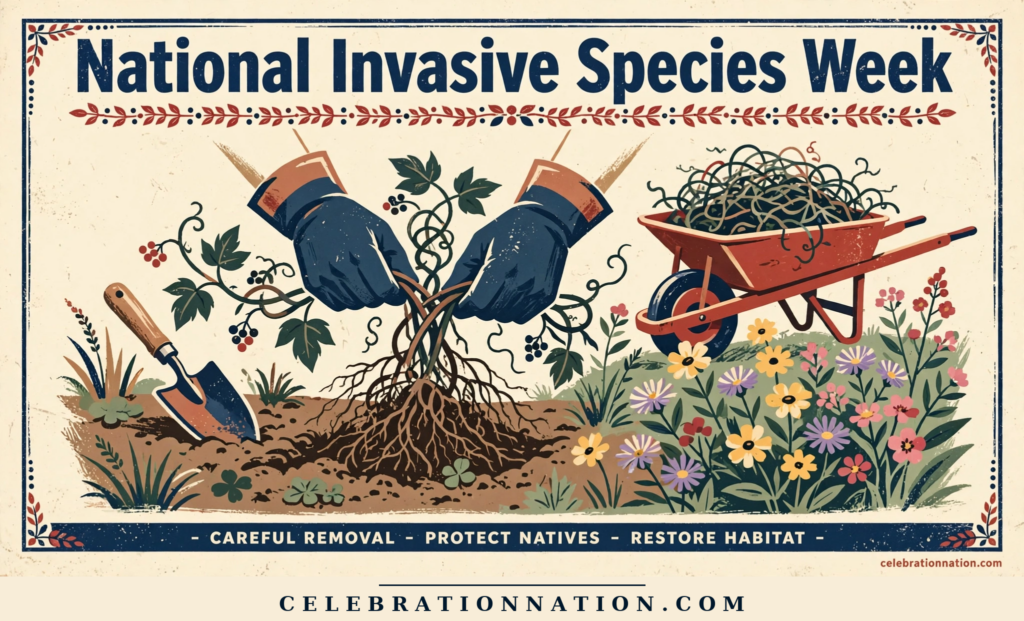
National Invasive Species Week
This week emphasizes the importance of protecting our ecosystems.
- Roots
- First held in 2015
- Vibe
- Community engagement and education
- Hashtag
- #NationalInvasiveSpeciesWeek
Fast facts
The story
National Invasive Species Week begins every year on the last Monday in February, drawing attention to the challenges posed by non-native species that disrupt local ecosystems. The week serves as an opportunity for individuals and communities to engage in activities that promote awareness and education about the threats these species pose to biodiversity. From the Great Lakes to the Everglades, invasive species have left a significant mark on natural landscapes, highlighting the urgent need for action.
Read the full story
Invasive species can outcompete native plants for resources, leading to declines in local wildlife populations. The impact is felt not only in ecological terms but also economically, affecting industries such as agriculture and tourism. As the effects of climate change continue to unfold, the spread of these species may accelerate, compounding the challenges faced by conservationists and land managers. The need for proactive measures has never been more critical.
Educating the public is a cornerstone of National Invasive Species Week. Communities across the nation are encouraged to come together, sharing knowledge, resources, and strategies for combatting invasive species. This collective effort can lead to more effective management practices and greater public understanding of how to identify and report invasive species in their area. Local workshops, educational programs, and volunteer opportunities abound during this week.
As we participate in National Invasive Species Week, we are reminded of our role in protecting the environment. From school projects to community clean-ups, everyone can contribute to the cause. By fostering a sense of stewardship and responsibility towards our natural resources, we can help safeguard the delicate balance of our ecosystems against invasive threats.
Worth knowing
Learn About Invasive Species
Understanding the characteristics and behaviors of invasive species is crucial. Research online or visit your local library to find resources that can help you identify these plants and animals.
Get Involved Locally
Join local conservation groups or initiatives focused on managing invasive species in your area. Participating in clean-up events or educational workshops can make a significant difference.
Track Your Findings
Use citizen science platforms to report sightings of invasive species. This data helps scientists and conservationists track the spread and impact of these species.
Promote Native Flora
Plant native species in your garden to support local ecosystems. Native plants are better adapted to the environment and provide essential habitats for wildlife.
Did you know?
What are invasive species?
Invasive species are non-native organisms that, when introduced to a new environment, can cause harm to native species and ecosystems.
How do they spread?
Invasive species can spread through various means, including ballast water from ships, horticulture, and accidental releases.
Which species are most harmful?
Some of the most harmful invasive species include the Burmese python, kudzu, and the Asian tiger mosquito.
Can they be controlled?
While challenging, many invasive species can be managed through public education, physical removal, and ecological restoration.
Why are they a problem?
They can outcompete native species for resources, disrupt food chains, and alter habitats, leading to biodiversity loss.
What is the cost?
Invasive species damage and management cost billions of dollars each year.
What can you do?
You can help by reporting sightings, educating others, and participating in local conservation efforts.
Around the world
Every culture celebrates a little differently.
- USUnited StatesIn the U.S., invasive species such as the Asian carp and emerald ash borer threaten native ecosystems and economies.
- AUAustraliaAustralia faces challenges from invasive species like feral cats and rabbits, which significantly impact native wildlife.
- CACanadaInvasive species such as zebra mussels and purple loosestrife are a growing concern in Canadian waters and wetlands.
- GBUnited KingdomThe UK is dealing with invasive species such as Japanese knotweed, which can damage infrastructure and ecosystems.
- DEGermanyGermany has initiated programs to combat the spread of invasive species affecting its diverse landscapes.
- FRFranceFrance is actively working on the management of invasive species to protect its rich biodiversity, especially in its natural parks.
Coming up next
See the calendar



Celebrate every day, all year
Official gear from the people who track 1,700+ celebrations.
Browse the shop 2027 Wall Calendar, signed by Marlo AndersonSigned by the founder of National Day Calendar.
Never miss a reason to celebrate.
One quick morning email with today's celebrations, ideas and posters. Free, unsubscribe anytime.
🎉 You're on the list! Watch your inbox for The Daily Confetti.