





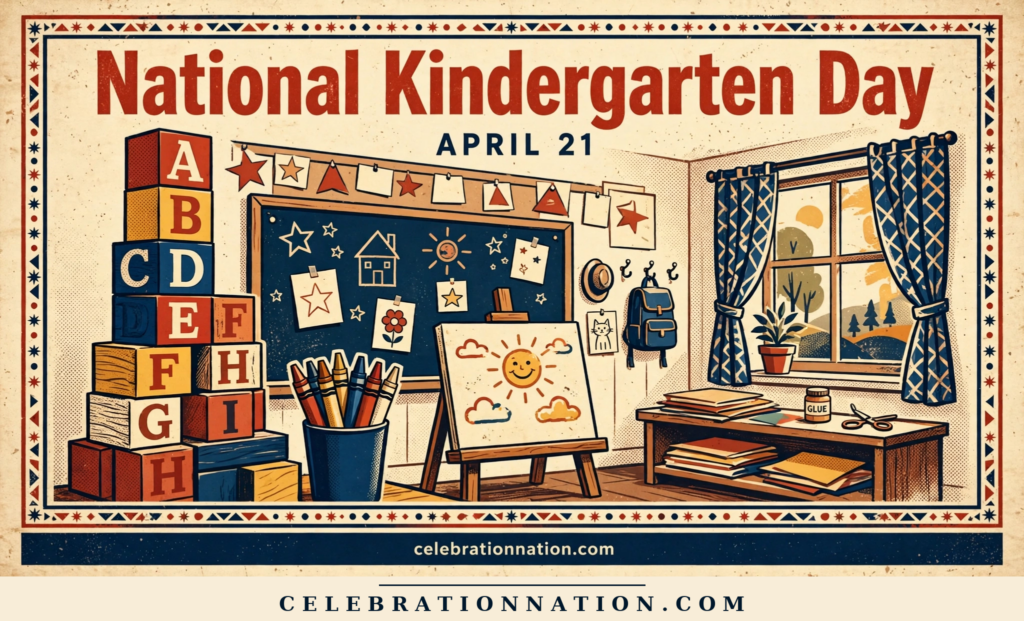
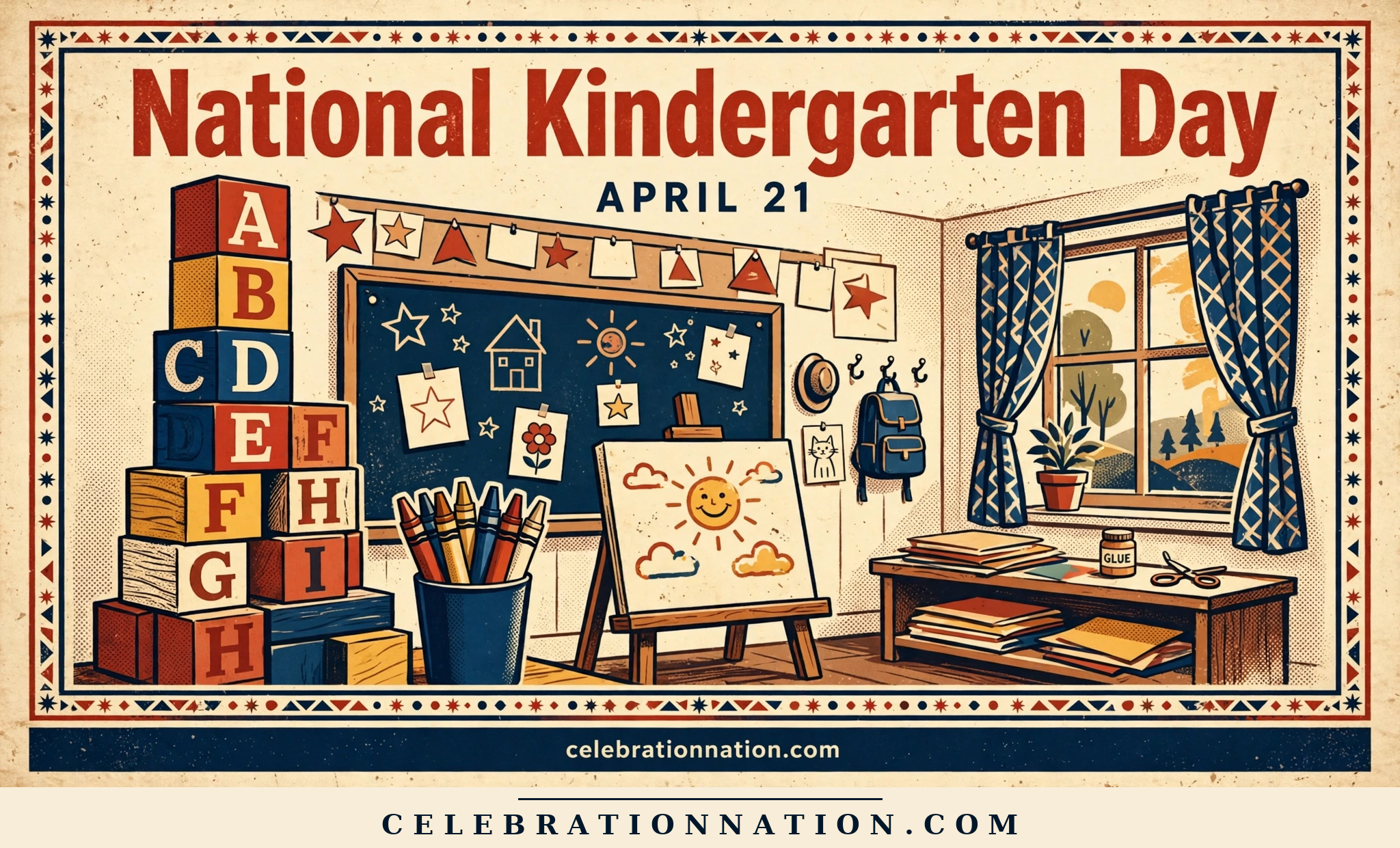
National Kindergarten Day
National Kindergarten Day is a small, loud, joyful reminder that kids are not the future — they're the present, and they're here.
- Roots
- Friedrich Froebel founded the first kindergarten in 1837 in Germany.
- Vibe
- A day for reflection on early education's impact.
- Also on Apr 21
- British National Tea Day · World Creativity and Innovation Day · Chocolate-Covered Cashews Day
- Hashtag
- #NationalKindergartenDay
Ways to celebrate
Small, doable ways to celebrate National Kindergarten Day.
- Put the phone away for an hour and follow their lead.
- Let them pick dinner, the music, or the route.
- Tell them one new story about someone in your family.
- Do one boring parenting task as a small event — folding, bath, bedtime.
- Send a photo of them to someone who'd love it.
Make it your kind of celebration
Family
Make one hour entirely kid-led. Do whatever they pick.
Kids
Let them plan the activity and see it through.
Couples
Trade one parenting chore you usually hate for a joint activity with the kids.
Office
Allow a little flex for parents on the calendar — school pickup matters.
School
Build a classroom tradition around the day — a story, a song, a simple ritual.
Community
Volunteer at a school, afterschool program, or youth center.
Just me
Reach out to a niece, nephew, godchild, or former student. Be seen.
Plan ahead
National Kindergarten Day is observed on April 21 every year. Here is where it lands for the next ten years, handy for planners, marketers and party people.
Fast facts
The story
National Kindergarten Day is celebrated each year on April 21, marking the anniversary of Friedrich Froebel's birth on April 21, 1782; in 1837 he established the first kindergarten in Bad Blankenburg, Germany. This innovative concept focused on the importance of play and social interaction in a child's educational journey. Today, kindergarten serves as a foundational year in education, introducing children to the joys of learning through hands-on activities and structured play.
Read the full story
In the United States, kindergarten has evolved significantly since its inception. Once viewed as merely a preparatory year, it is now recognized as an essential part of the educational system. Many states have made kindergarten attendance mandatory, reflecting a growing understanding of the developmental needs of young learners. As children engage in activities that foster creativity, critical thinking, and social skills, they are building the groundwork for future academic success.
The impact of kindergarten extends beyond academics; it shapes children's social interactions and emotional well-being. This year, parents and educators alike are encouraged to recognize the importance of this formative year, especially as children transition into a more structured learning environment. A strong emphasis on play-based learning, a hallmark of kindergartenensures that children develop not only intellectually but also socially and emotionally.
As we celebrate National Kindergarten Day, it's vital to acknowledge the dedicated teachers who guide young learners through this critical stage. They foster an environment where curiosity flourishes and each child's unique strengths are recognized. By supporting early education initiatives, we can help ensure that all children have access to quality kindergarten experiences, laying a strong foundation for lifelong learning.
Did you know?
Friedrich Froebel's Influence
Froebel's ideas on education were influential worldwide, leading to the establishment of kindergartens across many countries.
First U.S. Kindergarten
The first kindergarten in the U.S. was established in 1856 in Watertown, Wisconsin, by Margarethe Schurz.
Kindergarten Curriculum
Modern kindergarten curricula often include literacy, numeracy, and social-emotional learning components.
Global Variations
Different countries have unique approaches to kindergarten, reflecting cultural values and educational philosophies.
Play-Based Learning
Research shows that play-based learning is crucial for cognitive and social development in early childhood.
Kindergarten Readiness
Kindergarten readiness assessments help educators identify children's strengths and areas for growth.
Celebrating Diversity
Kindergarten classrooms often celebrate diversity through multicultural activities and inclusive teaching practices.
Around the world
Every culture celebrates a little differently.
- USUnited StatesIn the U.S., kindergarten is a vital part of early education, helping children transition to formal schooling.
- DEGermanyThe birthplace of kindergarten, Germany celebrates its educational philosophy and contributions to child development.
- CACanadaKindergarten programs in Canada emphasize play-based learning, promoting social and emotional growth.
- GBUnited KingdomIn the UK, early years education includes a focus on creativity and social skills, mirroring kindergarten's foundational role.
- AUAustraliaAustralian kindergartens prioritize play and exploration, reflecting a commitment to holistic child development.
- NZNew ZealandNew Zealand's early childhood education system emphasizes the importance of nurturing relationships and learning through play.
Keep the party going
See the calendar



Celebrate every day, all year
Official gear from the people who track 1,700+ celebrations.
Browse the shop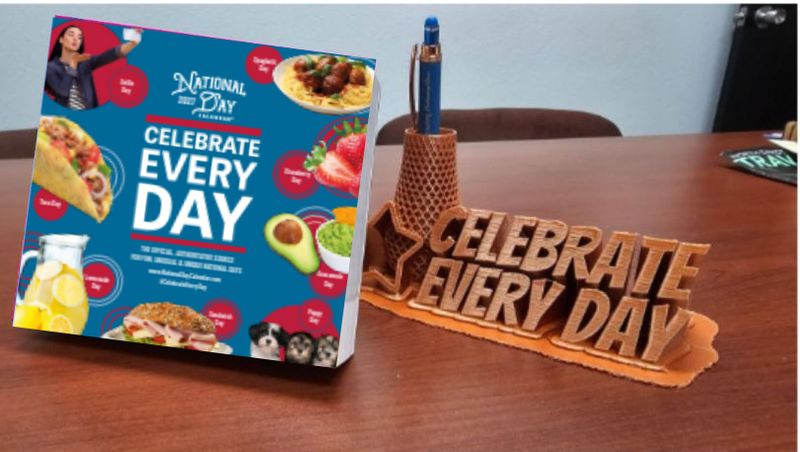 2027 National Day Desk CalendarA new celebration every morning. Daily tear-off.
Never miss a reason to celebrate.
One quick morning email with today's celebrations, ideas and posters. Free, unsubscribe anytime.
🎉 You're on the list! Watch your inbox for The Daily Confetti.