



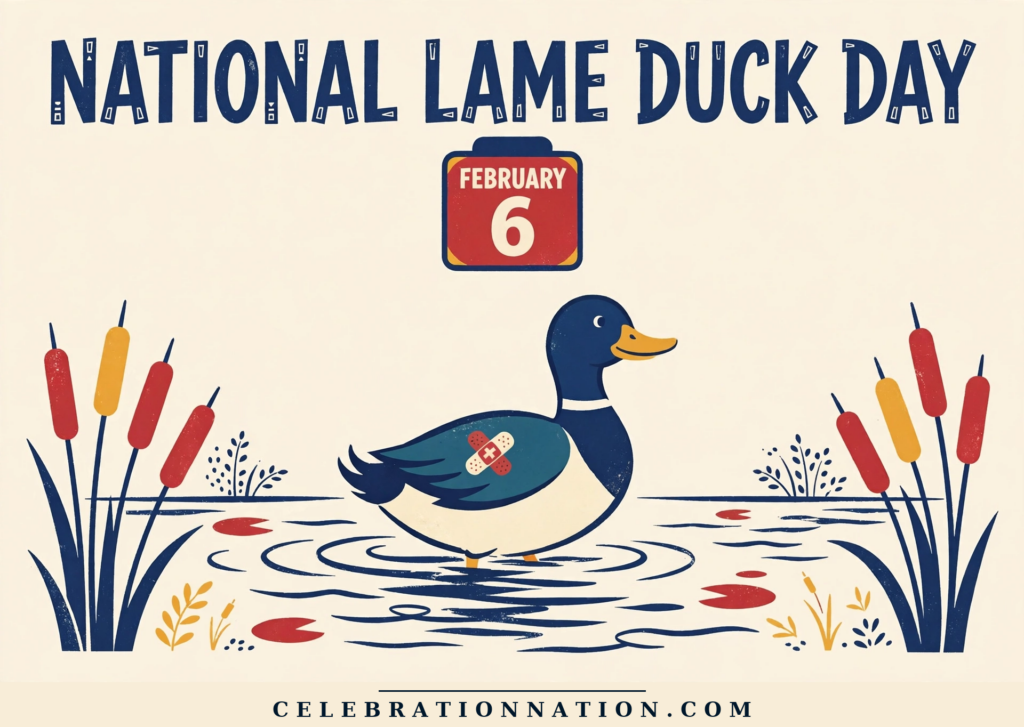
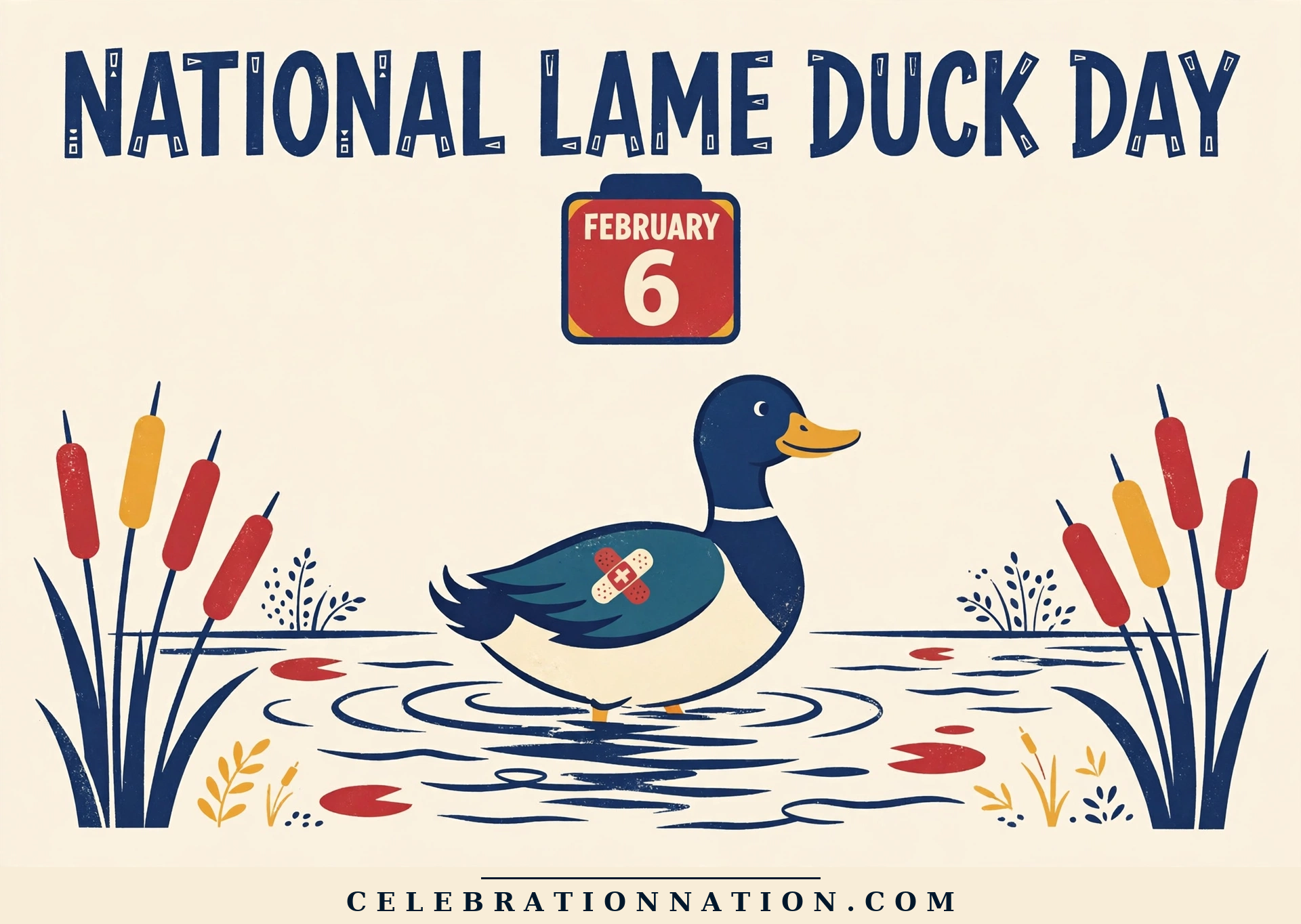
National Lame Duck Day
Explore the essence of governance during a transition period with this unique observance.
- Roots
- The term 'lame duck' dates back to the 18th century.
- Vibe
- Reflective and politically charged
- Also on Feb 6
- International Day of Zero Tolerance to Female Genital Mutilation · Stand Up to Bullying Day · Bubble Gum Day
- Hashtag
- #NationalLameDuckDay
3 ways to celebrate
Reflect on your own seasons
Write down one project you want to finish strong before moving on to something new.
Celebrate a transition
Gather for a small send-off for a friend leaving a job, team, or role with good stories.
Finish one loose end
Pick a task you have been putting off and get it done before the end of the day.
Plan ahead
National Lame Duck Day is observed on February 6 every year. Here is where it lands for the next ten years, handy for planners, marketers and party people.
Fast facts
The story
National Lame Duck Day is observed on February 6 each year, providing an opportunity to reflect on the unique phase of governance when elected officials are nearing the end of their terms. The term 'lame duck' refers to politicians who are in office but are not seeking reelection, often leading to significant legislative activity as they aim to finalize their agendas. This day captures the essence of political transition, allowing citizens to consider the impact of these final actions.
Read the full story
Historically, lame duck sessions have played a critical role in American politics. They became prominent during the 20th century, particularly after the 20th Amendment, which established the date of the presidential inauguration. During these sessions, outgoing officials can push through legislation that may not have been possible earlier in their terms. This practice is not unique to the United States; other countries with similar political structures experience their own versions of lame duck periods.
The dynamics of lame duck sessions can be contentious. While some officials may seek to accomplish their objectives, others may resist any last-minute changes, resulting in a complex interplay of power and negotiation. This period also allows incoming officials to prepare for their new roles, as they anticipate the changes and challenges that lie ahead. It is a time of both closure and anticipation, making it an intriguing aspect of democratic governance.
On National Lame Duck Day, individuals are encouraged to engage with their communities around these themes. Whether through discussions, educational activities, or personal reflection, the day serves as a reminder of the significance of political transitions. As the landscape shifts, citizens are invited to consider their roles in shaping future governance and to reflect on the lasting impact of outgoing officials.
Did you know?
Historical Significance
The term 'lame duck' was first used in England in the 18th century, referring to defaulting stock brokers.
U.S. Constitution
The U.S. Constitution does not explicitly mention lame duck sessions.
FDR's Influence
Franklin D. Roosevelt's presidency saw significant lame duck legislation, particularly in the New Deal era.
Global Context
Many democratic nations experience lame duck periods, which can affect international relations.
Public Perception
Public interest in lame duck sessions often fluctuates based on the political climate.
Legislative Outcomes
Some of the most controversial laws in U.S. history were passed during lame duck sessions.
Future Implications
The actions taken during lame duck periods can have long-lasting effects on subsequent administrations.
Around the world
Every culture celebrates a little differently.
- USUnited StatesNational Lame Duck Day is primarily recognized in the U.S., where it aligns with the political calendar.
- GBUnited KingdomIn the UK, similar political transitions occur, though the term 'lame duck' is not commonly used.
- CACanadaCanada experiences similar governance transitions, especially during federal elections.
- AUAustraliaAustralia's parliamentary system also sees outgoing officials with limited power after elections.
- DEGermanyGermany has its own version of lame duck periods during coalition negotiations.
- FRFranceIn France, political transitions occur during presidential and legislative election cycles.
Keep the party going
See the calendar



Celebrate every day, all year
Official gear from the people who track 1,700+ celebrations.
Browse the shop 2027 Wall Calendar, signed by Marlo AndersonSigned by the founder of National Day Calendar.
Never miss a reason to celebrate.
One quick morning email with today's celebrations, ideas and posters. Free, unsubscribe anytime.
🎉 You're on the list! Watch your inbox for The Daily Confetti.