





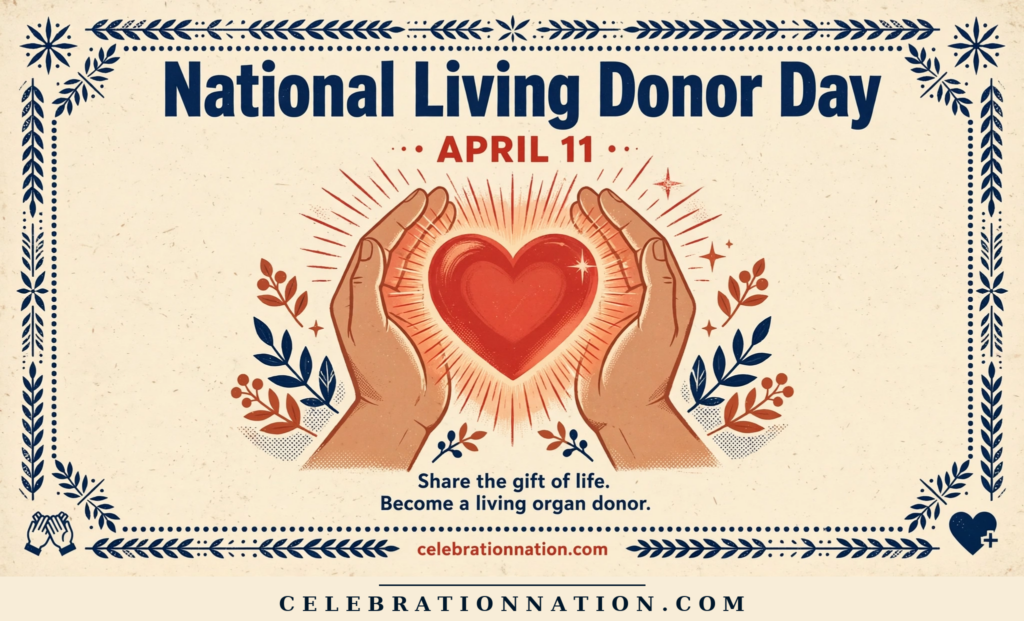
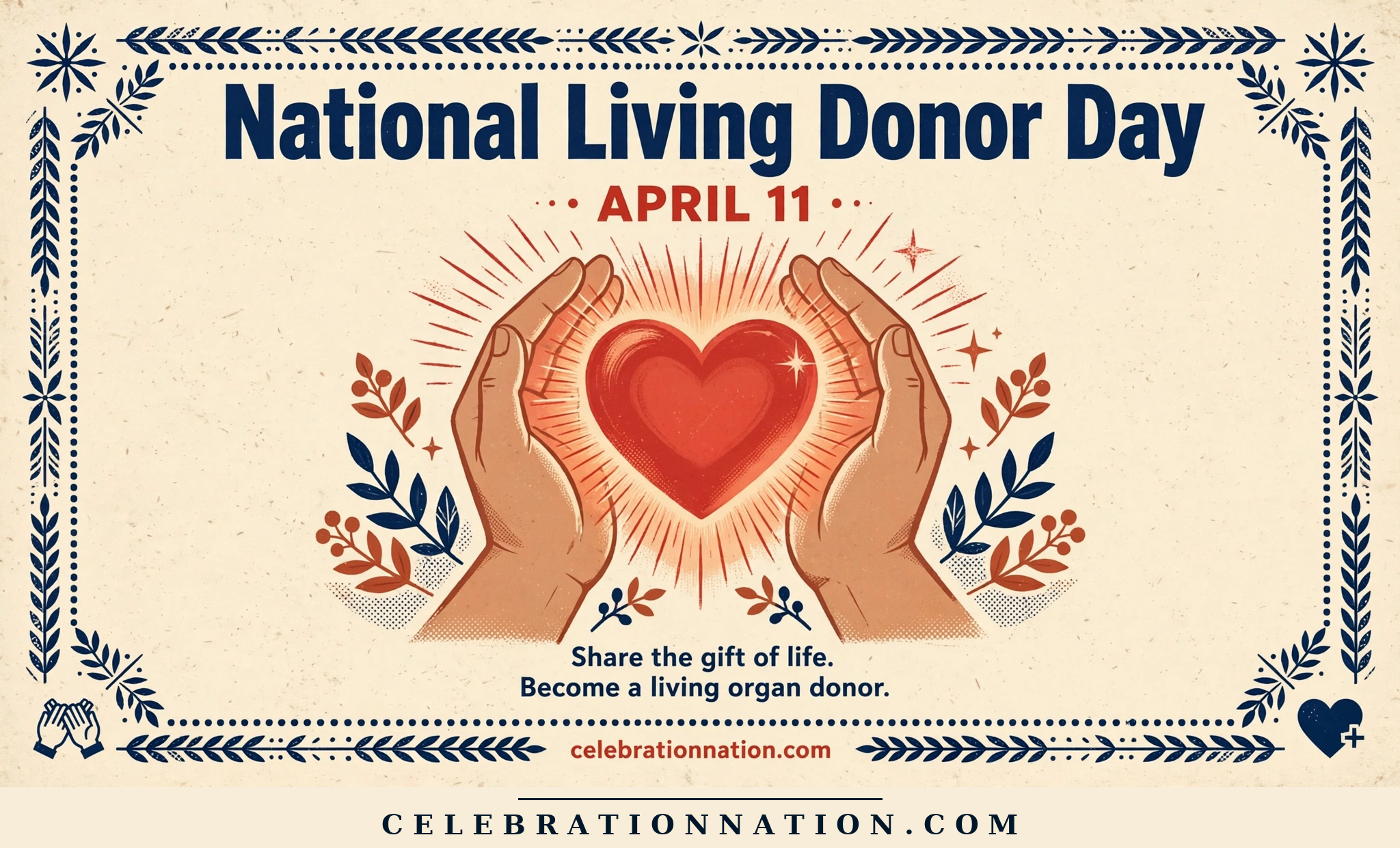
National Living Donor Day
On National Living Donor Day, we listen louder, learn more, and make sure no one feels invisible.
- Roots
- Established in 2023 by the Living Liver Foundation
- Vibe
- Supportive and hopeful
- Also on Apr 11
- International Louie Louie Day · World Parkinson’s Day · Cheese Fondue Day
- Hashtag
- #NationalLivingDonorDay
Ways to celebrate
Small, doable ways to celebrate National Living Donor Day.
- Share one reputable resource with your network.
- Donate to a patient-led organization working on living donor.
- Check in on someone you know who's living with it.
- Book the screening or appointment you've been putting off.
- Listen more than you speak.
Make it your kind of celebration
Family
Have the real conversation at the table — stigma-free, no lecture.
Kids
Answer questions honestly and age-appropriately.
Couples
Check in with each other's appointments, screenings, and follow-ups.
Office
Share vetted resources and encourage people to use their benefits.
School
Bring in an expert, survivor, or advocate to speak for a class period.
Community
Run a donation drive, a walk, or a listening session for those affected.
Just me
Reach out to someone you know is living with it. Ask how they're doing for real.
Plan ahead
National Living Donor Day is observed on April 11 every year. Here is where it lands for the next ten years, handy for planners, marketers and party people.
Fast facts
The story
National Living Donor Day serves as a reminder of the profound impact that living donations have on patients in need of organ transplants. Celebrated each year on April 11, this day aims to raise awareness about the importance of organ donation and to honor those who have made the courageous decision to donate. Living donors can provide kidneys, a portion of their liver, and other organs, showcasing an incredible act of altruism.
Read the full story
Since its inception in 2023, National Living Donor Day has prompted individuals and families to consider the option of living organ donation. The Living Liver Foundation, which established the day in collaboration with National Day Calendar, emphasizes the importance of sharing information about living donations and encouraging more people to become donors. With more than 100,000 individuals waiting for organ transplants in the United States, each living donor plays a critical role in saving lives.
The process of becoming a living donor involves thorough medical evaluations, consultations, and a commitment to the health and safety of both the donor and recipient. This day also highlights the stories of those who have benefited from living donations, often leading to improved quality of life and increased longevity. The gift of life that living donors provide is invaluable, and it is crucial to acknowledge their sacrifices and contributions.
As we observe National Living Donor Day, it is an opportune time to educate ourselves and our communities about the needs of organ donation. Awareness can lead to increased registration and support for both living donors and those in need of transplants. By fostering conversations and encouraging action, we can work together to ensure that more lives are saved through the generosity of living organ donors.
Did you know?
First Living Donor
The first successful living donor transplant occurred in 1954, when Dr. Joseph Murray transplanted a kidney from one identical twin to another.
Global Impact
According to the World Health Organization, living donation accounts for about 25% of all kidney transplants worldwide.
Organ Types
Living donors can donate a kidney, a portion of the liver, or a lung, among other organs.
Age Factor
Most living donors are between the ages of 35 and 50, but people as young as 18 can donate.
Health Benefits
Living donors often experience improved health outcomes, with many reporting better quality of life post-donation.
Awareness Campaigns
Many organizations run campaigns during April to promote National Living Donor Day and organ donation awareness.
Success Rates
Living donor transplants generally have higher success rates compared to deceased donor transplants.
Around the world
Every culture celebrates a little differently.
- USUnited StatesNational Living Donor Day is prominently observed in the U.S., where thousands benefit from living donations.
- CACanadaCanada also recognizes the vital role of living organ donation in saving lives.
- GBUnited KingdomLiving donation is an important topic in the UK, with various organizations advocating for awareness.
- AUAustraliaAustralia supports living organ donation initiatives and promotes donor registration.
- DEGermanyGermany has programs in place to encourage living organ donation and raise public awareness.
- INIndiaIndia is increasing its focus on living donations as part of broader health initiatives.
Keep the party going
See the calendar



Celebrate every day, all year
Official gear from the people who track 1,700+ celebrations.
Browse the shop 2027 Wall + Desk Calendar BundleCelebrate every day at home and at work.
Never miss a reason to celebrate.
One quick morning email with today's celebrations, ideas and posters. Free, unsubscribe anytime.
🎉 You're on the list! Watch your inbox for The Daily Confetti.