
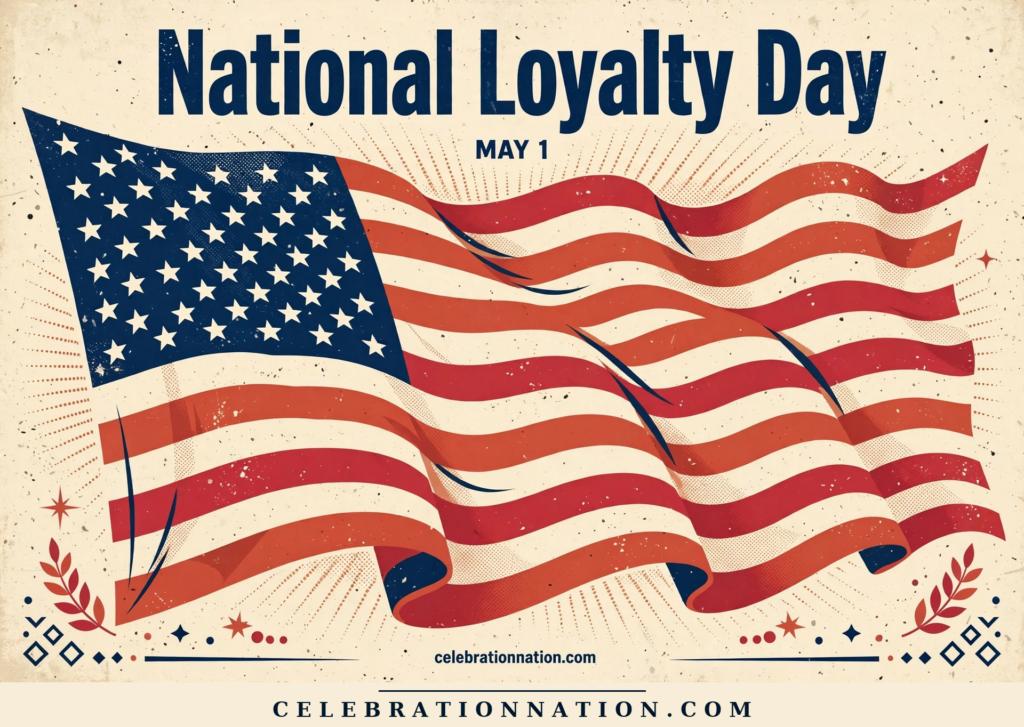
National Loyalty Day
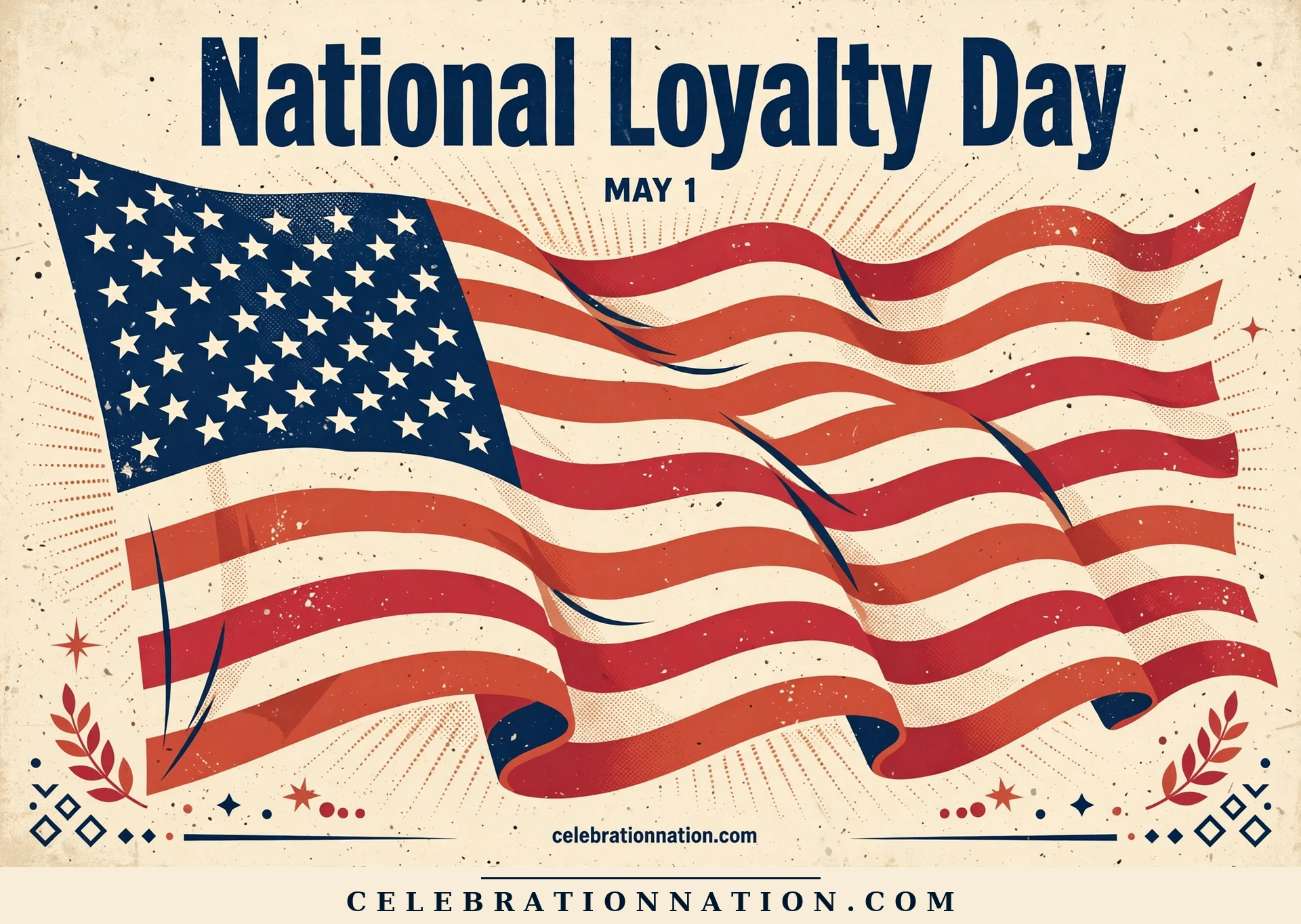
National Loyalty Day on May 1 is a federally-recognized US observance honoring American citizenship, loyalty to the Constitution, and the shared civic values that hold the country together. Signed into law by President Eisenhower in 1958, it exists largely as the American answer to May Day's socialist origins abroad. Proclaimed every year by the sitting president.
- Vibe
- Civic & Constitutional
- Also on May 1
- School Lunch Hero Day · School Principals’ Day · Silver Star Service Banner Day
- Hashtag
- #NationalLoyaltyDay
Ways to celebrate
Civic engagement done well:
- 🇺🇸 Fly the flag. Properly. Look up the Flag Code (4 USC §§ 1-10) — it's shorter than you think and the American way to honor the flag.
- 📜 Re-read the Constitution. 4,543 words. Free at constitutioncenter.org. Worth an annual reread; few Americans have read it since high school.
- 🗳️ Register to vote (or check your registration). Takes 2 minutes at vote.org. The single most concrete loyalty act available.
- 🎪 Attend a Loyalty Day parade. Batavia, IL hosts the country's oldest Loyalty Day parade (60+ years). Local American Legion posts often organize them.
- 📖 Read about American civic institutions. Jill Lepore's 'These Truths' is the best single-volume American history in print. One chapter a week, yearlong.
Make it your kind of celebration
Family
Family-friendly civics: read the Preamble aloud, talk about what 'We the People' actually means, let kids ask questions. Elementary-school ready.
Kids
Flag etiquette is easy to teach at any age. The Pledge of Allegiance, properly explained, is a good conversation starter.
Couples
If you haven't voted in an election together, commit to the next one. Go together; have dinner after.
Office
Register your team to vote. Pay for lunch during voter registration. Non-partisan; universally appreciated.
School
Classic civics day. Constitution reading, flag discussion, mock voting for older kids. Ripe for end-of-year review.
Community
American Legion / VFW / municipal Loyalty Day parades. Support local civic organizations.
Just me
Read the Declaration and the Preamble back to back. 10 minutes. Powerful.
Plan ahead
National Loyalty Day is observed on May 1 every year. Here is where it lands for the next ten years, handy for planners, marketers and party people.
Fast facts
The story
National Loyalty Day is a product of the Cold War. In the years after World War II, the US government became increasingly concerned with the public association of May 1, International Workers' Day, with communist and socialist movements. May 1 had been the global labor-movement holiday since 1889, and the Soviet Union held massive military parades on May 1 through Red Square. The US wanted an alternative.
Read the full story
The observance has deeper roots. 'Americanization Day' was first proposed in 1921 by the Veterans of Foreign Wars and briefly observed by presidential proclamation. It faded. In 1949, Congress formally named May 1 'Loyalty Day' by resolution. In 1958, President Dwight D. Eisenhower signed it into permanent federal law (Public Law 85-529).
Every sitting president since Eisenhower has issued an annual presidential proclamation on Loyalty Day. The proclamation text has evolved over the years sometimes emphasizing anti-communism, sometimes civic participation, sometimes immigrant citizenship, but the core message has always been: loyalty to the United States Constitution and to the values it expresses.
Today, Loyalty Day is a modest observance. No federal holiday status; no closing of offices. A few hundred communities hold parades, mostly in places with strong American Legion or VFW traditions. Batavia, Illinois has hosted a Loyalty Day parade every year since 1963, the oldest continuous one. The observance is a quiet one, deliberately so, more about civic reflection than public spectacle.
Four ideas at the core of the Loyalty Day tradition:
Six communities and institutions that keep the tradition active:
Did you know?
Loyalty Day is a specifically American counter-May-Day.
May 1 has been International Workers' Day since 1889, a day of labor movement celebrations and socialist parades worldwide. The US explicitly chose May 1 for Loyalty Day to provide a patriotic alternative during the Cold War.
The 1950 bill was introduced by Rep. Gordon Canfield of NJ.
The Republican congressman from New Jersey authored the original Loyalty Day resolution, which passed Congress in 1949 and was signed by Truman. Eisenhower's 1958 law made it permanent federal observance.
Over 800,000 people become US citizens annually.
The USCIS naturalization oath, where new citizens swear allegiance to the Constitution, is formally administered at ceremonies held all year, including frequently around Loyalty Day.
The Pledge of Allegiance was written in 1892.
By Francis Bellamy for the 400th anniversary of Columbus's arrival. The phrase 'under God' was added in 1954 during the Eisenhower era, the same period that created Loyalty Day. Both reflect the same Cold War religious-civic framing.
Keep the party going
See the calendar
Celebrate every day, all year
Official gear from the people who track 1,700+ celebrations.
Browse the shop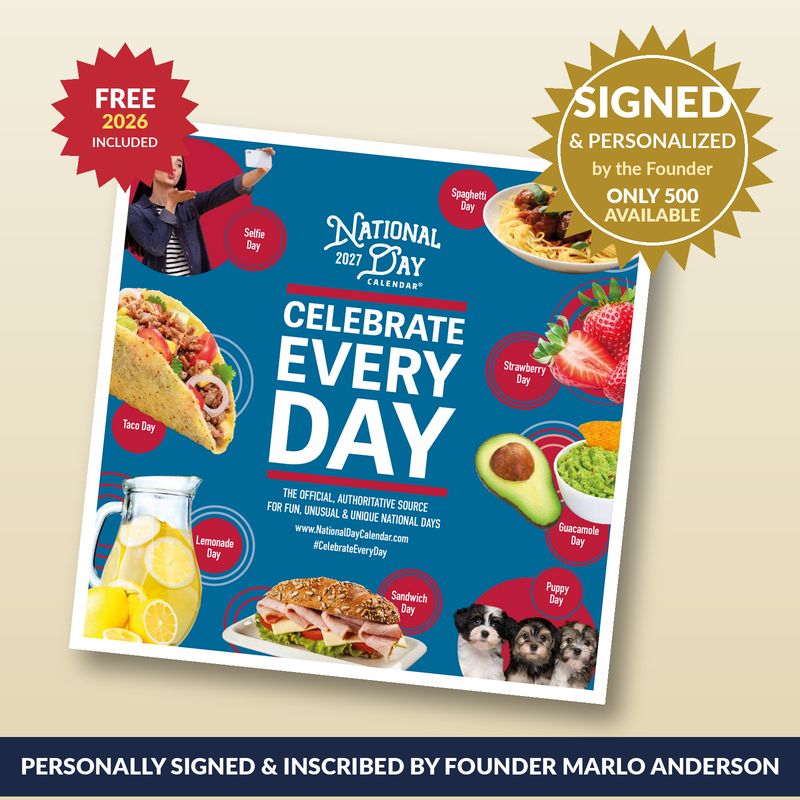 2027 Wall Calendar, signed by Marlo AndersonSigned by the founder of National Day Calendar.
Never miss a reason to celebrate.
One quick morning email with today's celebrations, ideas and posters. Free, unsubscribe anytime.
🎉 You're on the list! Watch your inbox for The Daily Confetti.