






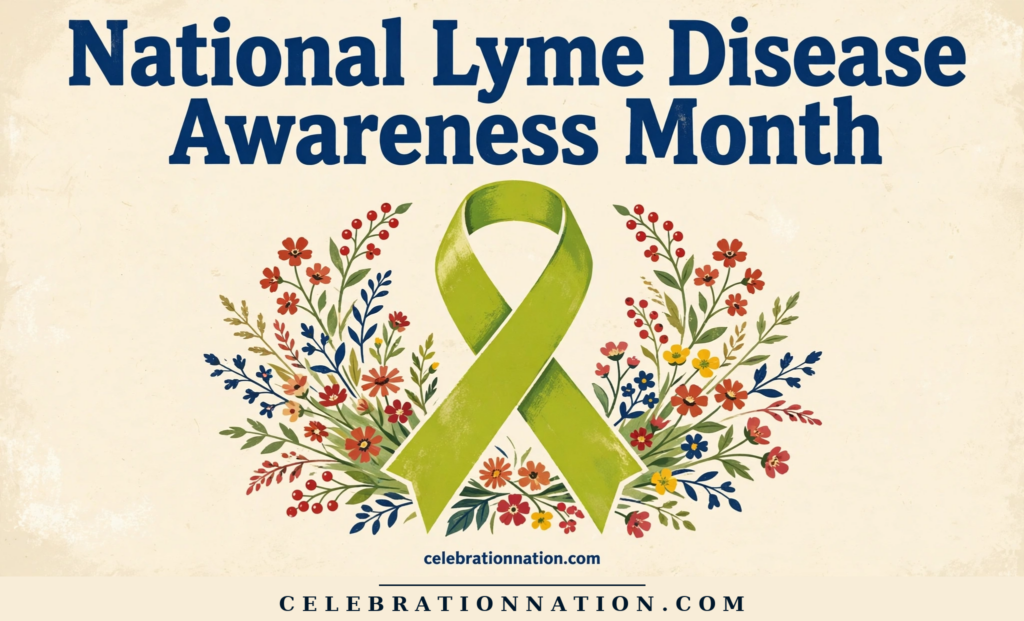
National Lyme Disease Awareness Month
National Lyme Disease Awareness Month is a hand extended — to the patients, caregivers, researchers, and families living with lyme disease awareness.
- Roots
- Observed since the 1980s
- Vibe
- Community engagement and education
- Hashtag
- #NationalLymeDiseaseAwarenessMonth
Ways to celebrate
Small, doable ways to celebrate National Lyme Disease Awareness Month.
- Share one reputable resource with your network.
- Donate to a patient-led organization working on lyme disease awareness.
- Check in on someone you know who's living with it.
- Book the screening or appointment you've been putting off.
- Listen more than you speak.
Fast facts
The story
Lyme disease, caused by the bacterium Borrelia burgdorferi, is transmitted through the bite of infected black-legged ticks, commonly known as deer ticks. The disease was first identified in Lyme, Connecticut, during the 1970s, and since then, the number of reported cases has steadily increased. Each May, National Lyme Disease Awareness Month seeks to inform the public about prevention, symptoms, and treatment options available.
Read the full story
Symptoms of Lyme disease can vary widely, ranging from fever and fatigue to more serious complications if left untreated. Early detection is crucial; the earlier a diagnosis is made, the easier it is to treat the infection with antibiotics. Awareness campaigns focus on educating individuals about the importance of recognizing the symptoms and seeking medical help promptly if they suspect exposure.
During this month, various organizations and communities host events to promote Lyme disease awareness. From walks and runs to educational sessions, these activities aim to bring people together to share experiences and knowledge. Raising awareness can lead to better prevention strategies and ultimately reduce the number of new cases each year.
As the weather warms and outdoor activities increase, it is essential to remain vigilant about tick bites. Wearing long sleeves, using insect repellent, and performing tick checks after spending time outdoors are simple yet effective strategies to protect oneself. This May, let us work together to foster a culture of awareness and prevention regarding Lyme disease.
Worth knowing
Understand the Risks
Lyme disease is prevalent in certain regions, particularly in the northeastern U.S. Being aware of these areas can help you take preventive measures.
Dress Appropriately
Wearing protective clothing, such as long sleeves and pants, can significantly reduce your risk of tick bites during outdoor activities.
Use Repellent
Insect repellents containing DEET or permethrin can help deter ticks. Be sure to apply them according to label instructions.
Check for Ticks
After spending time outdoors, perform a thorough tick check on yourself, your children, and your pets to ensure no ticks are attached.
Did you know?
Tick Life Cycle
Ticks have four life stages: egg, larva, nymph, and adult, with each stage posing a risk for disease transmission.
Common Symptoms
Early symptoms of Lyme disease can include fever, chills, headache, and fatigue, often resembling the flu.
The 'Bull's-eye' Rash
A characteristic rash, known as erythema migrans, often appears at the site of the tick bite.
Long-Term Effects
If untreated, Lyme disease can lead to joint pain, neurological problems, and heart issues.
Testing Methods
Blood tests can help diagnose Lyme disease, but they are not always accurate in the early stages.
Preventive Measures
Staying on marked paths and avoiding tall grass can help reduce the risk of tick bites.
Global Impact
Lyme disease is found in various countries, highlighting the need for international awareness and prevention efforts.
Around the world
Every culture celebrates a little differently.
- USUnited StatesThe U.S. sees more than 80,000 reported cases annually, mainly in the Northeast and Midwest.
- CACanadaCanada has seen a rise in Lyme disease cases, particularly in southern Ontario and Quebec.
- GBUnited KingdomCases in the UK have increased, especially in rural areas with high deer populations.
- DEGermanyGermany reports thousands of cases each year, often in forested regions.
- AUAustraliaWhile Lyme disease is less common in Australia, some cases have been reported, raising awareness.
- ITItalyItaly has regions with high tick populations, leading to increased Lyme disease awareness efforts.
Coming up next
See the calendar



Celebrate every day, all year
Official gear from the people who track 1,700+ celebrations.
Browse the shop 2027 Wall + Desk Calendar BundleCelebrate every day at home and at work.
Never miss a reason to celebrate.
One quick morning email with today's celebrations, ideas and posters. Free, unsubscribe anytime.
🎉 You're on the list! Watch your inbox for The Daily Confetti.