

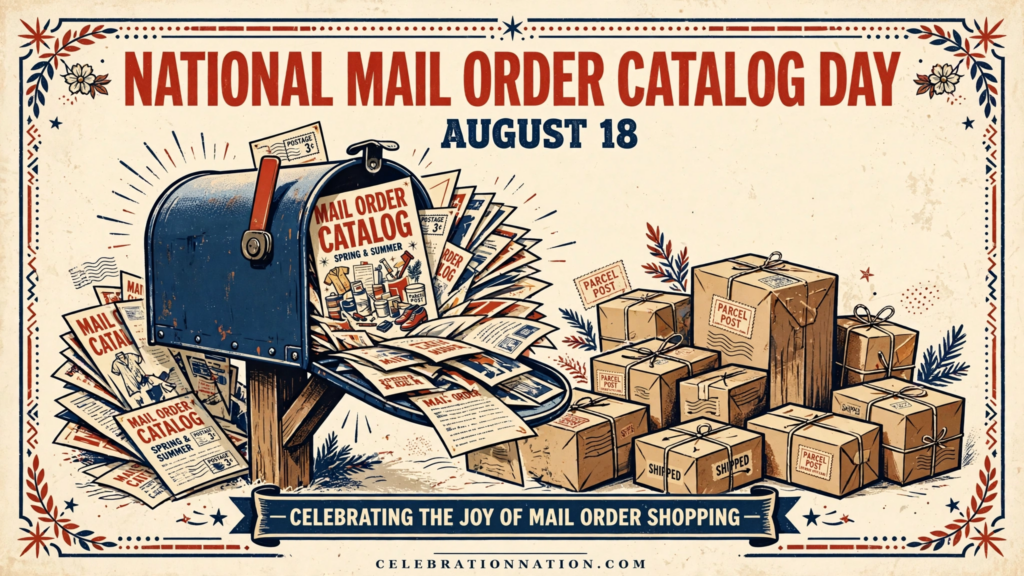
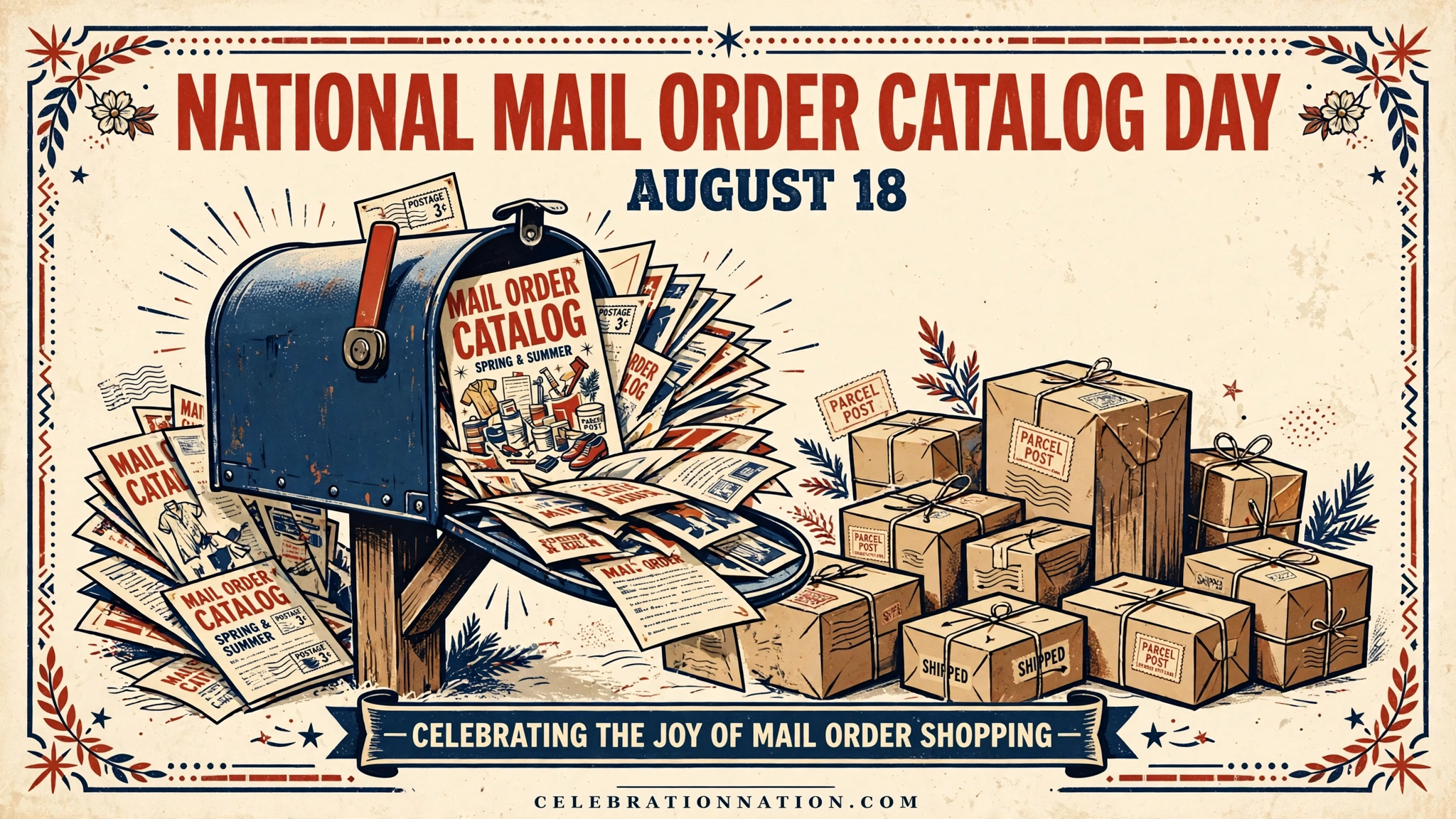
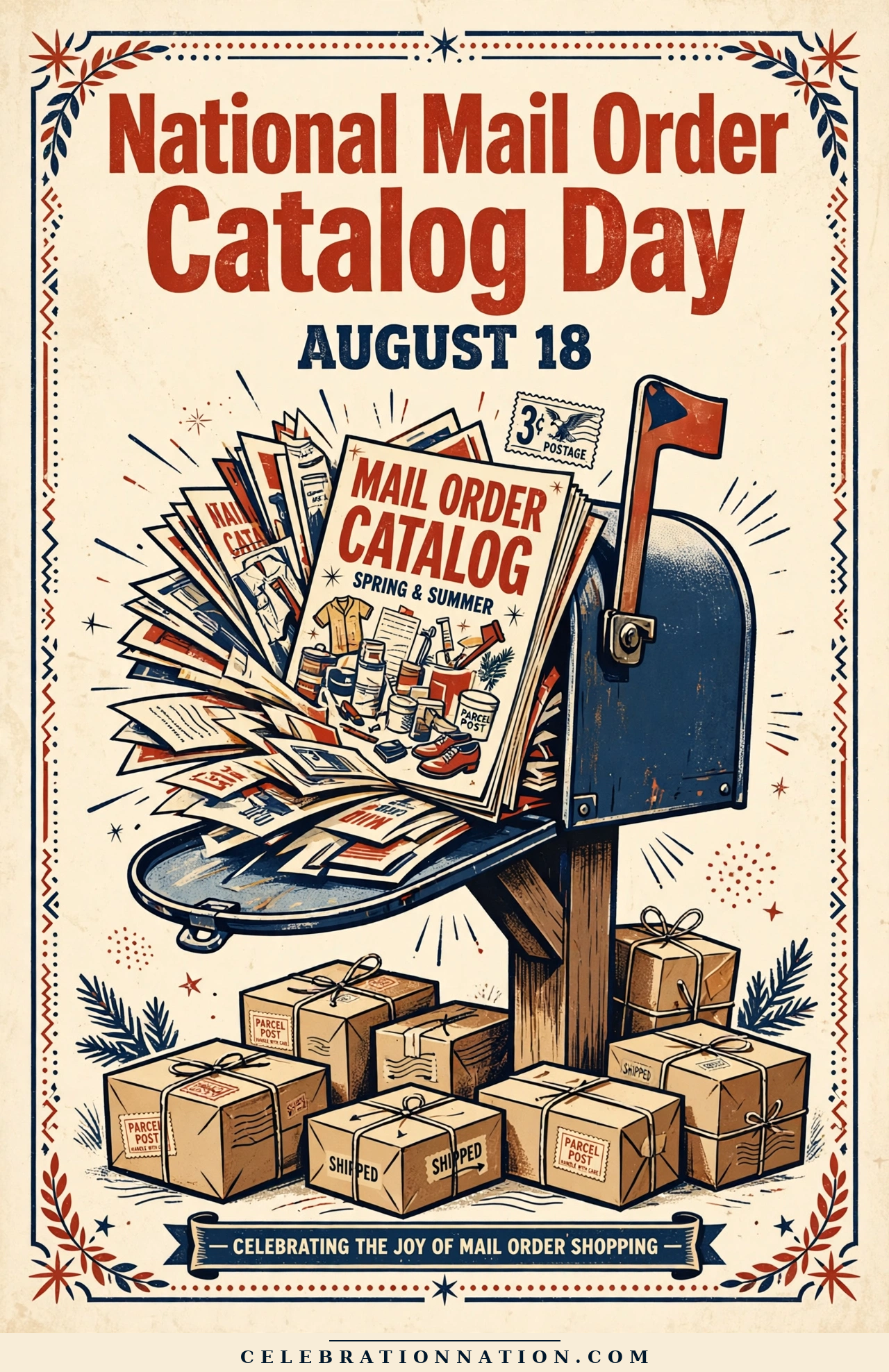
National Mail Order Catalog Day
On this special day, we take a moment to appreciate the convenience of mail order shopping and its lasting impact on American culture.
- Roots
- The first mail order catalog was created by Montgomery Ward in 1872.
- Vibe
- Nostalgic and convenient, reflecting a simpler shopping experience.
- Also on Aug 18
- Fajita Day · Ice Cream Pie Day · Pinot Noir Day
- Hashtag
- #NationalMailOrderCatalogDay
3 ways to celebrate
Flip a real catalog
Request a catalog and circle your dream finds.
Make wish lists
Trade catalog picks and compare dream shopping lists.
Share a catalog haul
Order office supplies from a catalog together.
Plan ahead
National Mail Order Catalog Day is observed on August 18 every year. Here is where it lands for the next ten years, handy for planners, marketers and party people.
Fast facts
The story
Mail order catalogs have been an integral part of American shopping culture since the late 19th century. The first known catalog was released by Montgomery Ward in 1872, paving the way for a new shopping experience. These catalogs allowed consumers, especially those in rural areas, to access a wide variety of products without needing to travel long distances to a store. This innovation transformed shopping into a more accessible and personalized experience.
Read the full story
Throughout the years, mail order catalogs evolved, reflecting changes in consumer preferences and technology. Companies like Sears and J.C. Penney followed suit, producing thick, colorful catalogs that showcased everything from clothing to home goods. These catalogs were not just shopping tools; they became a source of entertainment for families, often found lying around the house or eagerly awaited during the holiday season.
Today, while online shopping has largely taken over, the nostalgia for mail order catalogs remains strong. Many people fondly recall flipping through the glossy pages, dreaming of desired items. Some brands have revived the catalog format, recognizing its charm and the personal touch it brings to shopping. The tactile experience of flipping through pages stands in contrast to the digital screens that dominate our lives today.
As we celebrate National Mail Order Catalog Day, it is essential to reflect on the impact of these catalogs on consumer culture. They not only shaped how we shop but also influenced marketing strategies and design. From the colorful illustrations to the descriptive copy, catalogs have left an indelible mark on American history. So, take some time to browse through old catalogs or explore the newer versions available today, enjoying the unique experience they offer.
Did you know?
First Mail Order Catalog
Montgomery Ward published its first catalog in 1872, marking the beginning of this shopping revolution.
Sears Roebuck Catalog
At its peak, the Sears catalog was over 1,000 pages long, offering a vast array of items.
Catalogs and Advertising
Catalogs have historically served as a significant marketing tool, influencing consumer trends and behaviors.
Digital Revival
Some brands have returned to print catalogs as a strategy to stand out in a digital marketplace.
Cultural Impact
Mail order catalogs have inspired countless parodies and references in popular culture.
Collectible Items
Vintage catalogs are now considered collectible, with some fetching high prices at auctions.
Seasonal Releases
Many companies still produce seasonal catalogs, particularly for holidays, tapping into consumer nostalgia.
Around the world
Every culture celebrates a little differently.
- USUnited StatesThe birthplace of the mail order catalog, significantly influencing American consumer habits.
- GBUnited KingdomHome to companies like Argos, which popularized catalog shopping in the 1970s.
- CACanadaCanadians have embraced mail order catalogs, particularly for seasonal goods.
- AUAustraliaAustralian retailers have used catalogs to reach remote areas, enhancing accessibility to products.
- DEGermanyKnown for its diverse range of catalogs, Germany has a rich history in mail order shopping.
- BRBrazilBrazilian companies have adopted catalogs to cater to a growing middle class eager for diverse products.
Keep the party going
See the calendar
Celebrate every day, all year
Official gear from the people who track 1,700+ celebrations.
Browse the shop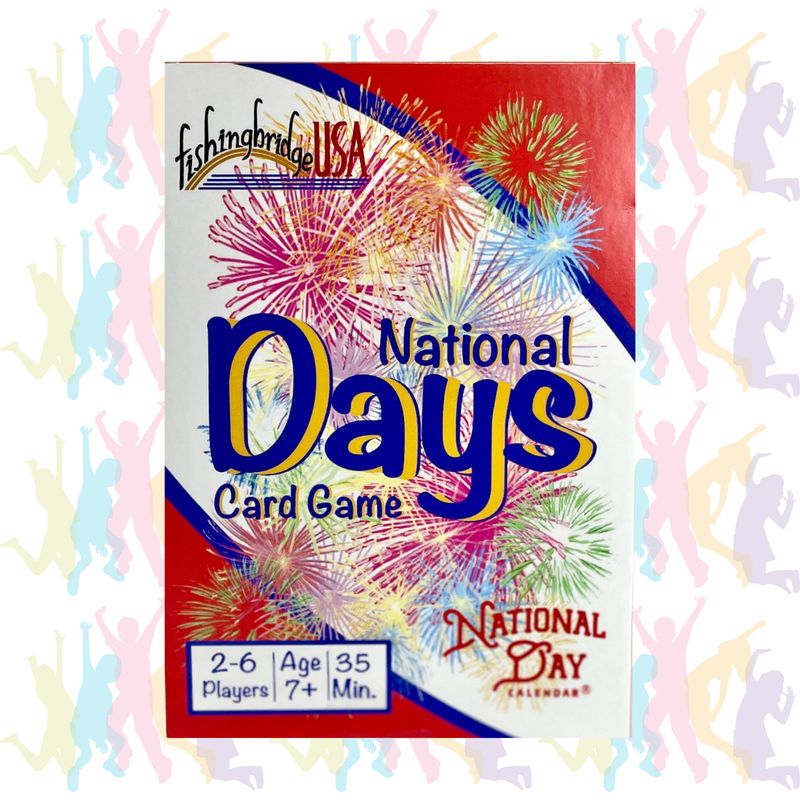 National Day Celebration Card GameA party in a box, any day of the year.
Never miss a reason to celebrate.
One quick morning email with today's celebrations, ideas and posters. Free, unsubscribe anytime.
🎉 You're on the list! Watch your inbox for The Daily Confetti.