




National Moth Week
Embrace the beauty of moths with your community and learn about their ecological role.
- Roots
- First celebrated in 2012
- Vibe
- A celebration of nocturnal exploration
- Hashtag
- #NationalMothWeek
Fast facts
The story
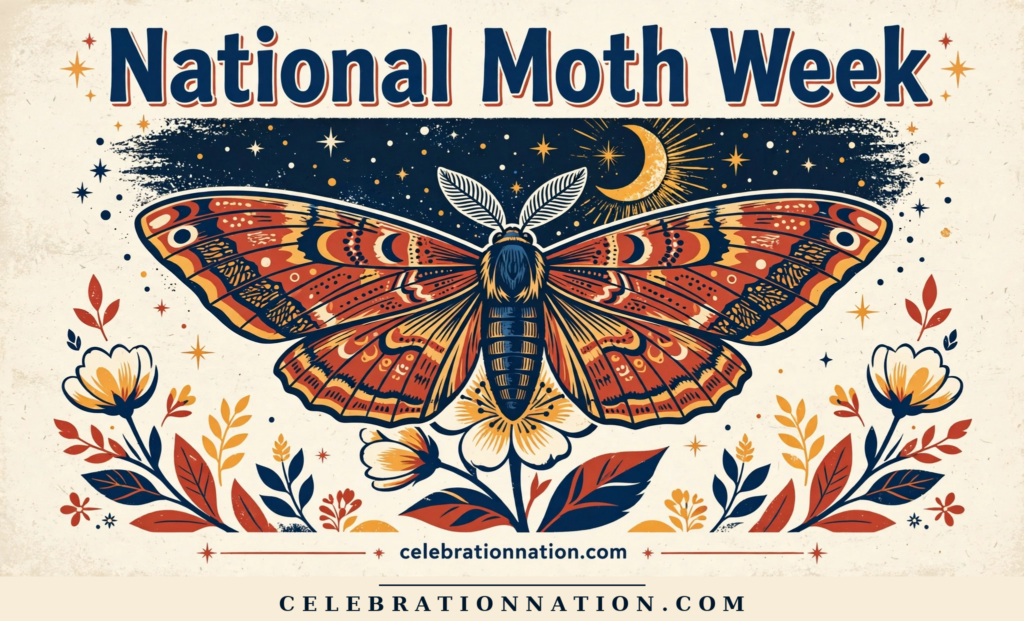
National Moth Week, celebrated annually in late July, invites individuals, families, and communities to appreciate the beauty and ecological significance of moths. Founded in 2012 by Friends of the East Brunswick Environmental Commission, this event encourages people to observe and document moth species in their local environments. The week-long celebration fosters awareness about the vital roles moths play in pollination and as a food source for various wildlife.
Read the full story
Moths, often overshadowed by their more colorful butterfly cousins, exhibit a remarkable diversity in size, color, and behavior. With some 160,000 species globally, and nearly 11,000 in the United States alone, moths are an integral part of our ecosystems. During National Moth Week, participants are encouraged to set up lights and traps to draw these creatures in, turning their backyards into vibrant moth-watching hubs.
The event aligns with a global effort to connect with nature and engage in citizen science. Participants can join local moth identification workshops, share their findings on social media, and contribute to databases that track moth populations. This collaborative approach not only enhances knowledge but also fosters a sense of community among nature enthusiasts.
As night falls, the soft flutter of moth wings becomes a symphony of nature, inviting all to take part in this celebration. From families to individuals, National Moth Week provides an opportunity to observe, learn, and appreciate the often-missed nocturnal wonders that inhabit our world.
Worth knowing
Moth Diversity
Discover over 160,000 moth species around the world.
Nighttime Adventure
Experience the magic of moth-watching after dark.
Capture the Moment
Document your moth sightings with photography.
Global Participation
Join a worldwide community of moth enthusiasts.
Did you know?
Moths vs. Butterflies
Moths are generally nocturnal, while butterflies are diurnal.
Moth Lifespan
Some moths live only a few days, while others can live for months.
Pollinators
Moths are important pollinators for many night-blooming plants.
Camouflage Experts
Many moths have evolved to blend in with their surroundings.
Cultural Significance
Moths appear in folklore, representing transformation and mystery.
Light Attraction
Moths are famously drawn to artificial lights at night.
Luna Moth
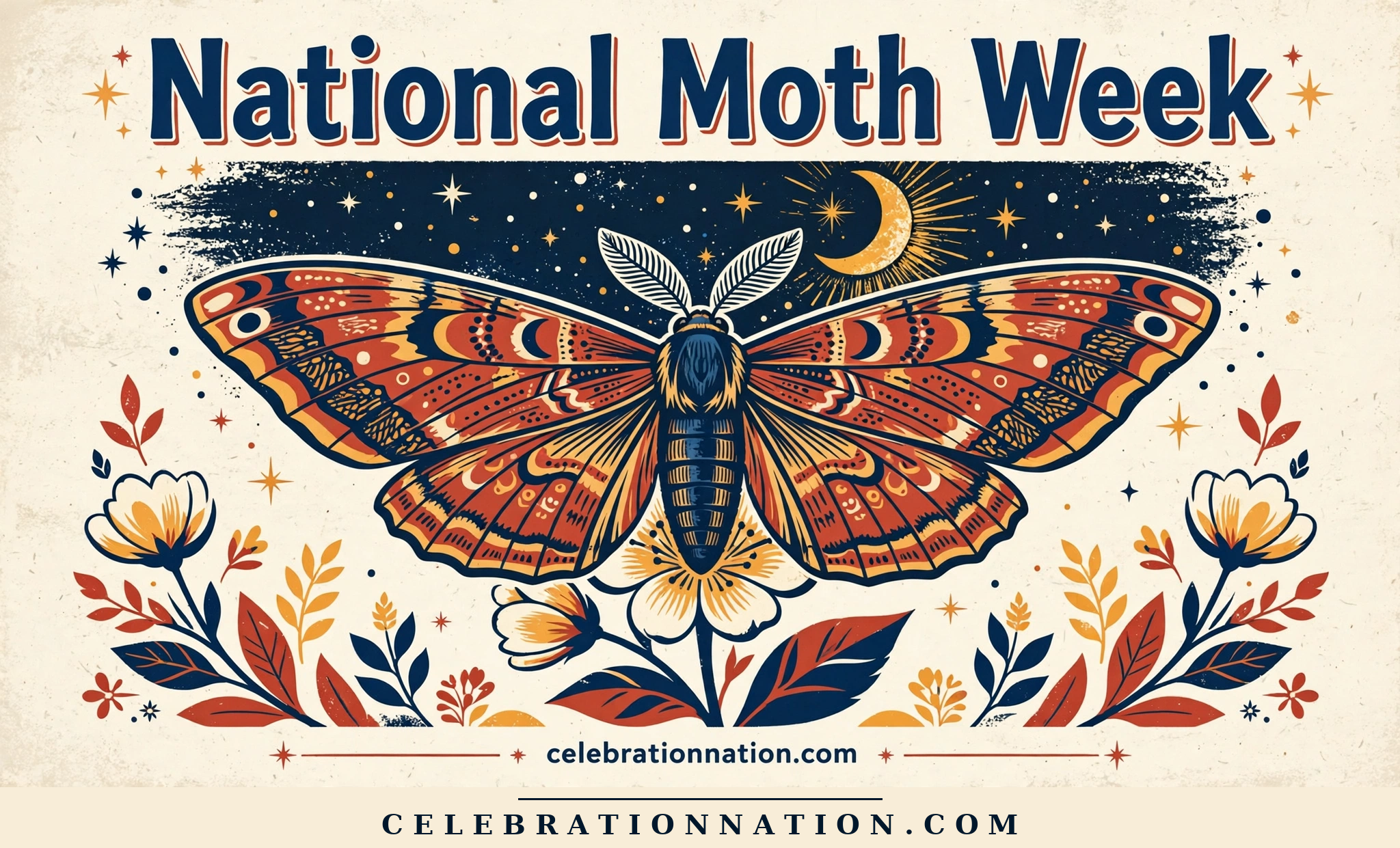
The Luna moth is known for its striking green wings and long tails.
Around the world
Every culture celebrates a little differently.
- USUnited StatesNational Moth Week is celebrated across the U.S., encouraging local events.
- CACanadaCanadian enthusiasts participate in moth-watching activities.
- GBUnited KingdomMoth conservation efforts are highlighted during this week.
- AUAustraliaAustralian communities engage in nocturnal moth observations.
- ZASouth AfricaSouth African naturalists celebrate local moth species.
- DEGermanyGerman entomologists contribute to international moth research.
Coming up next
See the calendar

Celebrate every day, all year
Official gear from the people who track 1,700+ celebrations.
Browse the shop 2027 Wall Calendar, signed by Marlo AndersonSigned by the founder of National Day Calendar.
Never miss a reason to celebrate.
One quick morning email with today's celebrations, ideas and posters. Free, unsubscribe anytime.
🎉 You're on the list! Watch your inbox for The Daily Confetti.