






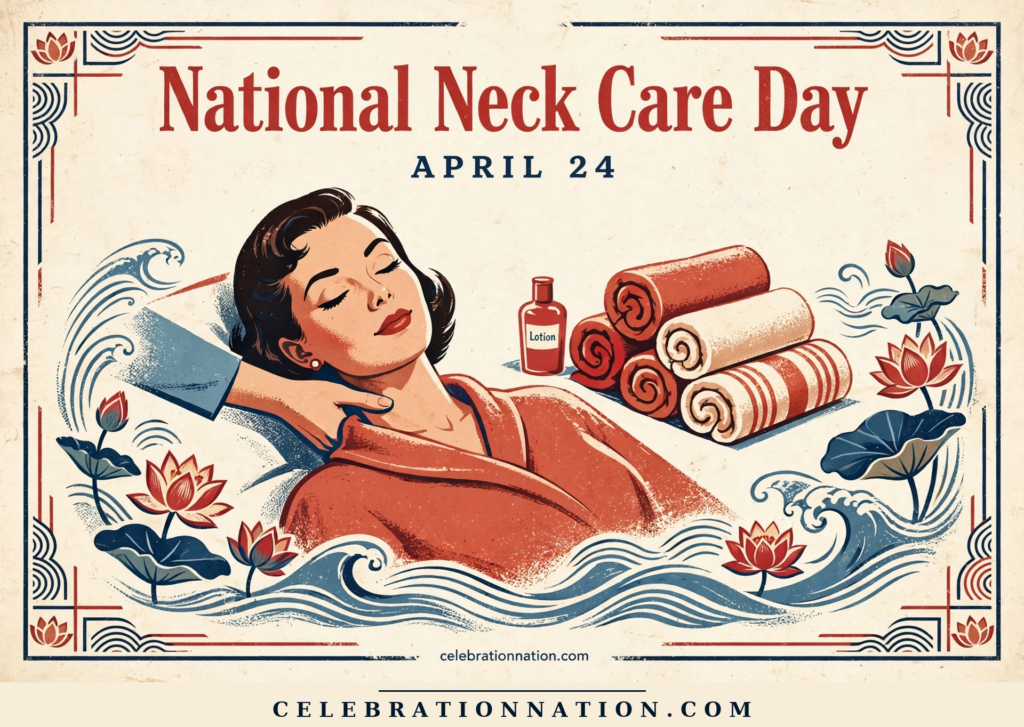
National Neck Care Day
National Neck Care Day is the kind of day that rewards a little intention and a lot of heart.
- Roots
- Established in 2025 by NEOSTRATA® to promote neck skincare
- Vibe
- Awareness, Self-Care, Skincare
- Also on Apr 24
- International Sculpture Day · Fashion Revolution Day · Arbor Day
- Hashtag
- #NationalNeckCareDay
Ways to celebrate
Small, doable ways to celebrate National Neck Care Day.
- Do one small thing that makes the day feel marked.
- Tell someone what you're celebrating and why.
- Share a post, a photo, or a memory connected to it.
- Make a tiny tradition — something you could do again next year.
- Let it be simple. Not every celebration has to be a production.
Make it your kind of celebration
Family
Do one small thing together that everyone will remember.
Kids
Turn it into a craft, a story, or a snack — meet them where they are.
Couples
Use the day as an excuse for a little intentional time together.
Office
Acknowledge the day in the team chat or at a stand-up. Small, sincere, fast.
School
Anchor a short lesson or activity around the day.
Community
Share, volunteer, or donate to make the day mean something locally.
Just me
Celebrate quietly and completely. One person can still mark a day.
Plan ahead
National Neck Care Day is observed on April 24 every year. Here is where it lands for the next ten years, handy for planners, marketers and party people.
Fast facts
The story
In the hustle of modern American life, where digital screens dominate our work and leisure, the subtle, persistent strain on our necks often goes unnoticed until it escalates into discomfort. National Neck Care Day, observed annually on April 24, is a reminder to include the neck and décolletage in daily skincare routines. It’s a day dedicated to raising awareness about the often-overlooked neck area, which is prone to early signs of aging such as fine lines, wrinkles, and discoloration. From the subtle hunch over a smartphone to prolonged hours spent at a desk, the demands on our necks are unprecedented, making this observance more relevant than ever.
Read the full story
As we age, the neck is one of the first areas to exhibit visible signs of aging. Despite this, it frequently remains neglected in regular skincare regimens. National Neck Care Day serves as a reminder to extend skincare practices beyond the face to include the neck and décolletage, promoting a more comprehensive approach to skin health.
NEOSTRATA®, a dermatologist-born brand with over 50 years of experience advancing the science of skin renewal, founded the day to raise awareness about the importance of caring for your neck as part of your daily skincare routine.
To participate, cleanse the neck gently with a mild cleanser, moisturize regularly to keep skin supple, use sunscreen with adequate SPF, and consider products specifically formulated for the neck that address firmness and elasticity.
Did you know?
Thinner Skin
Neck skin is thinner and contains less collagen than facial skin, so it needs special care.
First to Show Age
The neck is often the first area on the body to show signs of aging.
Submitted in 2024
National Neck Care Day was submitted in 2024 by NEOSTRATA® and first celebrated in 2025.
Dermatologist-Born Brand
NEOSTRATA® is a dermatologist-born brand with over 50 years of experience advancing skincare science.
Signs of Aging
Fine lines, wrinkles, and discoloration are the common early signs of aging on the neck.
Observed April 24
National Neck Care Day is observed annually on April 24.
Below-the-Chin Care
Only 17% of women in a NEOSTRATA® survey paid significant attention to caring for their neck.
Around the world
Every culture celebrates a little differently.
- ·Below the ChinTake your skincare routine below the chin, the neck is often forgotten in daily routines.
- ·Guard Against UVWear sunscreen daily; the sun causes significant skin damage and accelerates signs of aging.
- ·Moisturize DailyMoisturize your neck just as you would your face to keep skin looking fresh.
- ·Renew Skin CellsUse a gentle exfoliant a few times a week to promote skin cell renewal and a healthy glow.
- ·Neck Cream at NightConsider a neck-specific cream in your nightly routine to visibly reduce signs of aging.
- ·Take PrideTake care of your neck skin so you can take pride in your youthful glow.
Keep the party going
See the calendar



Celebrate every day, all year
Official gear from the people who track 1,700+ celebrations.
Browse the shop 2027 National Day Wall CalendarGet the 2026 edition free. 1,700+ observances.
Never miss a reason to celebrate.
One quick morning email with today's celebrations, ideas and posters. Free, unsubscribe anytime.
🎉 You're on the list! Watch your inbox for The Daily Confetti.