


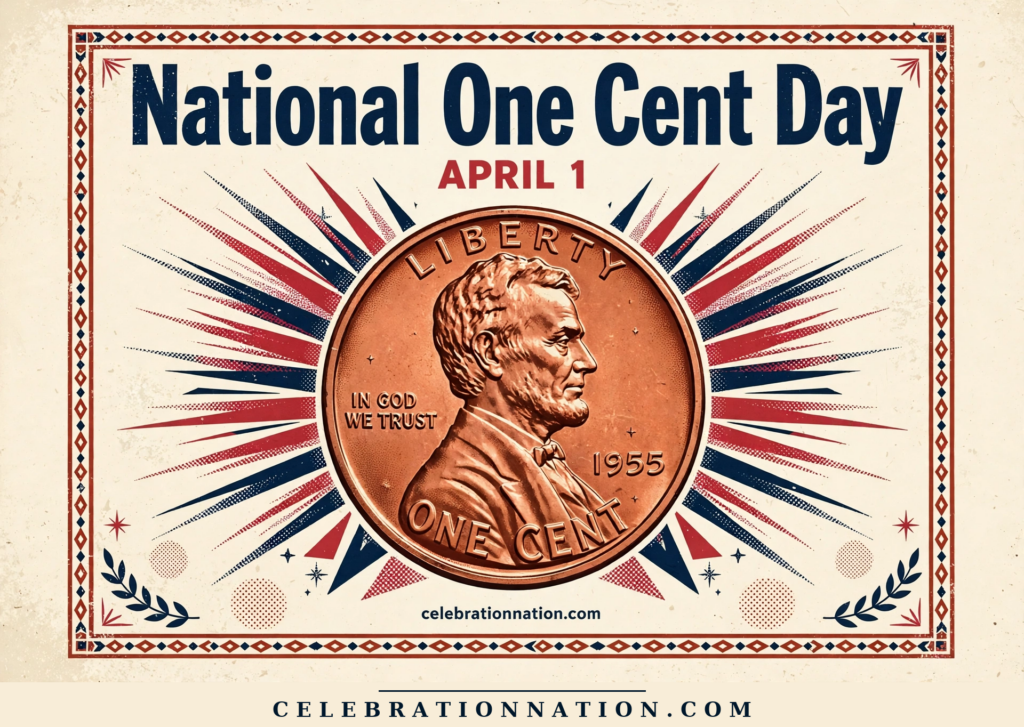
National One Cent Day
National One Cent Day is a plain-English invitation to get a little more comfortable with money.
- Roots
- Celebrating the one-cent coin
- Vibe
- Nostalgic and reflective on small change
- Also on Apr 1
- Take Down Tobacco National Day of Action · April Fools’ Day · ChildHelp National Day of Hope
- Hashtag
- #NationalOneCentDay
Ways to celebrate
Small, doable ways to celebrate National One Cent Day.
- Check one account balance you've been avoiding.
- Set one small automatic transfer to savings — any amount counts.
- Book a free 15-minute call with a credit union or financial counselor.
- Talk with a partner or family member about one clear money goal.
- Teach a kid how to read a receipt.
Make it your kind of celebration
Family
Talk about money openly, at your kids' level and your partner's level.
Kids
Give age-appropriate tasks for money: allowance, savings jars, small decisions.
Couples
Book a check-in about one real financial topic, no agenda-dodge.
Office
Share employer benefits, 401(k) education, or a lunch-and-learn.
School
Run a money-basics lesson — budgeting, saving, compound interest.
Community
Host or attend a local financial literacy workshop.
Just me
Do one thing you've been putting off — check the account, set the transfer, book the call.
Plan ahead
National One Cent Day is observed on April 1 every year. Here is where it lands for the next ten years, handy for planners, marketers and party people.
Fast facts
The story
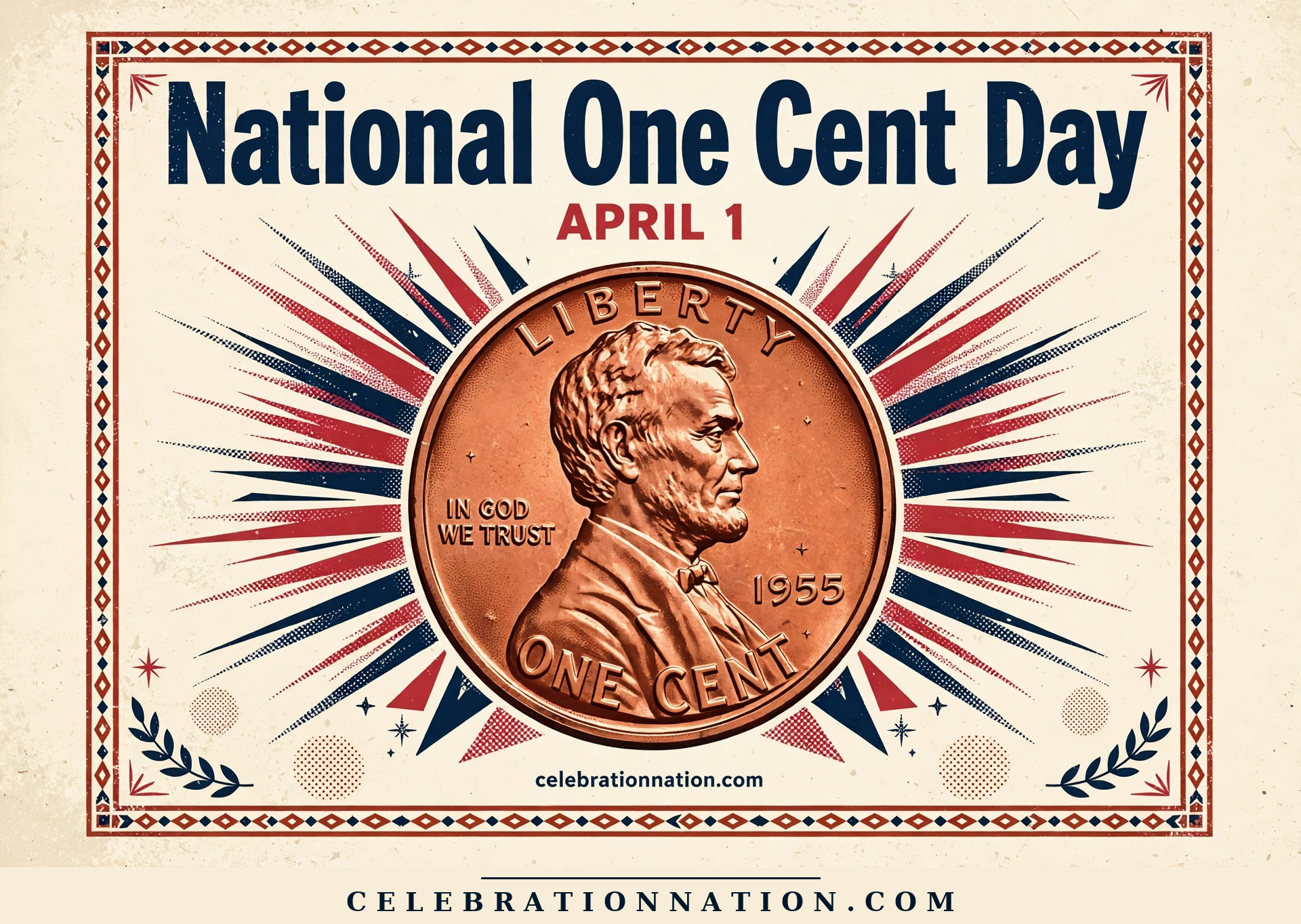
The penny, officially known as the one-cent coin, has been a staple of American currency since 1793. Originally made from pure copper, the penny has undergone various changes in composition and design throughout its storied history. Its current design features the profile of Abraham Lincoln, created by sculptor Victor David Brenner in 1909 to honor the 100th anniversary of Lincoln's birth. Today, the penny often elicits mixed feelings, as some see it as a relic of the past while others appreciate its sentimental value.
Read the full story
In a world increasingly dominated by digital transactions, the relevance of the penny has come into question. Some argue for its abolition, citing the rising costs of production and the inconvenience of carrying coins. Yet, for many, the penny remains a symbol of thriftiness and nostalgia. It represents the idea that every little bit counts, whether you’re saving for a big purchase or simply enjoying the thrill of finding loose change in your couch cushions.
National One Cent Day was established to honor the humble penny and its role in American history. On this day, individuals and families are encouraged to reflect on their own penny-related stories. From childhood memories of saving pennies to the excitement of finding a rare coin, National One Cent Day provides an opportunity for connection and storytelling. It's a chance to educate younger generations about the significance of small denominations in our economy.
Celebrating National One Cent Day can be as simple as starting a penny jar or organizing a penny-themed scavenger hunt. Community events, school projects, and charitable initiatives can also highlight the importance of small change. As we commemorate this quirky holiday, let us embrace the idea that even the smallest contributions can lead to significant impacts, both in our wallets and in our communities.
Did you know?
Rarity of the 1943 Penny
The 1943 copper penny can be worth thousands.
Penny Lane
The famous Beatles song references a real street in Liverpool.
Penny Collecting
Coin collecting is one of the most popular hobbies in America.
Penny Production
The U.S. Mint produces about 1 billion pennies each year.
Historical Value
Some historical pennies are prized by collectors.
Penny for Your Thoughts
This phrase emphasizes the penny's traditional value.
The Penny's Future
Debates continue on whether to keep or eliminate the penny.
Around the world
Every culture celebrates a little differently.
- USUnited StatesHome of the penny and its rich history.
- CACanadaOnce had its own penny, discontinued in 2012.
- GBUnited KingdomThe British penny dates back to the Anglo-Saxon period.
- AUAustraliaFormerly had a one-cent coin, discontinued in 1992.
- INIndiaFeatures a one-paisa coin, reflecting similar values.
- NZNew ZealandAbolished its one-cent and two-cent coins in 1990.
Keep the party going
See the calendar
Celebrate every day, all year
Official gear from the people who track 1,700+ celebrations.
Browse the shop 2027 Wall + Desk Calendar BundleCelebrate every day at home and at work.
Never miss a reason to celebrate.
One quick morning email with today's celebrations, ideas and posters. Free, unsubscribe anytime.
🎉 You're on the list! Watch your inbox for The Daily Confetti.