


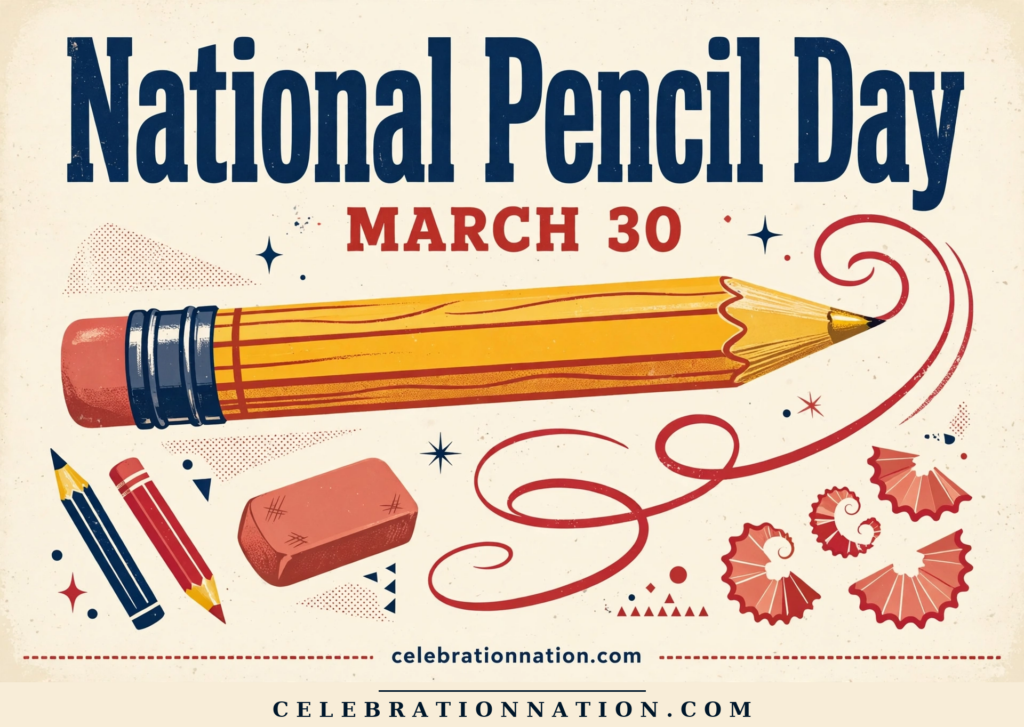
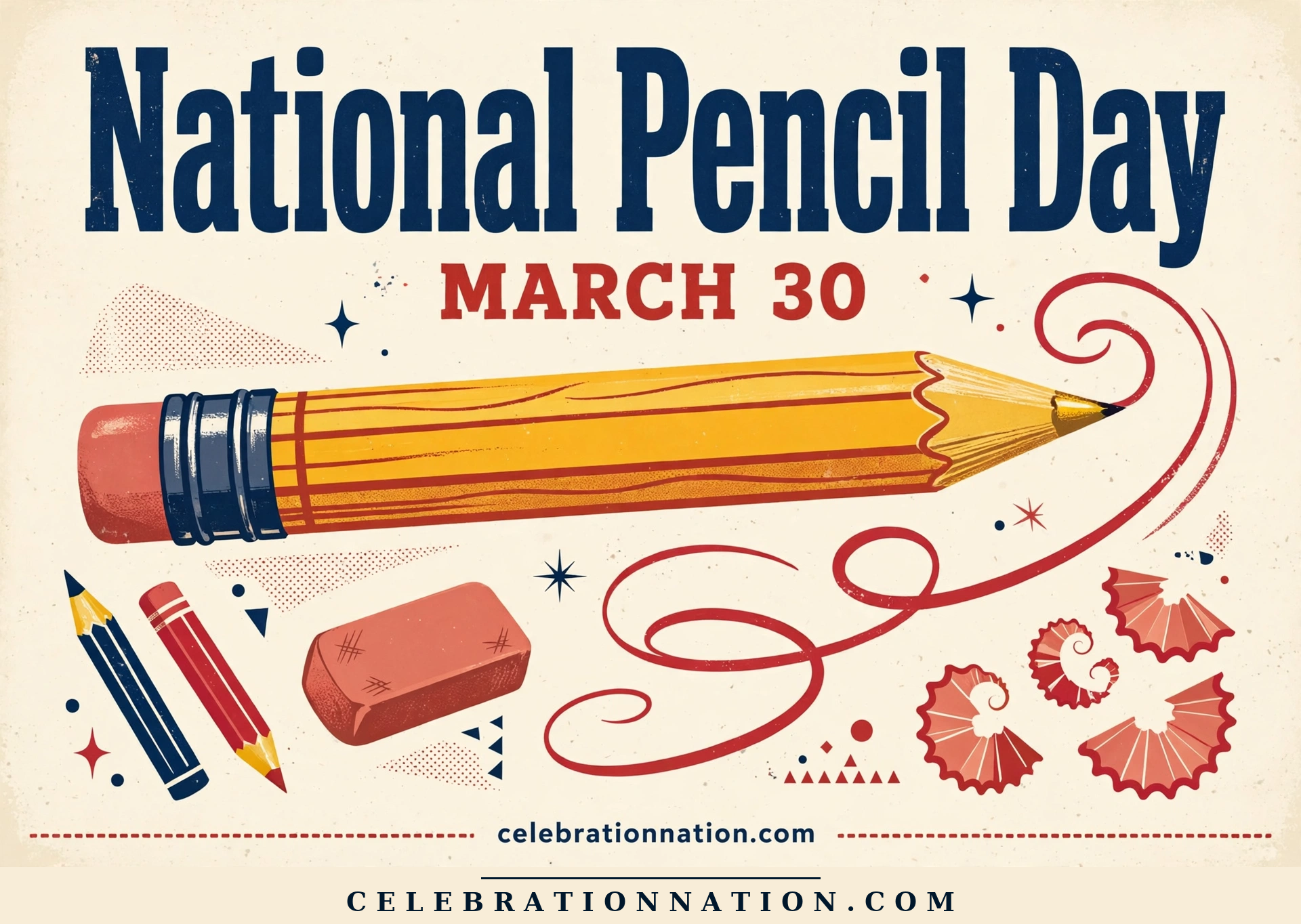
National Pencil Day
Celebrate the humble pencil, an icon of creativity that has shaped our communication.
- Roots
- March 30 marks Hymen Lipman's 1858 patent for the eraser-tipped pencil
- Vibe
- A celebration of creativity and expression
- Also on Mar 30
- Virtual Vacation Day · World Bipolar Day · Doctors Day
- Hashtag
- #NationalPencilDay
3 ways to celebrate
Sketch something
Grab a pencil and draw whatever is in front of you.
Draw each other
Do quick pencil portraits of friends and laugh at the results.
Pencil swap
Trade fun pencils with coworkers and doodle through meetings.
Plan ahead
National Pencil Day is observed on March 30 every year. Here is where it lands for the next ten years, handy for planners, marketers and party people.
Fast facts
The story
The pencil, a simple yet profound invention, has been a staple of education and creativity since its inception in the 16th century. Originally crafted from wood and graphite, the pencil’s design has evolved significantly, yet its core function remains unchanged, allowing humanity to express thoughts, ideas, and creativity on paper. National Pencil Day, celebrated on March 30, honors this essential tool and Hymen Lipman's March 30, 1858 patent for the eraser-tipped pencil.
Read the full story
In America, the pencil has played a key role in the educational system, becoming synonymous with learning and artistic expression. From the classic yellow No. 2 pencil, favored by students during standardized testing, to the vibrant colored pencils used by artists, this tool has transcended generations. Notably, the iconic Ticonderoga pencil has been a favorite since the late 19th century, representing quality and reliability in writing instruments.
Globally, the use of pencils is widespread, with variations found in many cultures. In Japan, for instance, the tradition of high-quality pencil craftsmanship has led to the creation of some of the world's finest writing tools. The Japanese pencil industry emphasizes precision and artistry, elevating the pencil beyond a mere writing tool to a craft that embodies culture and heritage.
On National Pencil Day, individuals are encouraged to reflect on the pencil's impact on their lives. Whether it’s through doodling, drafting, or journaling, pencils have continuously inspired creativity and innovation. So, gather your favorite pencils and take a moment to appreciate the beauty of writing by hand, an art form that remains timeless.
Did you know?
Pencil vs. Pen
Pencils can be erased, while ink pens are permanent.
Oldest Pencil
Hymen Lipman patented the eraser-tipped pencil on March 30, 1858.
Pencil Production
Faber-Castell is one of the world's largest pencil manufacturers.
Graphite Discovery
Graphite was discovered in Borrowdale, England.
Types of Pencils
There are various types: graphite, colored, and mechanical.
Pencil Length
A standard pencil is about 7.5 inches long.
Pencil Art
Some famous artists use pencils exclusively for their work.
Around the world
Every culture celebrates a little differently.
- USNorth AmericaPencils are a staple in American schools.
- GBEuropeThe modern pencil originated in Europe.
- JPAsiaJapan is known for its high-quality pencils.
- BRSouth AmericaPencil production is significant in Brazil.
- AUAustraliaPencils are widely used in Australian classrooms.
- ZAAfricaPencils are essential tools for education across Africa.
Keep the party going
See the calendar
Celebrate every day, all year
Official gear from the people who track 1,700+ celebrations.
Browse the shop 2027 National Day Wall CalendarGet the 2026 edition free. 1,700+ observances.
Never miss a reason to celebrate.
One quick morning email with today's celebrations, ideas and posters. Free, unsubscribe anytime.
🎉 You're on the list! Watch your inbox for The Daily Confetti.