





National Pet ID Week
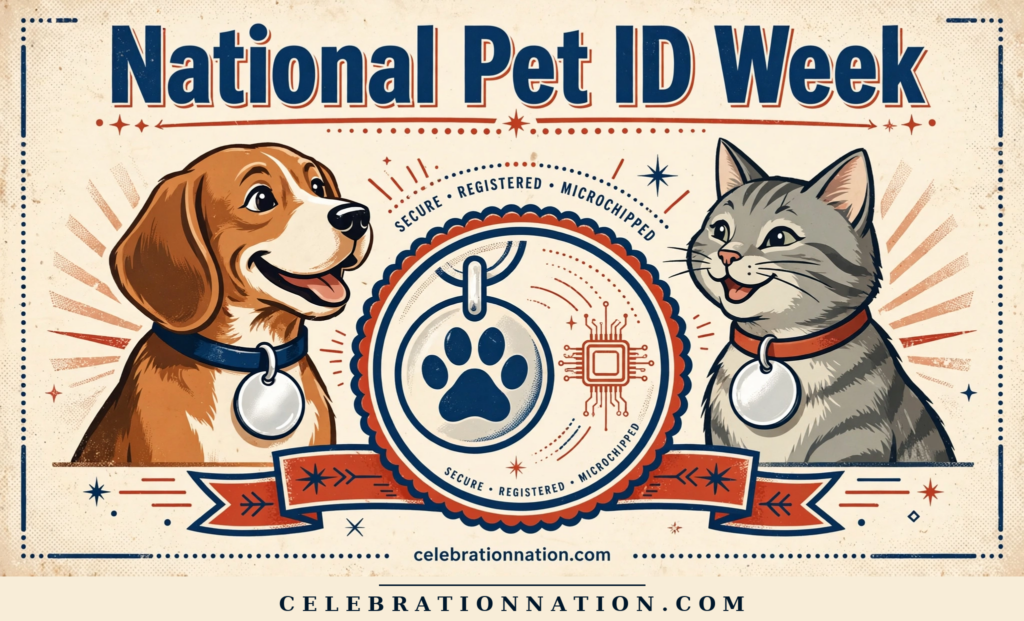
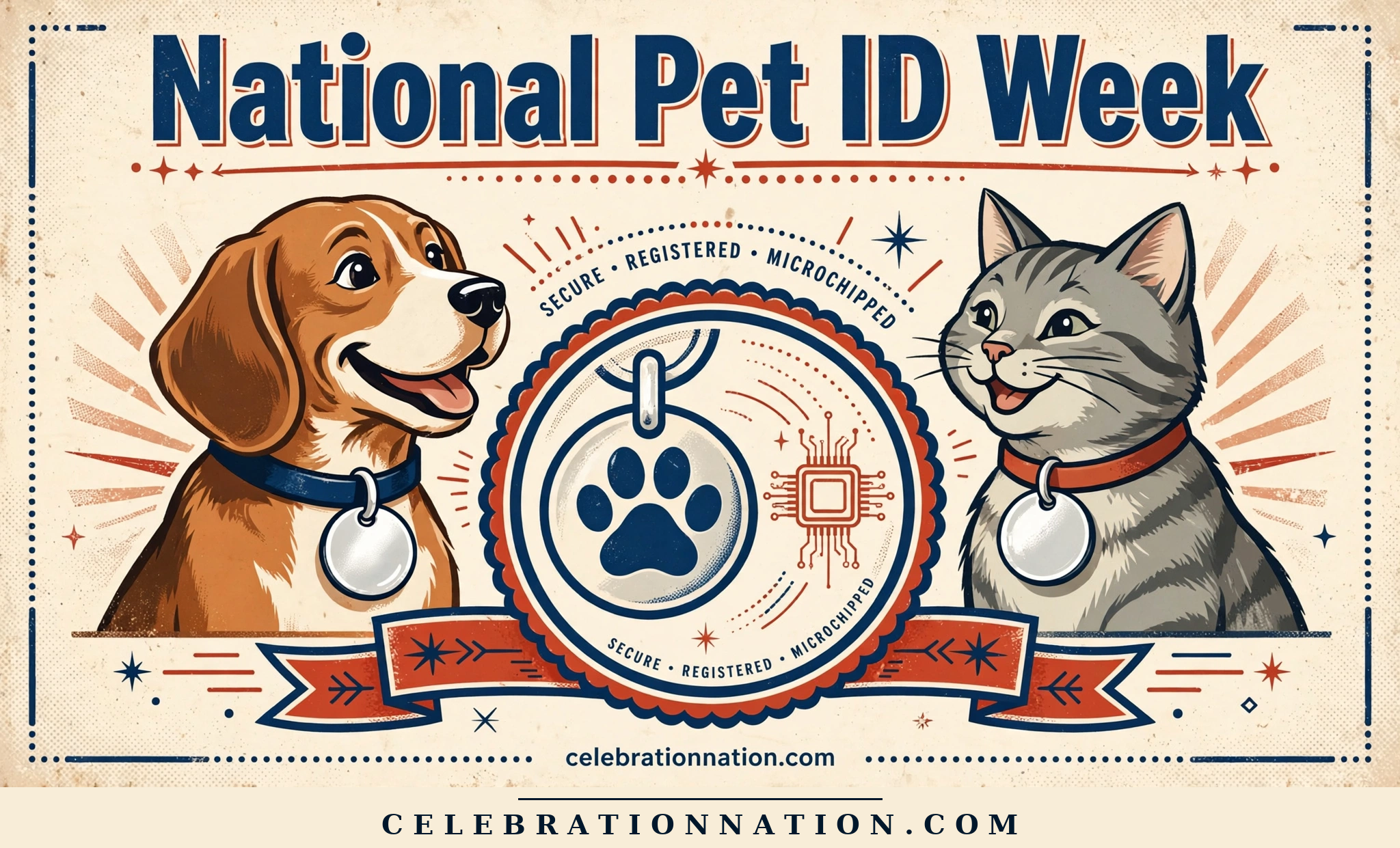
National Pet ID Week shines a light on an animal that deserves more of our attention and a lot more of our care.
- Roots
- Started in 1996 by the American Humane Association
- Vibe
- Community-focused and responsible pet ownership
- Hashtag
- #NationalPetIDWeek
Ways to celebrate
Small, doable ways to celebrate National Pet ID Week.
- Learn something specific about the species — one surprising fact.
- Donate to an organization doing real work for them.
- Choose one product at the store with the animal's welfare in mind.
- Share what you learn with a kid who'll care.
- Spend 10 minutes outside looking for them or their tracks.
Fast facts
The story
National Pet ID Week serves as a reminder for pet owners nationwide to prioritize their animals' safety and identification. Established in 1996 by the American Humane Association, this observance encourages responsible pet ownership through proper identification methods. In 2023, the week falls between April 16 and April 22, offering a timely opportunity for pet owners to evaluate their current pet ID measures and make improvements where necessary.
Read the full story
One of the most effective ways to ensure pets are easily identifiable is through microchipping. A small chip, no larger than a grain of rice, is implanted under the pet's skin and contains a unique ID number. When scanned, this number links to the owner's contact information in a database. Statistics show that microchipped pets are 20 times more likely to be returned home compared to those without any form of identification.
In addition to microchipping, traditional ID tags remain an essential tool for pet owners. These tags should include the pet's name, the owner's phone number, and any relevant medical information. Regularly updating this information, especially after moving or changing phone numbers, ensures that lost pets can be quickly identified and returned home. Taking clear photographs of pets can also aid in identification efforts if they go missing.
National Pet ID Week is not just about individual pets; it’s about fostering a sense of community around the shared responsibility of pet ownership. Local shelters and organizations often host events to promote awareness, offering low-cost or free microchipping services. Pet owners are encouraged to participate, ensuring that their beloved companions are easily identifiable and safe.
Worth knowing
Microchipping Benefits
Microchipped pets have a greater chance of being reunited.
Take a Good Photo
Clear images are crucial for identification.
Update Information
Keep your pet's ID tags current.
Community Events
Join local initiatives for pet safety.
Did you know?
Pet ID History
The first pet ID tags date back to the 1890s.
Microchip Stats
Over 90% of pet owners support microchipping.
Lost Pet Rates
Approximately 10 million pets are lost every year.
ID Tag Lifespan
ID tags should be replaced every few years.
Pet Safety Laws
Some states require pets to be microchipped.
Pet Owner Responsibility
Over 50% of lost pets are never reunited.
Technology Advances
Newer microchips offer GPS tracking capabilities.
Around the world
Every culture celebrates a little differently.
- USUnited StatesNational observance emphasizing pet safety.
- CACanadaRaising awareness about pet identification.
- GBUnited KingdomPromoting responsible pet ownership.
- AUAustraliaEncouraging microchipping and ID tags.
- DEGermanyCommunity events for pet safety.
- NZNew ZealandFocus on reuniting lost pets with owners.
Coming up next
See the calendar


Celebrate every day, all year
Official gear from the people who track 1,700+ celebrations.
Browse the shop 2027 National Day Wall CalendarGet the 2026 edition free. 1,700+ observances.
Never miss a reason to celebrate.
One quick morning email with today's celebrations, ideas and posters. Free, unsubscribe anytime.
🎉 You're on the list! Watch your inbox for The Daily Confetti.