



National Physician Assistant Week
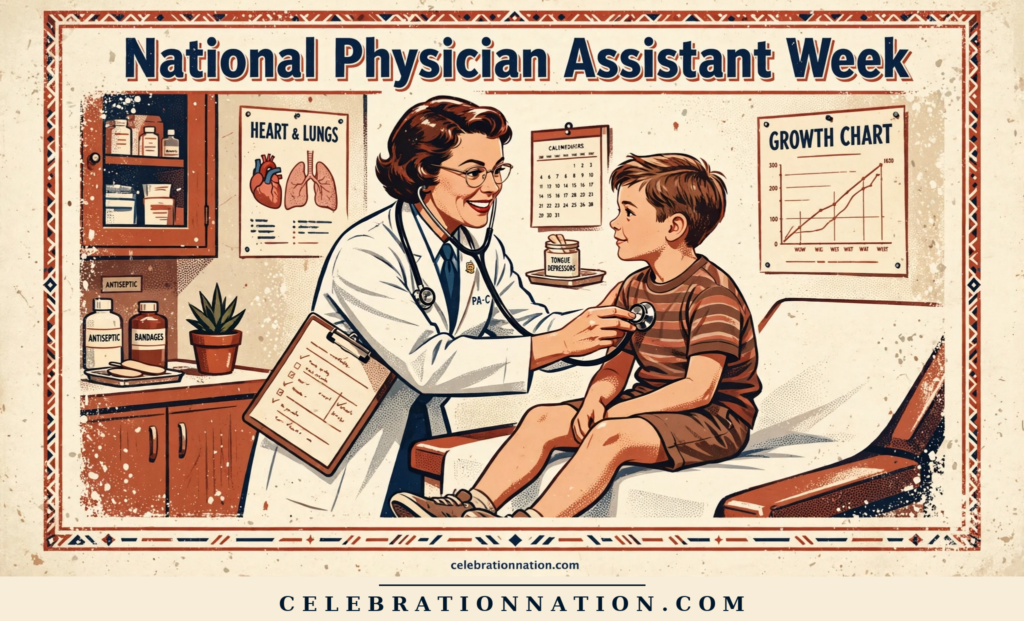
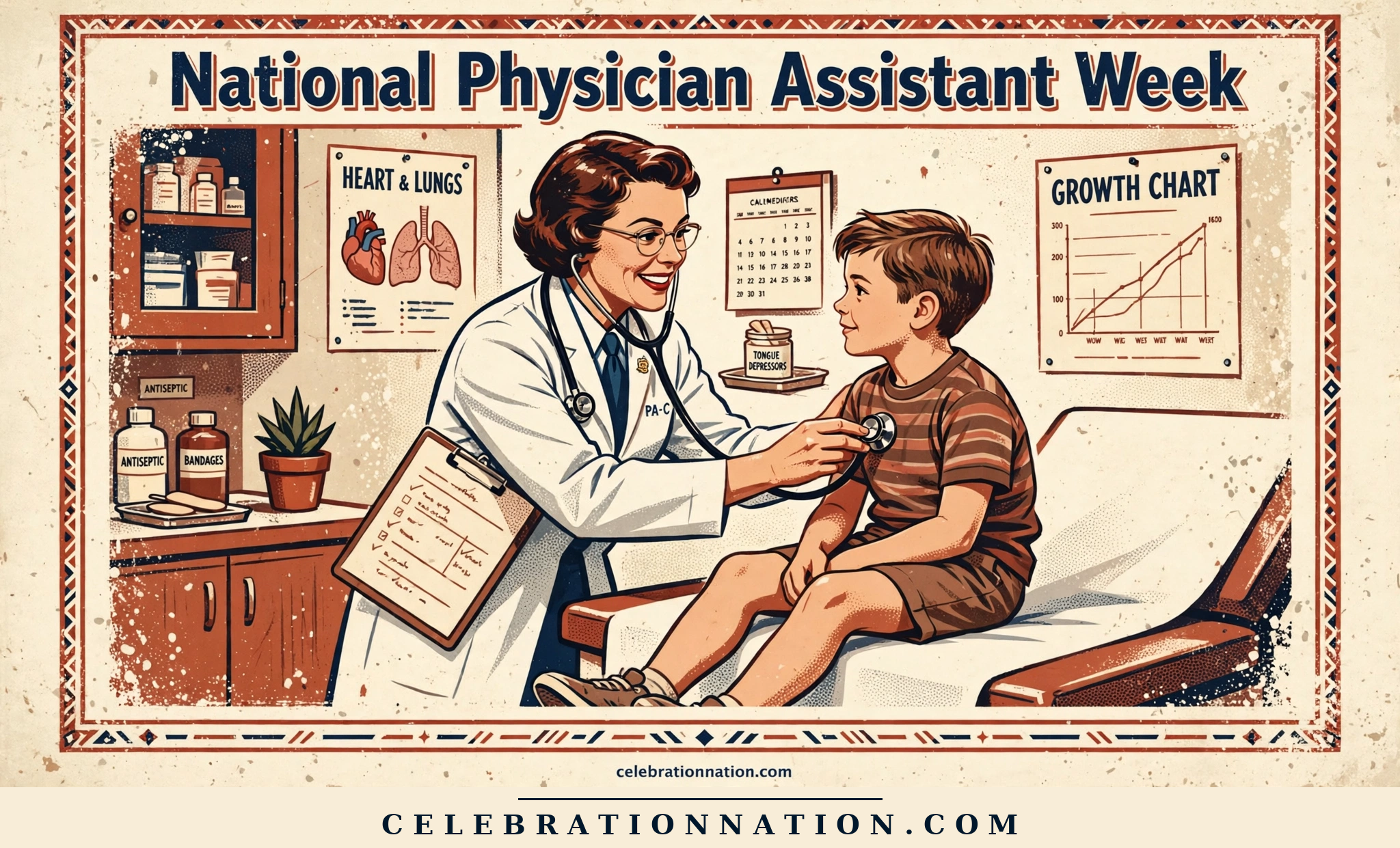
This week, we honor PAs, essential healthcare providers who enhance patient care across communities.
- Roots
- Established in 1987 by the American Academy of Physician Assistants
- Vibe
- Celebrating teamwork in healthcare
- Hashtag
- #NationalPhysicianAssistantWeek
Fast facts
The story
National Physician Assistant Week is a time to acknowledge the integral contributions of physician assistants to the healthcare system. Established in 1987 by the American Academy of Physician Assistants, this week-long celebration highlights the diverse roles PAs play in patient care, often serving as the first point of contact in medical settings. From primary care to emergency medicine, PAs have become an essential component of healthcare teams across the United States.
Read the full story
PAs are trained to perform a variety of tasks including diagnosing illnesses, developing treatment plans, and assisting in surgeries. Their training typically includes a master's degree from an accredited PA program, followed by clinical rotations in various medical specialties. The flexibility and adaptability of PAs allow them to work in diverse environments, from urban hospitals to rural clinics, ensuring that quality healthcare is accessible to all populations.
The demand for PAs is growing, with the Bureau of Labor Statistics projecting employment for PAs to increase by 31% from 2020 to 2030. This surge can be attributed to a growing healthcare workforce need, especially in light of an aging population and the increasing complexity of medical care. As healthcare systems continue to evolve, PAs are stepping up to fill gaps, providing comprehensive care and improving health outcomes for communities.
During National Physician Assistant Week, various events and activities take place across the country, including educational sessions, community outreach, and social media campaigns. These efforts not only promote the PA profession but also foster a greater understanding of their role in healthcare. As we celebrate the dedication and expertise of physician assistants, let us also advocate for their continued recognition and support in the medical field.
Worth knowing
What is a PA?
A PA is a licensed medical professional who practices medicine under the supervision of physicians.
PAs in Action
PAs work in various healthcare settings, improving patient access and care.
Celebrating Contributions
PAs enhance team-based care and address healthcare disparities.
Educate Others
Share information about the PA profession and its importance.
Did you know?
First PA Program
The first PA program was established at Duke University in 1965.
Diverse Roles
PAs can specialize in areas like surgery, pediatrics, and dermatology.
Team Players
PAs collaborate closely with physicians and other healthcare providers.
Annual Salary
The median annual salary for PAs is approximately $115,000.
National Exam
PAs must pass the Physician Assistant National Certifying Exam (PANCE).
Continuing Education
PAs are required to complete 100 hours of continuing education every two years.
Global Reach
The PA model is being adopted in various countries worldwide.
Around the world
Every culture celebrates a little differently.
- USUnited StatesHome to over 140,000 practicing physician assistants.
- CACanadaPAs are gaining recognition and expanding their roles.
- GBUnited KingdomPAs are emerging in healthcare, enhancing patient care.
- AUAustraliaPAs are being introduced to improve healthcare access.
- DEGermanyPAs are part of a growing trend in team-based healthcare.
- NZNew ZealandPAs are being integrated into the healthcare system.
Coming up next
See the calendar

Celebrate every day, all year
Official gear from the people who track 1,700+ celebrations.
Browse the shop National Day Celebration Card GameA party in a box, any day of the year.
Never miss a reason to celebrate.
One quick morning email with today's celebrations, ideas and posters. Free, unsubscribe anytime.
🎉 You're on the list! Watch your inbox for The Daily Confetti.