
National Picnic Day
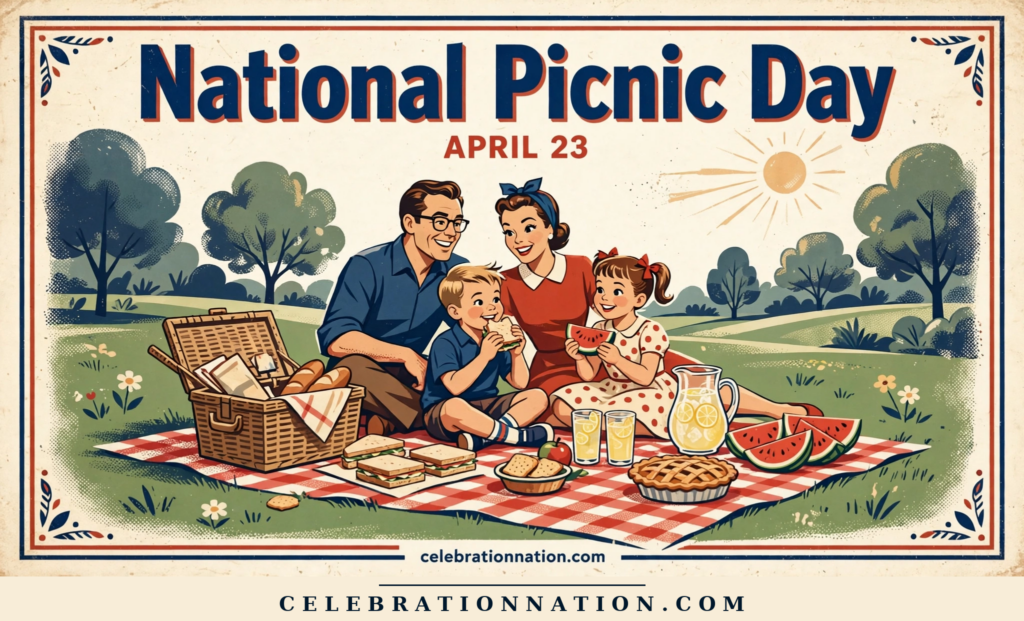
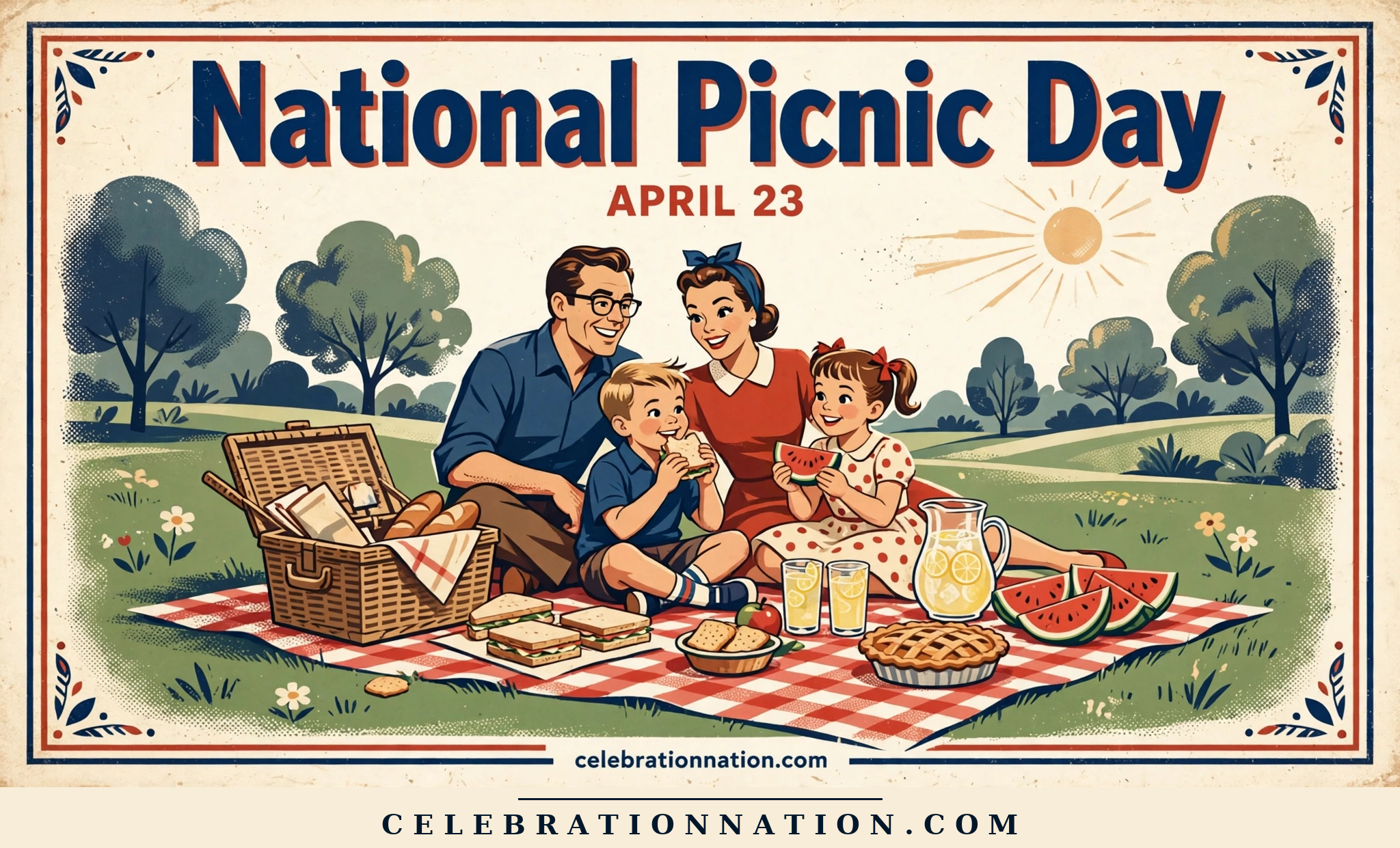
National Picnic Day on April 23 marks the unofficial start of American outdoor dining season — the blanket on the grass, the basket of sandwiches, the lemonade, the quiet bliss of eating under a tree. The picnic is one of humanity's oldest meals, reinvented for every era, from medieval hunting feasts to Manet's controversial 'Déjeuner sur l'herbe' to Instagram-ready charcuterie boards.
- Vibe
- Simple & Sun-Soaked
- Also on Apr 23
- International Pixel-Stained Technopeasant · World Laboratory Day · English Language Day
- Hashtag
- #NationalPicnicDay
Ways to celebrate
Pack, spread, enjoy:
- 🧺 Classic picnic basket. Sandwiches (turkey, ham, egg salad), fresh fruit, cookies, lemonade or iced tea, a checkered blanket. The platonic American picnic.
- 🍷 French-style elevated picnic. Baguette, good cheese, charcuterie, pâté, red wine, grapes. Sophisticated alternative.
- 🥗 Modern picnic board. Charcuterie board travel edition — cheese, meats, olives, crackers, nuts, dried fruit. Instagrammable.
- 🌳 Central Park style. Pack a sandwich; head to the closest public park. Just sitting on grass counts.
- 🎨 Paint your picnic. Bring sketchbook or watercolors. Picnics have been an artist's subject for 160+ years. Join the tradition.
Make it your kind of celebration
Family
The classic family picnic: sandwiches, chips, cookies, lemonade, a frisbee. Find a local park with a good shade tree.
Kids
Kids love picnic foods — simple finger foods, not-too-much-cleanup-needed. Fruit skewers, cheese cubes, crackers. Bring a ball.
Couples
Romantic picnic: baguette, brie, berries, wine, and a park-with-a-view. Dress a little nicer than normal park-going.
Office
Team picnic in a nearby park — brown-bag lunches together outdoors, or cater a picnic spread. Low-key team-building.
School
End-of-year classroom picnics. A school-yard tradition that's simple, cheap, and memorable.
Community
Many town parks host Community Picnic Days throughout April and May. Check your Parks & Rec calendar.
Just me
A solo book-and-picnic-for-one afternoon is genuinely restorative. Sandwich, a good novel, a shady bench.
Plan ahead
National Picnic Day is observed on April 23 every year. Here is where it lands for the next ten years, handy for planners, marketers and party people.
Fast facts
The story
The word 'picnic' comes from the French 'pique-nique,' first recorded in 1692. In its original French meaning, a 'pique-nique' was a fashionable indoor dinner where each guest brought a dish or contributed money, a potluck, not a park picnic. The social concept was: each person 'piques' (picks) something; 'nique' is a trifling or small amount. The word was eventually borrowed into English in the 1700s with the same potluck meaning.
Read the full story
The outdoor-park picnic as we know it is a Victorian-era English invention. In the 1850s, after the Great Exhibition of 1851, middle-class British families began taking portable meals to public parks on Sundays. This was a democratization of the aristocratic 'hunt picnic' tradition, where after a morning's fox hunting, hunters would eat an outdoor feast on the grass. Mrs. Beeton's famous 1861 cookbook included detailed picnic menus: cold roast chicken, pork pies, salads, cakes, fruit. The Victorian picnic industry (baskets, hampers, portable silver) was born.
Edouard Manet's 1863 painting "Le Déjeuner sur l'herbe" ("The Luncheon on the Grass") revolutionized the visual tradition of picnics. The painting shows two fully-clothed men in a Parisian park with a completely nude woman, scandalizing the 1863 Paris Salon. The painting was rejected from the Salon and displayed in the "Salon des Refusés," where it became a foundational work of Impressionism and Modern art. The image cemented the park-picnic as a subject worthy of serious artists. Cézanne, Picasso, and Renoir all painted their own versions.
American picnic culture evolved through the 20th century. Frederick Law Olmsted, designer of Central Park (1857) and dozens of other American parks, explicitly planned picnic meadows into his designs. The invention of the thermos (1904), pressed-linen picnic basket (1910s), and Tupperware (1946) made portable dining easier. The post-WWII suburban boom added backyard cookouts, state-park day-trips, and the classic American Sunday picnic. The 21st-century renaissance of charcuterie boards, craft lemonade, and Instagram-ready picnics has elevated the humble outdoor meal into an aesthetic event.
Each with its own regional character:
Global variations on the outdoor meal:
Did you know?
Central Park was designed for picnicking.
Frederick Law Olmsted's 1858 plan for Central Park explicitly included 'meadows' for family picnicking. The Sheep Meadow and Great Lawn remain the country's most iconic picnic venues, hosting hundreds of thousands each summer.
Picnic basket design has a 300-year history.
The wicker hamper, iconic American picnic basket shape, was designed by English basket-makers in the 1700s. The shape is optimized for carrying liquid-tight containers and blocking insects. Still unchanged.
Picnics have legal status in national parks.
US National Parks have formal 'picnic areas' with tables, grills, shelters. These are free to use. Yellowstone, Yosemite, Grand Canyon all have dozens. Part of Olmsted's parks-for-the-people legacy.
Mary Shelley wrote 'Frankenstein' on a picnic.
Mary Shelley conceived 'Frankenstein' during a rainy June 1816 lake-country picnic with Percy Shelley and Lord Byron. 'The year without a summer', a volcanic-caused gloomy season, provided the mood that produced the Gothic classic.
Keep the party going
See the calendar
Celebrate every day, all year
Official gear from the people who track 1,700+ celebrations.
Browse the shop 2027 Wall Calendar, signed by Marlo AndersonSigned by the founder of National Day Calendar.
Never miss a reason to celebrate.
One quick morning email with today's celebrations, ideas and posters. Free, unsubscribe anytime.
🎉 You're on the list! Watch your inbox for The Daily Confetti.