


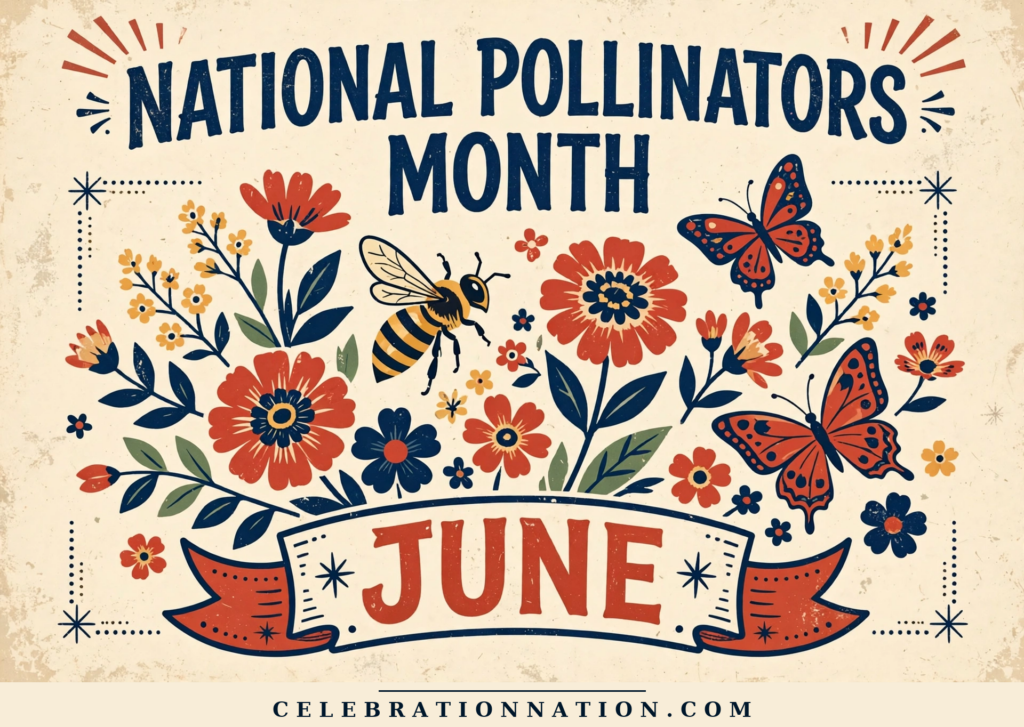
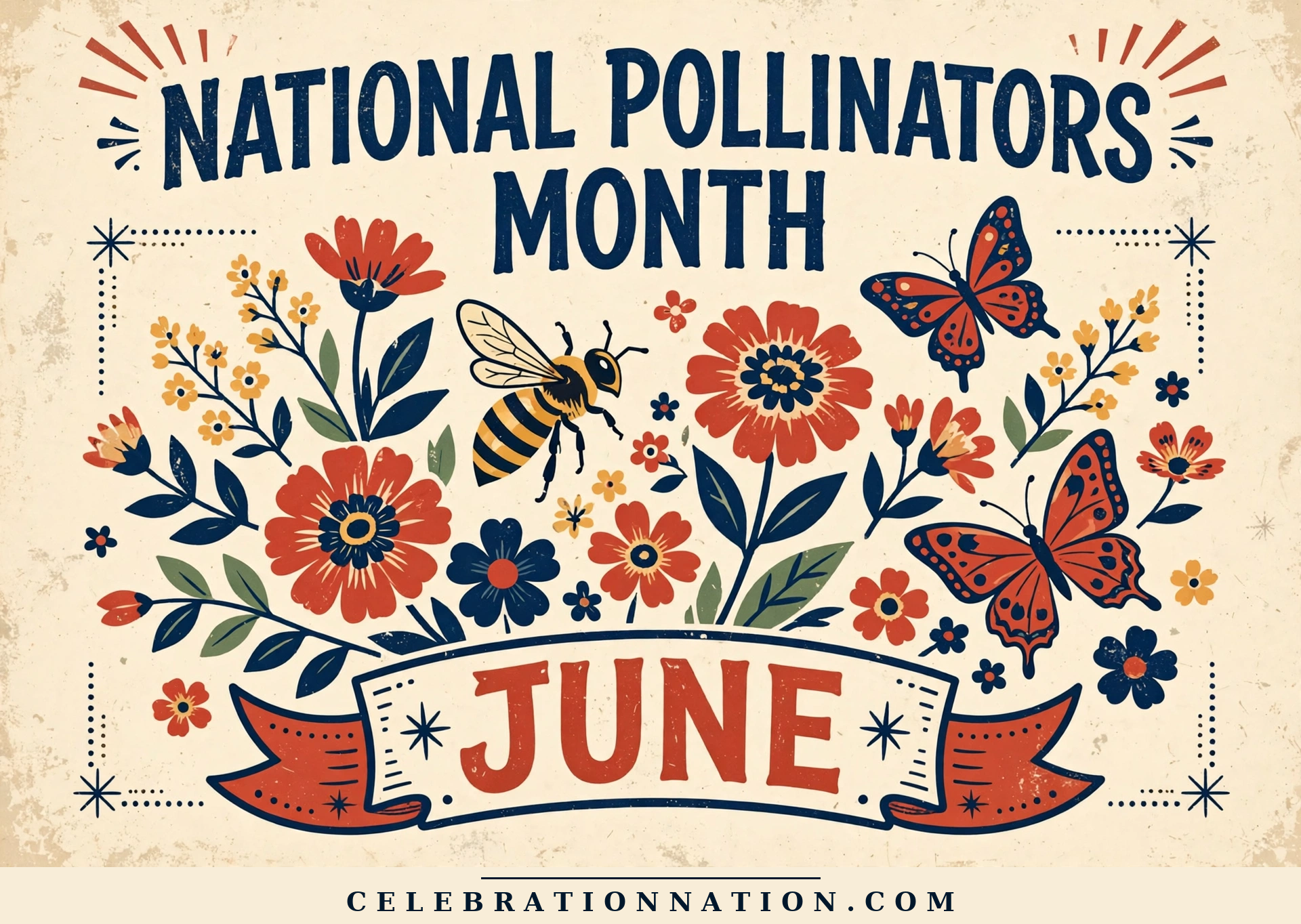
National Pollinators Month
Celebrate the beauty of nature with a focus on pollinators this June.
- Roots
- Initiated by the National Wildlife Federation
- Vibe
- A time to nurture and protect our environment.
- Hashtag
- #NationalPollinatorsMonth
Fast facts
The story
Pollinators play an essential role in sustaining our food systems and maintaining biodiversity. National Pollinators Month, initiated by the National Wildlife Federation, highlights the significance of these creatures, from bees and butterflies to birds and bats. Pollinators contribute to the production of fruits, vegetables, and nuts, making up about one-third of the U.S. diet. As we observe this month, we are reminded of the interconnectedness of nature and the importance of preserving these vital species.
Read the full story
In recent years, research has warned of alarming declines in pollinator populations. Honeybees, a key species for pollination, have seen a significant drop in numbers, primarily due to habitat loss, pesticides, and climate change. This decline threatens not only the agricultural industry but also the delicate balance of ecosystems that rely on these industrious insects. Awareness efforts during National Pollinators Month aim to educate the public on these challenges.
Across the United States, communities are coming together to celebrate National Pollinators Month with various initiatives. Events like guided nature walks, educational workshops, and local gardening clubs are springing up to promote pollinator-friendly practices. Additionally, schools are incorporating pollinator education into their curriculums, teaching the next generation about the importance of protecting these species. Each action taken helps to foster a greater awareness of our environment.
As we celebrate this month, individuals are encouraged to make simple changes that can have a significant impact. Planting native flowers, reducing pesticide use, and supporting local farms can contribute to a healthier ecosystem. Together, we can create a world where pollinators thrive, ensuring the continuation of food production and biodiversity for generations to come.
Worth knowing
Bees Matter
Bees are responsible for pollinating 70 of the top 100 crops.
Butterfly Benefits
Butterflies are critical for flower reproduction.
Plant Native
Native plants attract local pollinators.
Global Impact
Pollinators support ecosystems worldwide.
Did you know?
Did you know?
Pollinators are responsible for 1 of every 3 bites of food we take.
Fun Fact
Bees communicate through dance to share information.
Pollinator Species
There are over 20,000 known species of bees.
Cultural Impact
Pollinators are celebrated in various cultures around the world.
World Pollinator Day
World Bee Day is observed on May 20 to raise awareness.
Decline Causes
Habitat loss, pesticide use, and climate change threaten pollinators.
Pollinator Gardens
Creating gardens specifically for pollinators can improve biodiversity.
Around the world
Every culture celebrates a little differently.
- USNorth AmericaHome to diverse pollinators like honeybees and native butterflies.
- AUAustraliaUnique pollinators include native birds and various native bees.
- BRSouth AmericaRich in biodiversity, supporting many pollinator species.
- EUEuropeHome to the European honeybee and numerous wild pollinators.
- ZAAfricaSupports pollinators, particularly in agriculture like coffee and fruit.
- INAsiaHosts a variety of pollinators including butterflies and bats.
Coming up next
See the calendar
Celebrate every day, all year
Official gear from the people who track 1,700+ celebrations.
Browse the shop National Day Celebration Card GameA party in a box, any day of the year.
Never miss a reason to celebrate.
One quick morning email with today's celebrations, ideas and posters. Free, unsubscribe anytime.
🎉 You're on the list! Watch your inbox for The Daily Confetti.