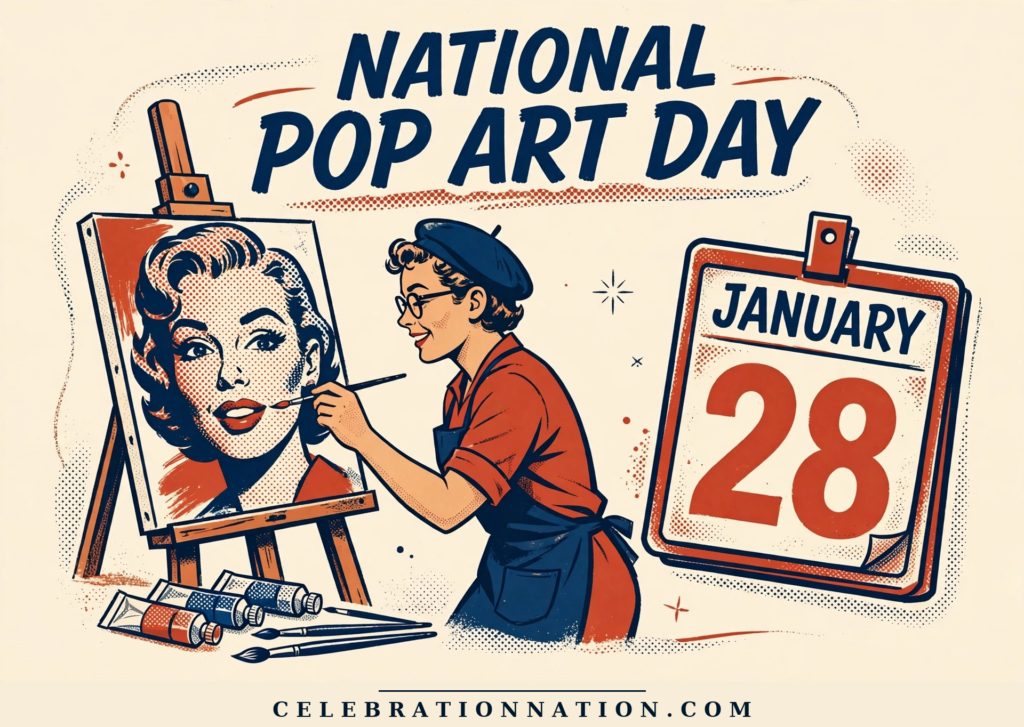
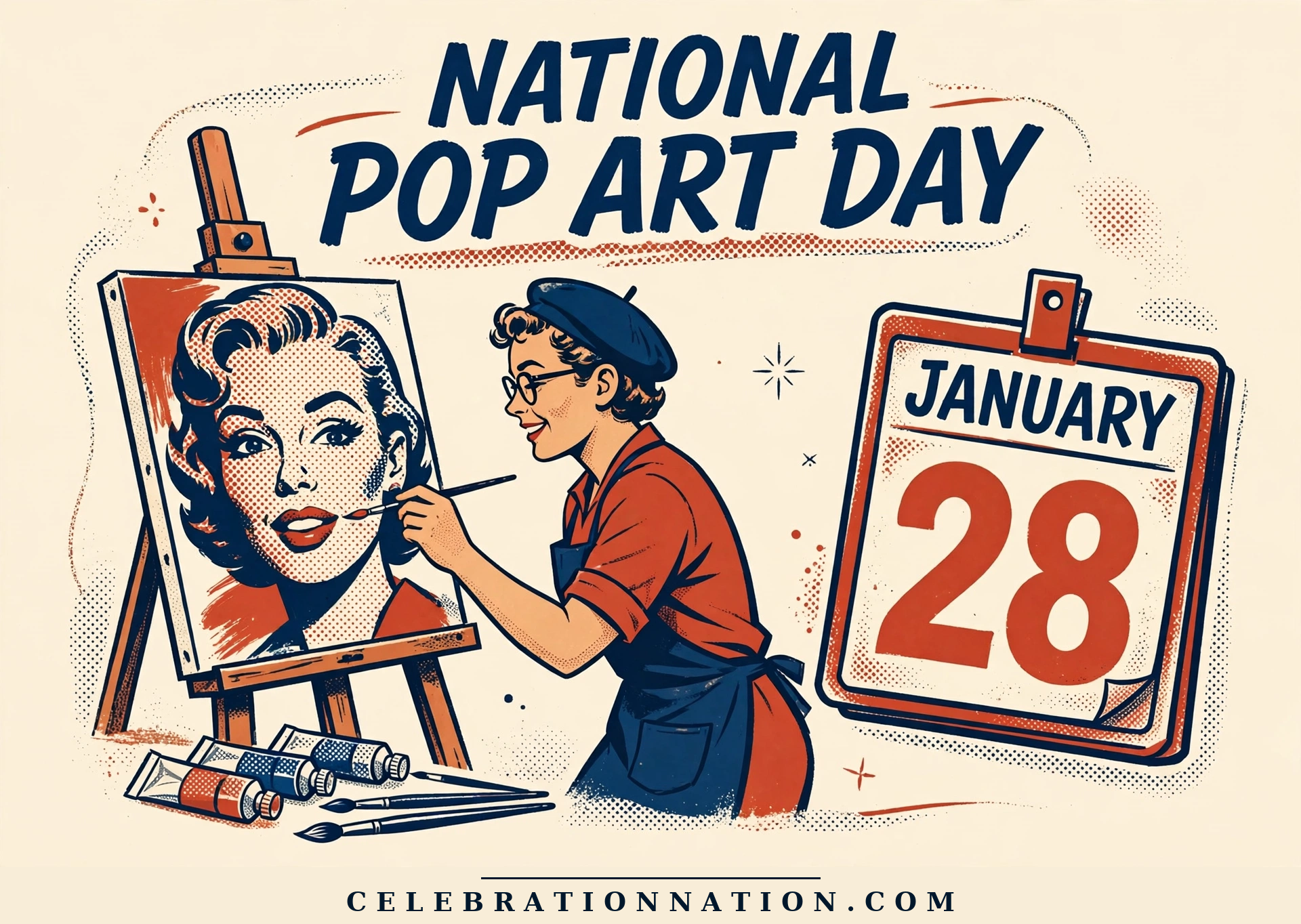
National Pop Art Day
Explore the vibrant world of pop art with a focus on creativity and expression.
- Roots
- 1950s United Kingdom and United States
- Vibe
- Bold, colorful, and accessible.
- Also on Jan 28
- Crossing Guard Day · Gift of the Ladybug Day · Kazoo Day
- Hashtag
- #NationalPopArtDay
3 ways to celebrate
Make a pop portrait
Turn a photo of yourself into bold, bright colors with an app or paint.
Paint like Warhol
Each person paints the same object in wild colors, then hang them in a row.
Color the break room
Print bold pop art posters and brighten up the office walls for the day.
Plan ahead
National Pop Art Day is observed on January 28 every year. Here is where it lands for the next ten years, handy for planners, marketers and party people.
Fast facts
The story
Pop art emerged in the 1950s as a reaction to the dominant artistic movements of the time, such as Abstract Expressionism. It sought to challenge traditional art forms by incorporating elements from popular culture, advertising, and mass media. Artists like Andy Warhol, Roy Lichtenstein, and Claes Oldenburg began to use imagery from commercial products and comic strips, creating works that were both accessible and thought-provoking. This movement not only redefined what art could be but also blurred the lines between high culture and low culture, inviting broader audiences to engage with art.
Read the full story
One of the defining characteristics of pop art is its vibrant use of color and bold graphic design. Warhol's repetitive use of imagery, such as his iconic Marilyn Monroe series, highlights the impact of consumerism and celebrity culture. Lichtenstein’s works, characterized by their comic book style, utilized Ben-Day dots and speech bubbles, transforming mundane scenes into captivating visual narratives. These artists, along with others, helped to elevate everyday objects to the status of fine art, encouraging viewers to reconsider the significance of the world around them.
National Pop Art Day, celebrated on January 28, serves as an opportunity for art lovers and newcomers alike to explore this dynamic movement. Communities across the United States host exhibitions, workshops, and discussions that delve into the history and significance of pop art. Social media platforms come alive with users sharing their favorite pop art pieces or creating their own interpretations, fostering a sense of connection and creativity among participants.
As the influence of pop art continues to thrive, its relevance in today’s society is undeniable. From fashion to digital media, elements of pop art are woven into the fabric of contemporary culture. National Pop Art Day invites everyone to embrace their inner artist, celebrate creativity, and reflect on how this vibrant movement has shaped artistic expression over the decades.
Did you know?
Did You Know?
Andy Warhol was also a filmmaker and music producer.
Fun Fact
Pop art often uses irony and humor in its designs.
Cultural Impact
Pop art has influenced fashion, advertising, and design.
Iconic Works
Lichtenstein's Drowning Girl is a pop art classic.
Art Meets Commerce
Warhol famously said, 'Making money is art.'
International Reach
Pop art has inspired movements worldwide, including Japan.
Art Education
Many schools now include pop art in their curriculums.
Around the world
Every culture celebrates a little differently.
- USUnited StatesHome to the origins of the pop art movement.
- GBUnited KingdomInfluenced by British artists like Richard Hamilton.
- AUAustraliaContemporary pop artists continue to thrive here.
- CACanadaCelebrates pop art through its vibrant art scene.
- FRFranceParis showcases numerous pop art exhibitions.
- ITItalyItalian pop artists blend tradition with modernity.
Keep the party going
See the calendar
Celebrate every day, all year
Official gear from the people who track 1,700+ celebrations.
Browse the shop National Day Celebration Card GameA party in a box, any day of the year.
Never miss a reason to celebrate.
One quick morning email with today's celebrations, ideas and posters. Free, unsubscribe anytime.
🎉 You're on the list! Watch your inbox for The Daily Confetti.