




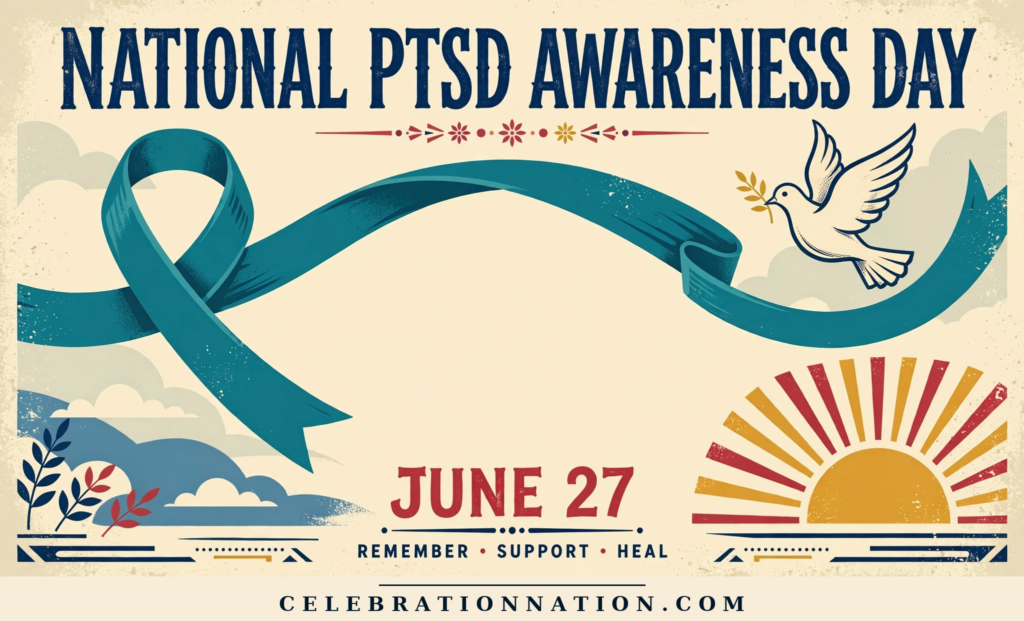
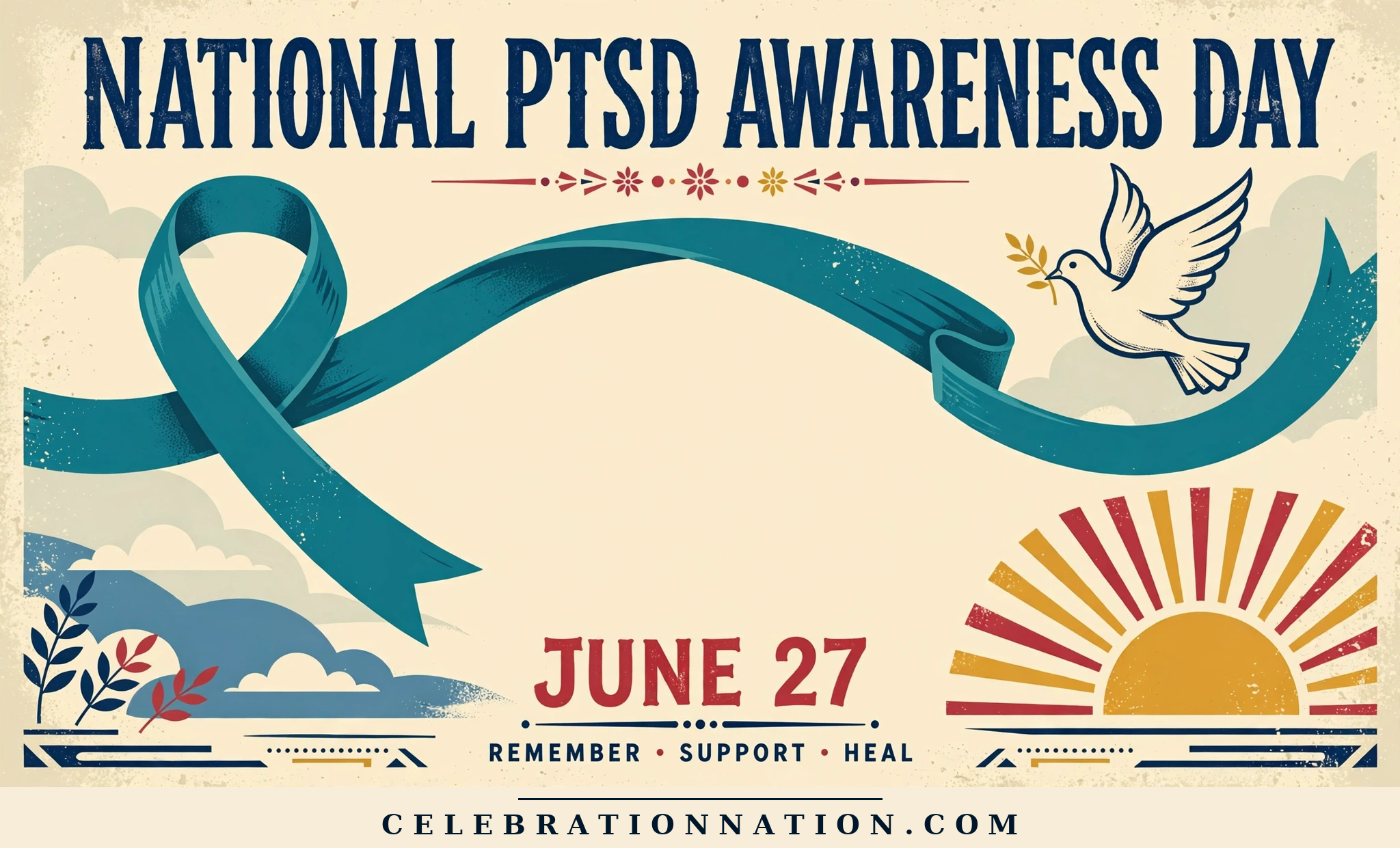
National PTSD Awareness Day
On National PTSD Awareness Day, we aim to bring light to the struggles of many.
- Roots
- Established by the U.S. Senate in 2010
- Vibe
- A day for awareness and healing
- Also on Jun 27
- Sunglasses Day · International Pineapple Day · International Ragweed Day
- Hashtag
- #NationalPTSDAwarenessDay
3 ways to celebrate
Learn the signs
Read about PTSD symptoms and how to support someone.
Check in gently
Reach out to a friend who may be struggling.
Share support resources
Post crisis lines and counseling options for anyone in need.
Plan ahead
National PTSD Awareness Day is observed on June 27 every year. Here is where it lands for the next ten years, handy for planners, marketers and party people.
Fast facts
The story
Post-traumatic stress disorder (PTSD) is a mental health condition triggered by a traumatic event, leading to severe anxiety, flashbacks, and uncontrollable thoughts. While it can affect anyone who has experienced trauma, those in high-stress professions, such as military personnel, first responders, and survivors of violence, are particularly vulnerable. National PTSD Awareness Day on June 27 serves as an opportunity to educate the public about this often-misunderstood condition, shedding light on its prevalence and the importance of seeking help.
Read the full story
The origins of National PTSD Awareness Day date back to 2010, when the U.S. Senate established the day through the efforts of Senator Kent Conrad, honoring Army Staff Sgt. Joe Biel on his June 27 birthday, to promote understanding and support for those affected by PTSD. This initiative encourages communities to engage in discussions about trauma and its long-lasting effects, fostering an environment where individuals feel safe to share their experiences. As awareness grows, so does the recognition of the need for accessible mental health services, which are crucial for recovery.
In recent years, the conversation around PTSD has expanded to include discussions about the stigma surrounding mental health issues. Many individuals still feel hesitant to seek help due to fear of judgment or misunderstanding. By participating in National PTSD Awareness Day, individuals and communities can work together to dismantle these barriers, encouraging an open dialogue that emphasizes compassion and understanding for those struggling with the effects of trauma.
Various organizations, including the National Center for PTSD and the Department of Veterans Affairs, provide resources and support for individuals affected by PTSD. These resources not only help raise awareness but also guide those in need toward professional help. By sharing personal stories and promoting mental health education, we can contribute to a culture of healing and support, ensuring that no one has to face their struggles alone.
Did you know?
PTSD in History
The term PTSD was first recognized in the 1980s.
Symptoms
Common symptoms include flashbacks and severe anxiety.
Treatment
Cognitive Behavioral Therapy is effective for PTSD.
Awareness Month
June is PTSD Awareness Month in the U.S.
Support Networks
Peer support can significantly aid recovery.
Global Perspective
PTSD affects people worldwide, not just in the U.S.
Educational Resources
Many organizations offer free resources for PTSD education.
Around the world
Every culture celebrates a little differently.
- USUnited StatesPTSD Awareness Day is recognized nationwide.
- CACanadaCanadians also observe PTSD Awareness Month.
- GBUnited KingdomThe UK promotes mental health awareness year-round.
- AUAustraliaAustralia has programs for PTSD support.
- DEGermanyGermany focuses on mental health initiatives.
- INIndiaIndia raises awareness about mental health issues.
Keep the party going
See the calendar



Celebrate every day, all year
Official gear from the people who track 1,700+ celebrations.
Browse the shop National Day Celebration Card GameA party in a box, any day of the year.
Never miss a reason to celebrate.
One quick morning email with today's celebrations, ideas and posters. Free, unsubscribe anytime.
🎉 You're on the list! Watch your inbox for The Daily Confetti.