


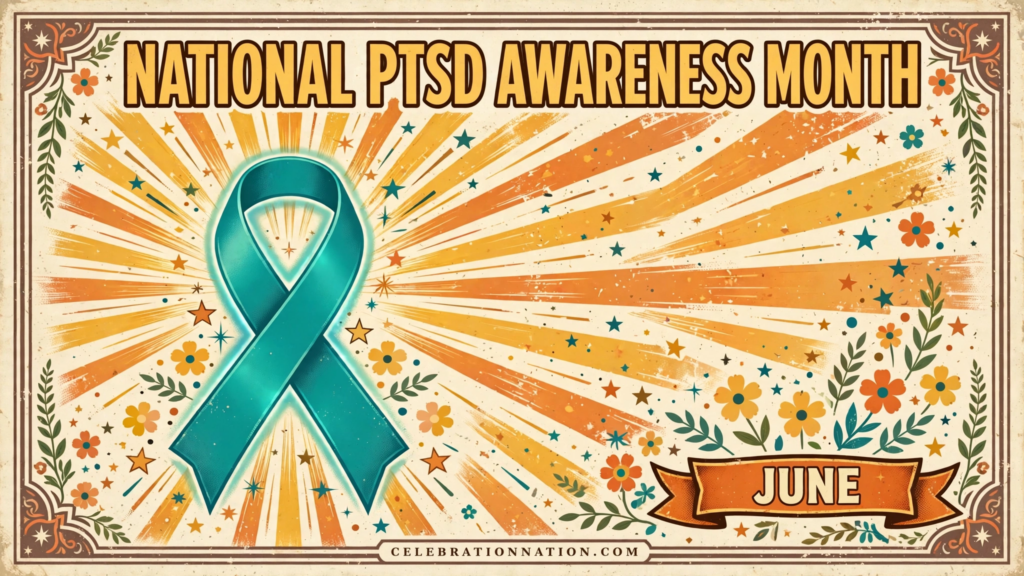
National PTSD Awareness Month
This month is dedicated to raising awareness about PTSD and its profound effects on individuals and families, emphasizing the need for compassionate support.
- Roots
- Supported by the U.S. Department of Veterans Affairs
- Vibe
- A focus on healing and support
- Hashtag
- #NationalPTSDAwarenessMonth
Fast facts
The story
Post-traumatic stress disorder (PTSD) affects millions of Americans, stemming from experiences such as military combat, sexual assault, or severe accidents. In June, as National PTSD Awareness Month, communities come together to educate and advocate for those affected. The aim is to foster a deeper understanding of the challenges faced by individuals with PTSD and to emphasize the importance of mental health resources.
Read the full story
The observance is a campaign supported by the U.S. Department of Veterans Affairs, and June 27 is PTSD Awareness Day. This initiative arose from the growing recognition of PTSD as a significant public health issue, particularly among veterans. It serves as a reminder that trauma does not only affect those who have served in the military, but also civilians who encounter various forms of trauma.
Throughout June, numerous events, including workshops, seminars, and social media campaigns, take place nationwide to raise awareness. Organizations such as the National Center for PTSD and the Department of Veterans Affairs offer resources and support to individuals coping with this disorder. These platforms play a crucial role in helping those affected find the help they need.
As we observe National PTSD Awareness Month, it is essential to promote understanding and compassion. By encouraging open conversations about mental health, we can break the stigma surrounding PTSD and create a supportive environment for healing. Together, we can foster a culture of awareness that empowers individuals to seek help and support.
Worth knowing
Mental Health Matters
Understanding PTSD is essential for fostering compassion.
Start Conversations
Encourage open discussions about trauma.
Support Systems
Create strong networks for those in need.
Educate Yourself
Learn about PTSD and its effects.
Did you know?
PTSD in History
PTSD has been recognized in various forms since World War I.
Common Symptoms
Symptoms include flashbacks, nightmares, and severe anxiety.
Treatment Options
Effective treatments include therapy and medication.
Veterans Affected
Veterans are more likely to have PTSD than civilians.
Youth Impact
Children can develop PTSD from traumatic events.
Global Recognition
PTSD is acknowledged worldwide as a mental health issue.
Community Support
Support groups can be vital for recovery.
Around the world
Every culture celebrates a little differently.
- USUnited StatesHome to numerous organizations dedicated to PTSD support.
- CACanadaOffers resources for veterans and trauma survivors.
- GBUnited KingdomFocuses on mental health awareness and support.
- AUAustraliaProvides services for those affected by trauma.
- DEGermanyPromotes PTSD research and care.
- INIndiaIncreasing awareness of mental health issues.
Coming up next
See the calendar
Celebrate every day, all year
Official gear from the people who track 1,700+ celebrations.
Browse the shop 2027 Wall Calendar, signed by Marlo AndersonSigned by the founder of National Day Calendar.
Never miss a reason to celebrate.
One quick morning email with today's celebrations, ideas and posters. Free, unsubscribe anytime.
🎉 You're on the list! Watch your inbox for The Daily Confetti.