




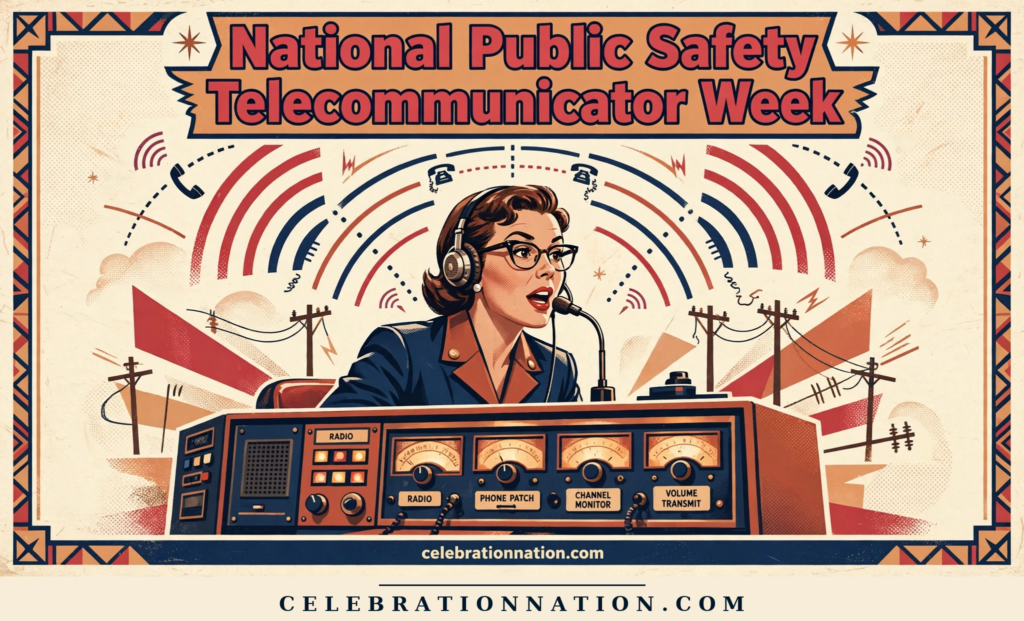
National Public Safety Telecommunicator Week
National Public Safety Telecommunicator Week is a hand extended — to the patients, caregivers, researchers, and families living with public safety telecommunicator.
- Roots
- Created in 1981 by Patricia Anderson; formally recognized in 1994
- Vibe
- Gratitude and recognition for essential services
- Hashtag
- #NationalPublicSafetyTelecommunicatorWeek
Ways to celebrate
Small, doable ways to celebrate National Public Safety Telecommunicator Week.
- Share one reputable resource with your network.
- Donate to a patient-led organization working on public safety telecommunicator.
- Check in on someone you know who's living with it.
- Book the screening or appointment you've been putting off.
- Listen more than you speak.
Fast facts
The story
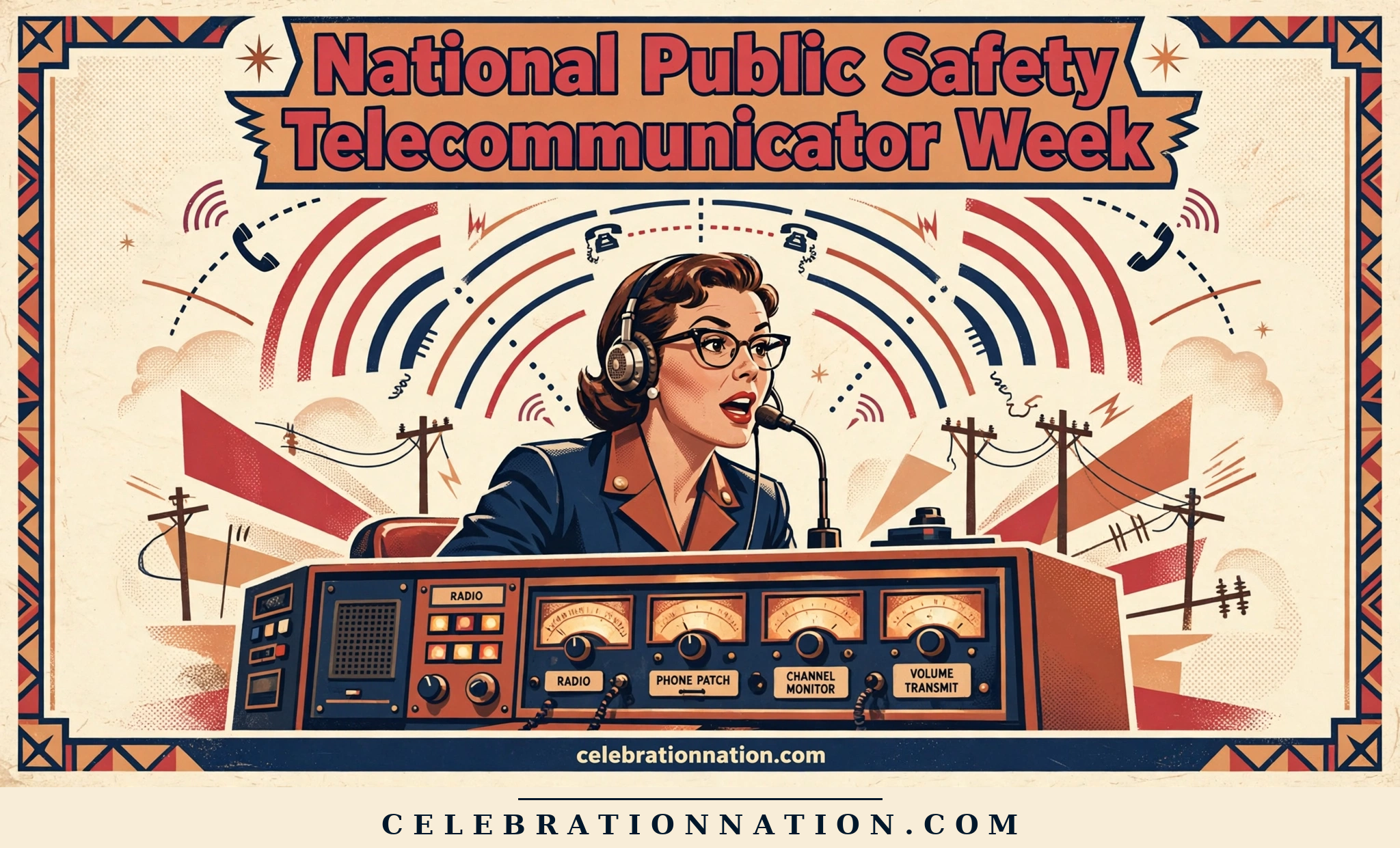
National Public Safety Telecommunicator Week is set aside to honor the professionals who serve as the critical link between the public and emergency services. Created in 1981 by Patricia Anderson of the Contra Costa County Sheriff's Office and formally recognized in 1994, this observance highlights the vital role of telecommunicators in ensuring safety and security for communities across the nation. These individuals handle emergency calls, dispatch responders, and provide crucial information in life-threatening situations.
Read the full story
Throughout the week, various activities take place, including community events, educational workshops, and recognition ceremonies. Dispatch centers often receive tokens of appreciation from local businesses and residents. The recognition goes beyond mere appreciation; it serves to remind the public of the challenges faced by telecommunicators daily, working under pressure and managing multiple calls simultaneously.
Telecommunicators are trained professionals who must remain calm and focused, making split-second decisions that can save lives. They often work long shifts around the clock, dealing with traumatic and high-stress situations. Despite the challenges, their dedication and commitment to public service remain unwavering.
As we celebrate this important week, it is essential to acknowledge not just their work but the human element that drives it. Each call answered represents a person in need, and each dispatch signals a response to a potentially life-threatening situation. This week, let us come together to show our appreciation and support for these unsung heroes.
Worth knowing
Thank a Dispatcher
Send a note or small gift to your local dispatch team.
Attend Events
Participate in community events celebrating telecommunicators.
Learn More
Educate yourself on the role of telecommunicators.
Volunteer
Help organize recognition events in your community.
Did you know?
Did you know?
Telecommunicators often undergo extensive training before taking calls.
Interesting Fact
They may handle many calls in a single shift.
Fun Fact
Telecommunicators are sometimes referred to as 'the first first responders'.
Historical Insight
The role of telecommunicators has evolved significantly since the 1960s.
Unique Challenge
They must remain calm during high-pressure situations.
Recognition
Many states have official proclamations for Telecommunicator Week.
Global Perspective
Countries worldwide recognize the essential service of telecommunicators.
Around the world
Every culture celebrates a little differently.
- USUnited StatesCelebrated nationwide with local events and recognition.
- GBUnited KingdomSimilar appreciation for emergency dispatchers.
- CACanadaRecognizes the efforts of telecommunicators in public safety.
- AUAustraliaCelebrates emergency service operators and their work.
- DEGermanyAcknowledges the role of dispatchers in emergency response.
- NZNew ZealandHonors the contributions of telecommunicators in safety.
Coming up next
See the calendar

Celebrate every day, all year
Official gear from the people who track 1,700+ celebrations.
Browse the shop 2027 National Day Wall CalendarGet the 2026 edition free. 1,700+ observances.
Never miss a reason to celebrate.
One quick morning email with today's celebrations, ideas and posters. Free, unsubscribe anytime.
🎉 You're on the list! Watch your inbox for The Daily Confetti.