




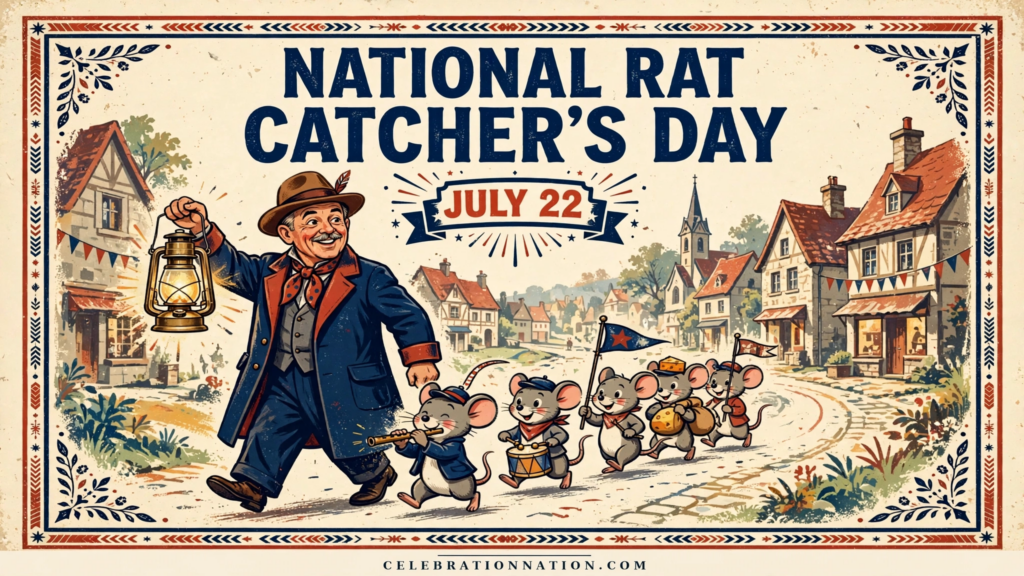
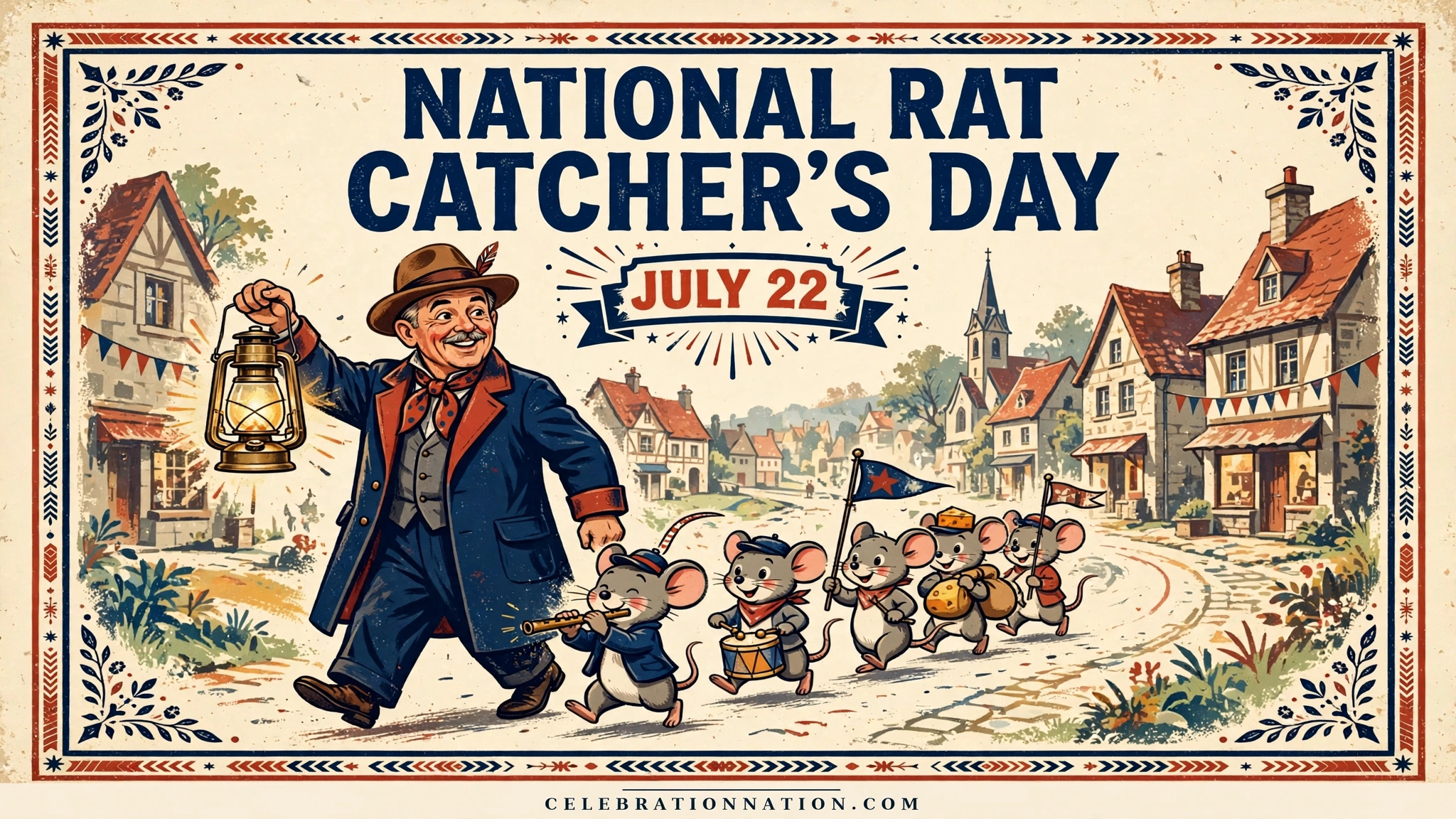
National Rat Catcher’s Day
Join us in recognizing the vital work of those who keep our communities safe from rodents, ensuring public health for all.
- Roots
- Inspired by the Pied Piper of Hamelin legend; the July 22 date reflects Robert Browning's telling of the tale.
- Vibe
- Community-focused and educational.
- Also on Jul 22
- Fragile X Awareness Day · Hammock Day · Mango Day
- Hashtag
- #NationalRatCatcher8217sDay
3 ways to celebrate
Deep clean the pantry
Check corners and seal containers so pests stay away for good.
Watch a piper tale
Stream the Pied Piper story and debate the ending together.
Share pest tips
Swap your best keep-them-out tricks with coworkers or classmates.
Plan ahead
National Rat Catcher’s Day is observed on July 22 every year. Here is where it lands for the next ten years, handy for planners, marketers and party people.
Fast facts
The story
National Rat Catcher's Day is observed each year on July 22, recognizing the essential role of pest control professionals in maintaining healthy urban environments. While often overlooked, these workers help mitigate public health risks associated with rodent infestations, which can carry diseases and contaminate food supplies. The observance invites communities to reflect on the importance of cleanliness and pest management.
Read the full story
The practice of rat catching has historical roots dating back centuries, with early rat catchers often depicted in folklore and literature. One of the most famous tales is that of the Pied Piper of Hamelin, a legend that underscores the significance of these professionals. Today, rat catchers employ a variety of methods to control rodent populations, emphasizing humane and environmentally-friendly practices.
In urban settings, where rats can thrive due to abundant food sources and shelter, the work of rat catchers becomes even more critical. Cities like New York and Chicago invest heavily in pest control measures, employing experts to assess and manage rat populations. Public awareness campaigns promote responsible waste disposal and hygiene practices as vital components of effective rodent control.
Celebrating National Rat Catcher's Day is an opportunity to educate ourselves about the intricate balance between urban wildlife and human populations. Communities can come together to support local pest control initiatives and engage in discussions about sustainable practices. By honoring the contributions of rat catchers, we acknowledge their role in fostering healthier, cleaner living environments.
Did you know?
Rodent Facts
Rats are highly intelligent and can learn complex tasks.
Disease Carriers
Rats are known carriers of diseases like hantavirus and leptospirosis.
Historical Catchers
Rat catchers once traveled from town to town to control infestations.
Modern Techniques
Today's pest control includes traps, baiting, and exclusion methods.
Community Involvement
Residents can play a key role in preventing infestations.
Cultural References
Rats have been featured in literature, from 'The Tale of Despereaux' to folklore.
Global Efforts
Countries worldwide celebrate pest control efforts on various days.
Around the world
Every culture celebrates a little differently.
- USUnited StatesHome to various rodent control initiatives across major cities.
- CACanadaVancouver and Toronto have notable pest management programs.
- GBUnited KingdomLondon has a long history of tackling rat populations.
- AUAustraliaCities like Sydney employ pest control strategies to manage rats.
- DEGermanyBerlin conducts regular rodent monitoring and control efforts.
- NZNew ZealandRat control is vital for protecting native wildlife.
Keep the party going
See the calendar




Celebrate every day, all year
Official gear from the people who track 1,700+ celebrations.
Browse the shop 2027 Wall + Desk Calendar BundleCelebrate every day at home and at work.
Never miss a reason to celebrate.
One quick morning email with today's celebrations, ideas and posters. Free, unsubscribe anytime.
🎉 You're on the list! Watch your inbox for The Daily Confetti.