
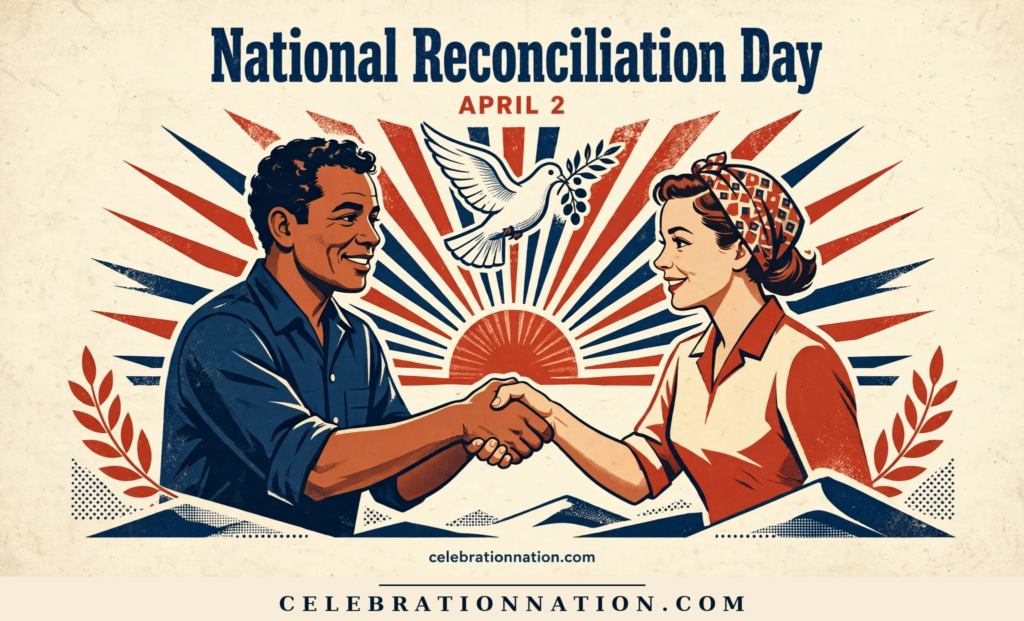
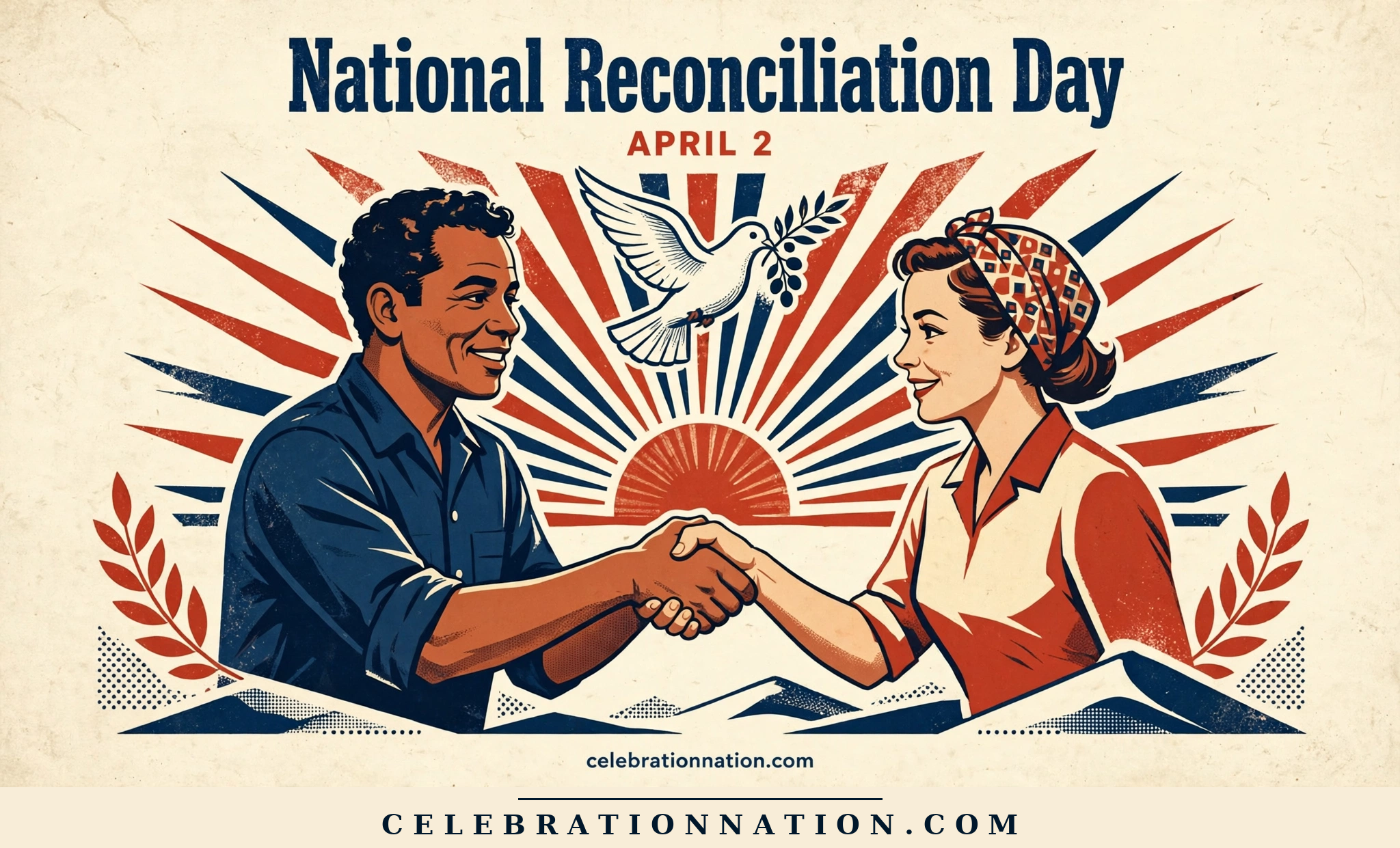
National Reconciliation Day
On National Reconciliation Day, we make a little room on the calendar for the thing that makes us who we are.
- Roots
- Observed to promote healing and understanding
- Vibe
- A day of reflection and unity.
- Also on Apr 2
- International Children’s Book Day · Peanut Butter and Jelly Day · World Autism Awareness Day
- Hashtag
- #NationalReconciliationDay
Ways to celebrate
Small, doable ways to celebrate National Reconciliation Day.
- Do one small thing that makes the day feel marked.
- Tell someone what you're celebrating and why.
- Share a post, a photo, or a memory connected to it.
- Make a tiny tradition — something you could do again next year.
- Let it be simple. Not every celebration has to be a production.
Make it your kind of celebration
Family
Do one small thing together that everyone will remember.
Kids
Turn it into a craft, a story, or a snack — meet them where they are.
Couples
Use the day as an excuse for a little intentional time together.
Office
Acknowledge the day in the team chat or at a stand-up. Small, sincere, fast.
School
Anchor a short lesson or activity around the day.
Community
Share, volunteer, or donate to make the day mean something locally.
Just me
Celebrate quietly and completely. One person can still mark a day.
Plan ahead
National Reconciliation Day is observed on April 2 every year. Here is where it lands for the next ten years, handy for planners, marketers and party people.
Fast facts
The story
National Reconciliation Day, observed on April 2 each year, was established to foster healing and understanding within diverse communities across the United States. It encourages individuals to engage in meaningful dialogues, share experiences, and work toward mutual respect. The observance aims to bring attention to the importance of reconciliation, particularly in light of America's complex history of social and racial tensions.
Read the full story
The origins of National Reconciliation Day are unclear, but community leaders and organizations have increasingly promoted the day as a call for unity and understanding among all Americans, regardless of their backgrounds, and various organizations began to host events aimed at fostering connections and healing.
In cities across the nation, activities range from community discussions to shared meals celebrating diverse cultures. Schools incorporate lessons on empathy and respect, while workplaces encourage conversations about inclusivity and collaboration. The day serves as a reminder that reconciliation is not a one-time event but an ongoing process that requires commitment and effort from all individuals.
As National Reconciliation Day approaches, it is vital for each of us to reflect on our own roles in promoting understanding and healing. Whether through personal stories, community initiatives, or national discussions, we can all contribute to a more united America. Together, we can honor this day by fostering connections and building bridges across differences.
Did you know?
First Observance
National Reconciliation Day was first celebrated in 2021.
Increase in Community Events
Community dialogues have increased significantly since the day was established.
Cultural Significance
The day emphasizes the importance of cultural understanding.
Volunteering Impact
Volunteering on this day has shown to foster community spirit.
Educational Initiatives
Many schools incorporate lessons about reconciliation.
Global Observance
Reconciliation efforts are observed worldwide, particularly in post-conflict regions.
Grassroots Movement
The day originated from a grassroots movement for social justice.
Around the world
Every culture celebrates a little differently.
- USUnited StatesThe heart of National Reconciliation Day.
- CACanadaCelebrates multiculturalism and healing.
- GBUnited KingdomEngages in discussions on social justice.
- AUAustraliaFocuses on reconciliation with Indigenous peoples.
- ZASouth AfricaA model for reconciliation post-apartheid.
- BRBrazilPromotes unity in diverse communities.
Keep the party going
See the calendar

Celebrate every day, all year
Official gear from the people who track 1,700+ celebrations.
Browse the shop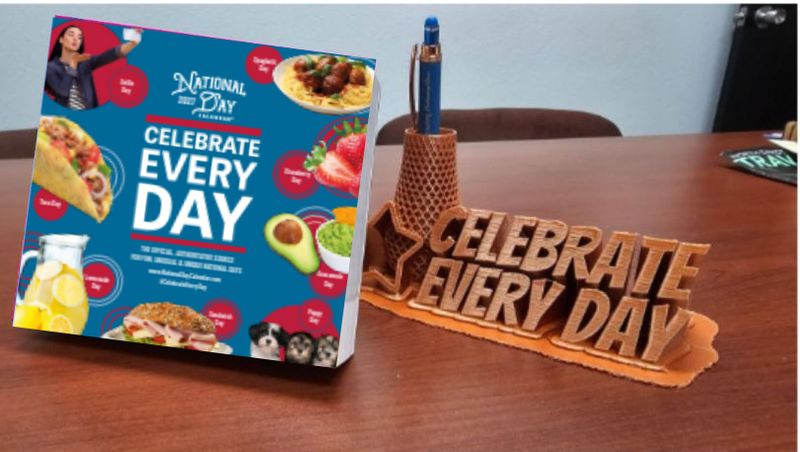 2027 National Day Desk CalendarA new celebration every morning. Daily tear-off.
Never miss a reason to celebrate.
One quick morning email with today's celebrations, ideas and posters. Free, unsubscribe anytime.
🎉 You're on the list! Watch your inbox for The Daily Confetti.