


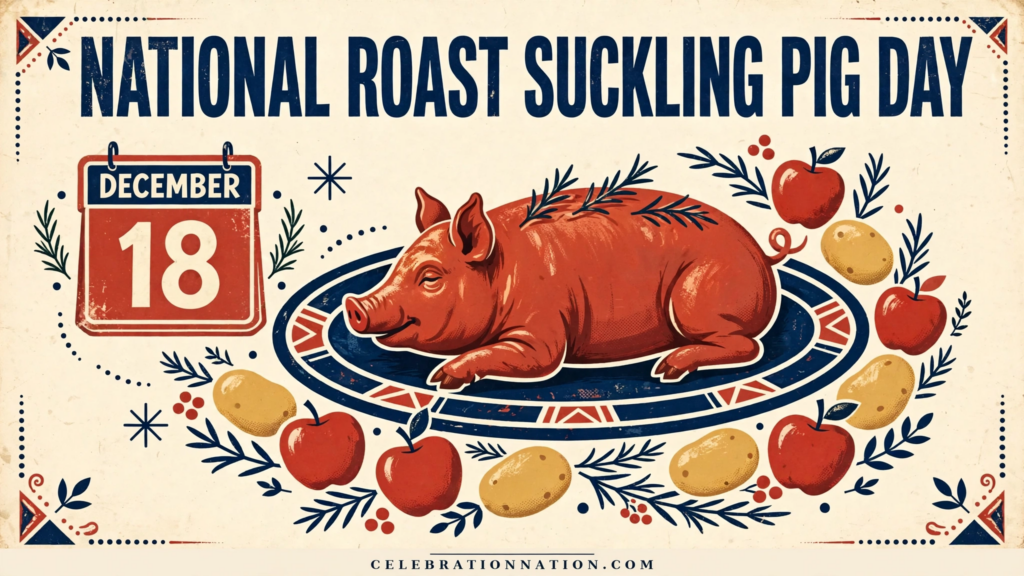
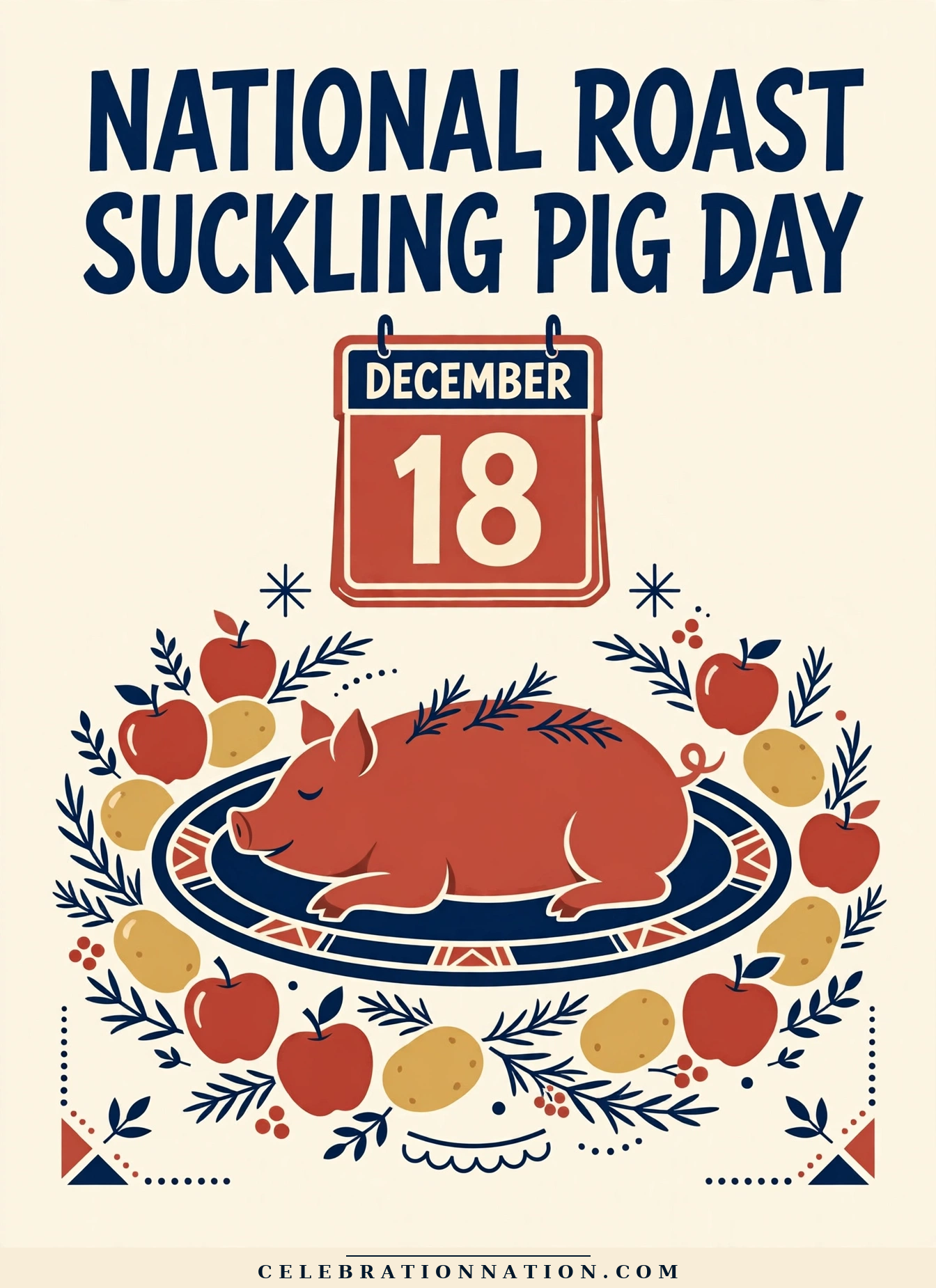
National Roast Suckling Pig Day
Celebrate a rich culinary tradition with a delicious roast suckling pig.
- Roots
- Origins still being researched by National Day Calendar
- Vibe
- Festive gatherings and communal dining.
- Also on Dec 18
- Answer the Telephone Like Buddy the Elf Day · International Migrants Day · Twin Day
- Hashtag
- #NationalRoastSucklingPigDay
3 ways to celebrate
Roast it low
Slow roast a suckling pig or pork shoulder with herbs until the skin crisps.
Host a pig roast
Invite friends for a backyard roast with sides and plenty of cold drinks.
Potluck a feast
Bring roast pork sandwiches or sides to share with coworkers at lunch.
Plan ahead
National Roast Suckling Pig Day is observed on December 18 every year. Here is where it lands for the next ten years, handy for planners, marketers and party people.
Fast facts
The story
The tradition of roasting suckling pigs dates back to ancient times, with roots in both Roman and Chinese cultures. These cultures celebrated significant events with this delicacy, symbolizing abundance and festivity. Today, it is a dish often served at special occasions and family gatherings, showcasing a culinary art form that brings people together around the table.
Read the full story
In the United States, roast suckling pig has gained popularity at events such as weddings, barbecues, and holiday celebrations. Many chefs and home cooks alike have adopted the technique, offering their unique spins on marinades and cooking methods. The process often involves slow-roasting the pig over an open flame or in a specially designed oven, allowing for the skin to become crispy while the meat remains tender and juicy.
Beyond its culinary appeal, roast suckling pig represents a connection to cultural heritage and community. In many cultures, the act of preparing and sharing a roast pig is a communal event, often accompanied by music, storytelling, and laughter. This tradition continues to thrive in various forms, celebrating not just the meal but the bonds it creates among those who gather to enjoy it.
As you gather to celebrate National Roast Suckling Pig Day, consider the rich history and cultural significance behind this dish. Whether you choose to host a large gathering or enjoy a smaller celebration, take the time to appreciate the flavors, the techniques, and the stories that have been passed down through generations.
Keep the party going
See the calendar


Celebrate every day, all year
Official gear from the people who track 1,700+ celebrations.
Browse the shop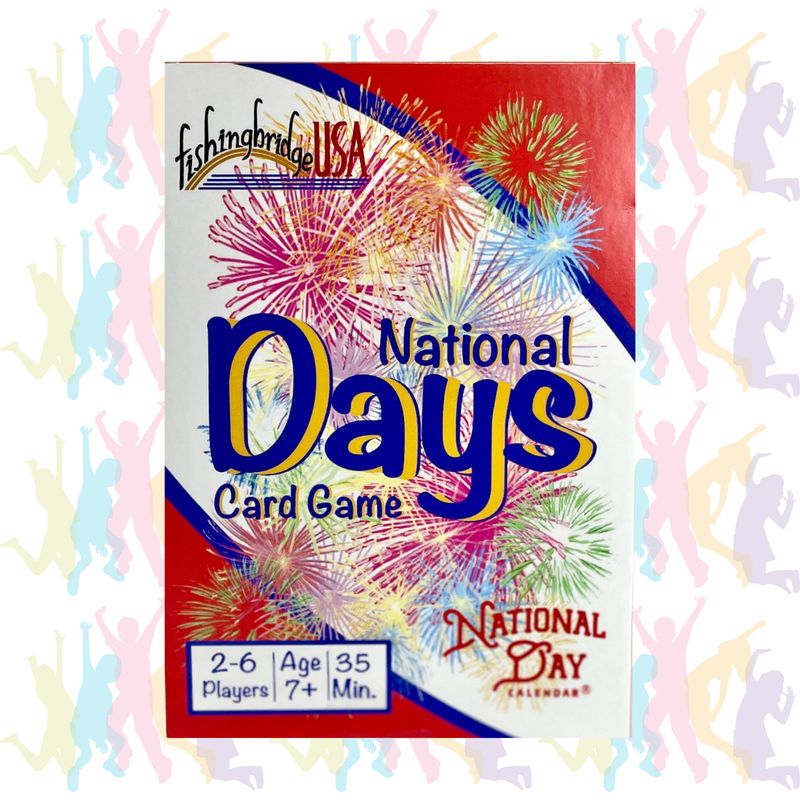 National Day Celebration Card GameA party in a box, any day of the year.
Never miss a reason to celebrate.
One quick morning email with today's celebrations, ideas and posters. Free, unsubscribe anytime.
🎉 You're on the list! Watch your inbox for The Daily Confetti.