


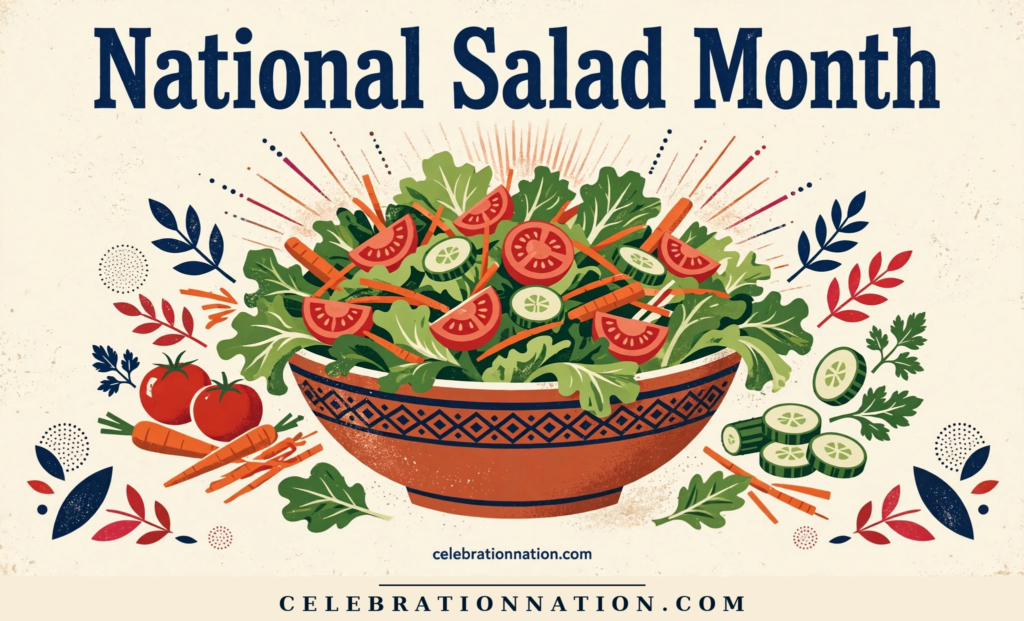
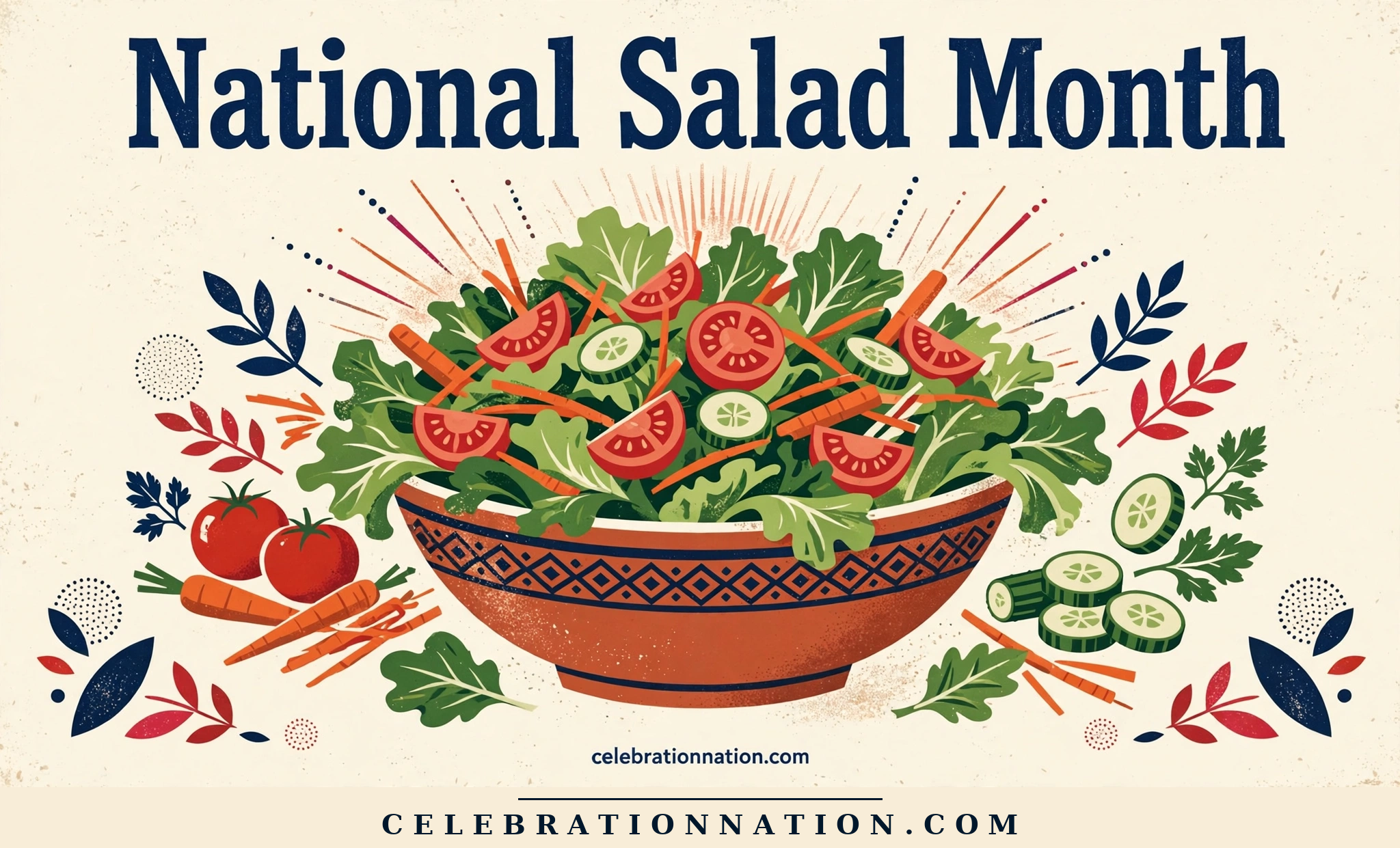
National Salad Month
National Salad Month turns a familiar meal into a small celebration — the kind of dish you remember by who was there.
- Roots
- Source unknown, per National Day Calendar
- Vibe
- A celebration of freshness and creativity
- Hashtag
- #NationalSaladMonth
Ways to celebrate
Small, doable ways to celebrate National Salad Month.
- Host a low-stakes dinner — everyone brings one thing.
- Cook salad the way a family member taught you, if you can.
- Order from a locally owned spot that could use the business.
- Make a double batch and drop half off to a friend.
- Eat together without screens — even for 20 minutes.
Fast facts
The story
National Salad Month, celebrated every May, has become a beloved tradition across the United States. This month serves as a reminder to incorporate more fresh vegetables, fruits, and grains into our daily diets. Salads, often seen as a side dish, are evolving into main courses, showcasing a plethora of ingredients and flavors. From leafy greens to hearty grains, the salad world is vast and varied, inviting everyone to explore their culinary creativity.
Read the full story
National Salad Month arrives as fresh greens become abundant, promoting the health benefits of salads. Salads not only contribute to a balanced diet but also reduce the risk of chronic diseases. Many Americans are now opting for salads as a convenient and nutritious meal option. This shift is not only beneficial for individual health but also supports local farmers and sustainable practices by encouraging the use of fresh, seasonal ingredients.
Throughout the month, communities across the nation engage in various celebrations, including potlucks, cooking classes, and farmer's market events. Local restaurants often feature special salad menus, highlighting seasonal produce. Schools encourage students to participate in salad-making competitions, fostering a love for healthy eating from a young age. These activities not only promote healthy eating habits but also create opportunities for social interactions and community bonding.
In a world that often prioritizes convenience over nutrition, National Salad Month stands as a beacon for health-conscious individuals. It encourages everyone to take a moment to appreciate the simple pleasure of a well-crafted salad. Whether you prefer a classic Caesar, a refreshing Greek salad, or a vibrant quinoa bowl, there is a salad for everyone. This May, let’s celebrate the diversity of salads and the joy they bring to our tables.
Worth knowing
Fresh Ingredients
Utilize seasonal produce for optimal flavor.
Herb Power
Incorporate fresh herbs for added depth.
Colorful Creations
Emphasize variety, more colors, more nutrients.
Weekly Themes
Explore different regional salads each week.
Did you know?
Caesar Salad Origin
The Caesar salad was invented in Tijuana, Mexico, in the 1920s.
Grow Your Own
Lettuce can be grown even in a small space.
Salad Dressings
Dressing choices can make or break a salad's nutrition.
Salad History
The term 'salad' comes from the Latin word 'sal,' meaning salt.
Salad Varieties
Salads can feature greens, grains, proteins, cheeses, nuts, and berries.
Nutritional Benefits
Salads are rich in vitamins, minerals, and antioxidants.
Salad as a Meal
Salads can be a complete meal when balanced with proteins and grains.
Around the world
Every culture celebrates a little differently.
- USUnited StatesHome of National Salad Month, promoting fresh ingredients.
- CACanadaCanadians enjoy diverse salads influenced by multicultural cuisine.
- GBUnited KingdomBritish salads often feature local produce and traditional dressings.
- ITItalyFamous for Caprese and Panzanella salads, rich in flavor.
- MXMexicoSalads often incorporate beans and avocados for nutrition.
- FRFranceHome to the classic Niçoise salad, a staple in French cuisine.
Coming up next
See the calendar
Celebrate every day, all year
Official gear from the people who track 1,700+ celebrations.
Browse the shop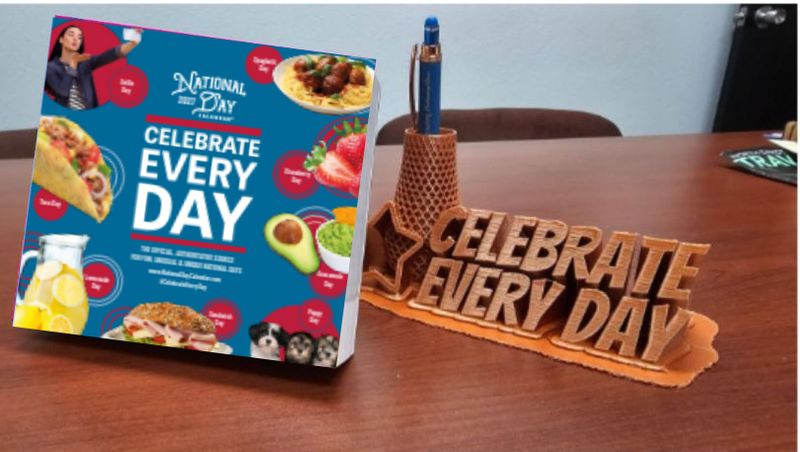 2027 National Day Desk CalendarA new celebration every morning. Daily tear-off.
Never miss a reason to celebrate.
One quick morning email with today's celebrations, ideas and posters. Free, unsubscribe anytime.
🎉 You're on the list! Watch your inbox for The Daily Confetti.