



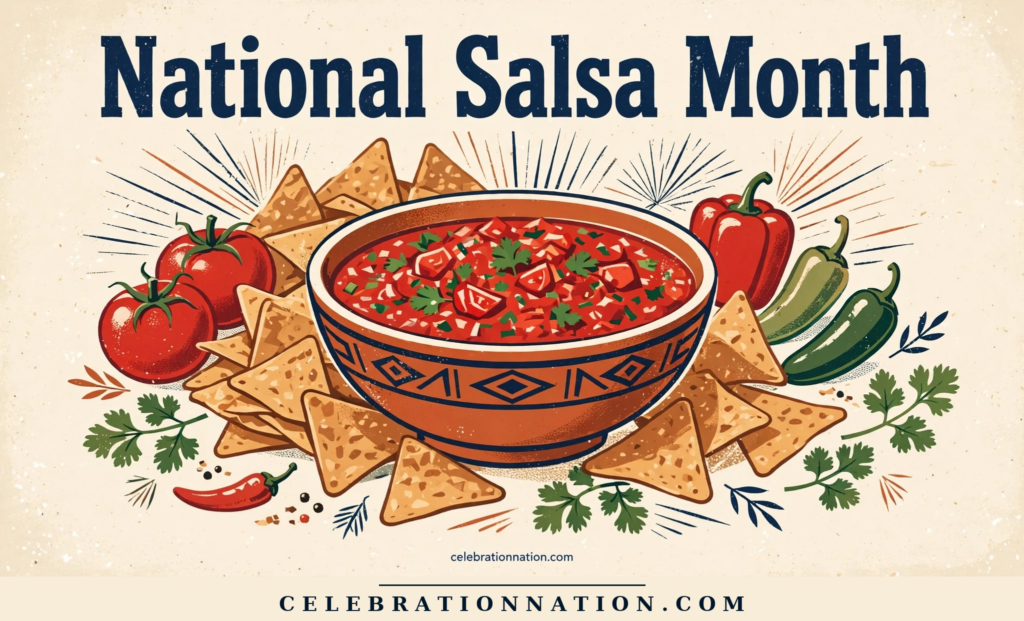
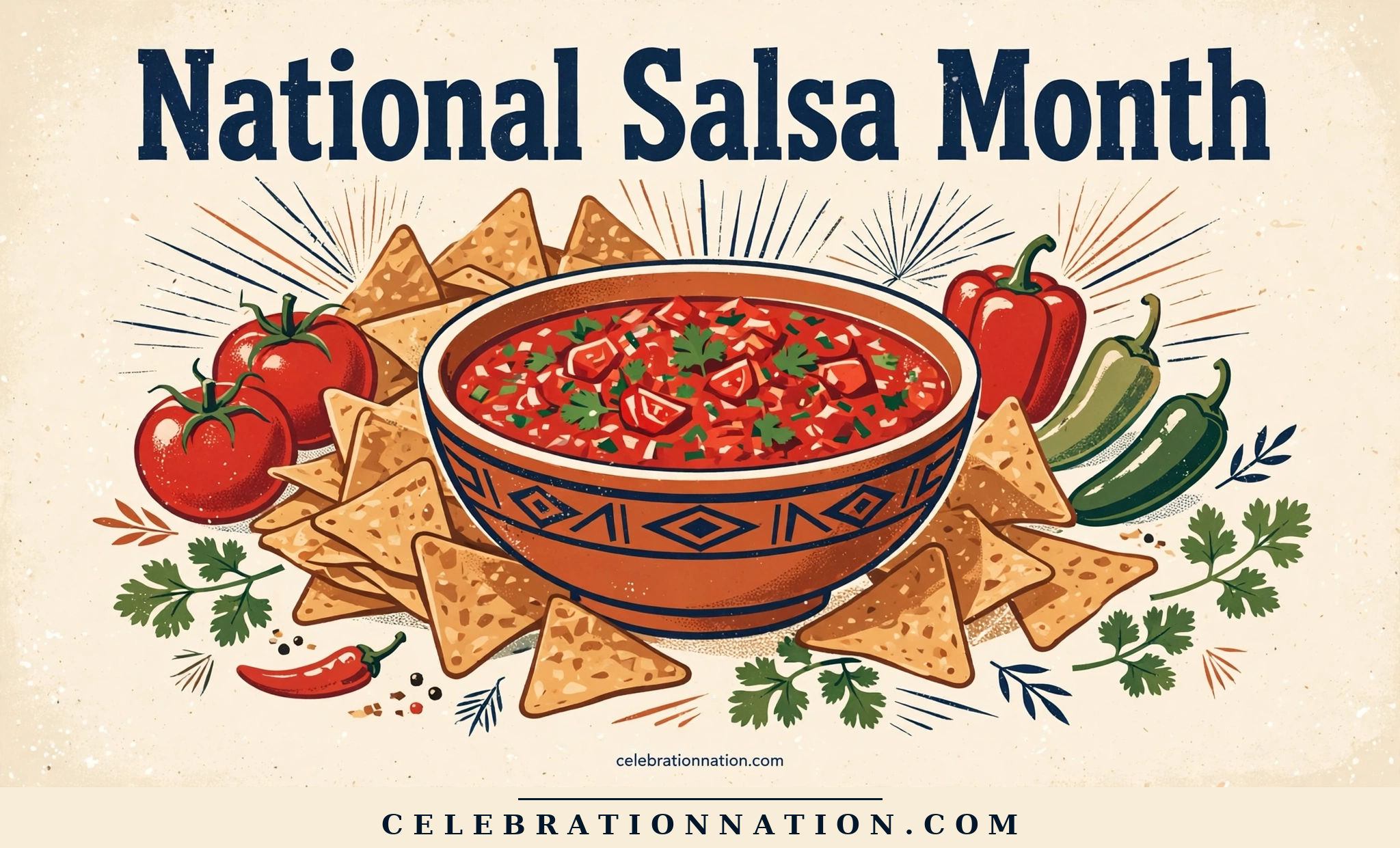
National Salsa Month
National Salsa Month is a reminder that the best table is a crowded one — plates passing, seconds offered, everyone fed.
- Roots
- Salsa originated in ancient Mesoamerica.
- Vibe
- A celebration of flavors and cultures.
- Hashtag
- #NationalSalsaMonth
Ways to celebrate
Small, doable ways to celebrate National Salsa Month.
- Host a low-stakes dinner — everyone brings one thing.
- Cook salsa the way a family member taught you, if you can.
- Order from a locally owned spot that could use the business.
- Make a double batch and drop half off to a friend.
- Eat together without screens — even for 20 minutes.
Fast facts
The story
National Salsa Month began as a way to honor the rich cultural heritage of salsa, a sauce that has roots in Latin America. As salsa gained popularity in the United States, it transformed from a regional dish into a nationwide favorite. This month serves as an opportunity to celebrate not only the taste but also the vibrant traditions that accompany salsa-making and consumption.
Read the full story
The word 'salsa' means 'sauce' in Spanish, and it encompasses a variety of recipes, ingredients, and regional styles. From traditional tomato-based salsas to fruit-based varieties like mango salsa, the possibilities are endless. Salsa is often made fresh, using ingredients like tomatoes, onions, cilantro, and lime, bringing a burst of flavor to any dish.
In the U.S., salsa is more than just a condiment; it has become a staple at gatherings, barbecues, and parties. Many local festivals showcase salsa competitions, where chefs and home cooks alike share their unique creations. These events not only highlight culinary skills but also foster community spirit through shared love for this flavorful sauce.
As we celebrate National Salsa Month, it's essential to recognize the global influence of salsa. While it is widely associated with Mexican cuisine, variations exist in countries like Colombia, Peru, and Spain. Each region adds its unique twist, showcasing the adaptability and enduring popularity of salsa across cultures.
Worth knowing
Salsa Varieties
Explore different types of salsa, mild, spicy, fruity, and more.
Guacamole vs. Salsa
Learn about the differences and how they complement each other.
Fresh Ingredients
Use garden-fresh vegetables for the best salsa.
Salsa Festivals
Find local salsa events to enjoy with friends and family.
Did you know?
Salsa's Popularity
Lemon or lime juice helps salsa keep its bright color.
Seasonal Salsas
Salsas made with seasonal produce can be enjoyed all month.
Cultural Significance
Salsa is central to many Latin American celebrations.
Health Benefits
Salsa is low in calories and packed with nutrients.
Salsa with a Twist
Fruit salsas are increasingly popular for their sweetness.
Salsa Dips
Salsa can be paired with chips, tacos, and more.
Global Variations
Salsas differ widely, from pico de gallo to chimichurri.
Around the world
Every culture celebrates a little differently.
- MXMexicoThe birthplace of traditional salsa recipes.
- USUnited StatesSalsa is a beloved condiment across the country.
- COColombiaHome to unique salsa variations with tropical fruits.
- PEPeruKnown for its fresh, vibrant salsa verde.
- ESSpainSalsa has roots in Spanish cuisine, influencing many Latin dishes.
- DODominican RepublicFamous for salsas that accompany its traditional dishes.
Coming up next
See the calendar

Celebrate every day, all year
Official gear from the people who track 1,700+ celebrations.
Browse the shop National Day Celebration Card GameA party in a box, any day of the year.
Never miss a reason to celebrate.
One quick morning email with today's celebrations, ideas and posters. Free, unsubscribe anytime.
🎉 You're on the list! Watch your inbox for The Daily Confetti.