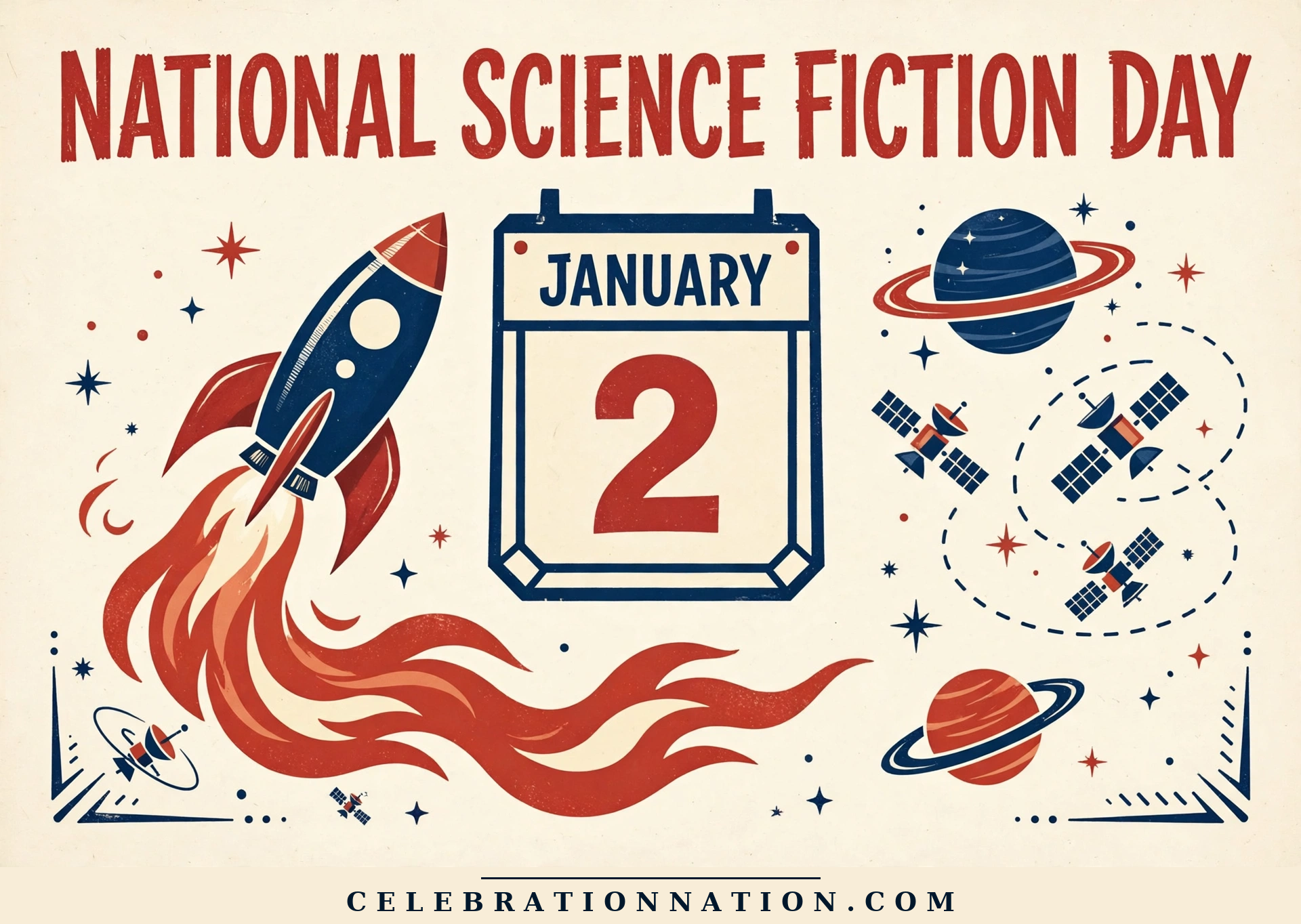
National Science Fiction Day
Join us to honor the genre that inspires innovation and creativity.
- Roots
- Coincides with Isaac Asimov's birthday
- Vibe
- Imaginative and thought-provoking
- Also on Jan 2
- Cream Puff Day · Personal Trainer Awareness Day · World Introvert Day
- Hashtag
- #NationalScienceFictionDay
3 ways to celebrate
Watch a classic
Stream a beloved sci-fi film and spot the future tech.
Sci-fi movie marathon
Binge a trilogy with friends and debate the best one.
Future tech chat
Share the sci-fi gadget you wish existed in the team chat.
Plan ahead
National Science Fiction Day is observed on January 2 every year. Here is where it lands for the next ten years, handy for planners, marketers and party people.
Fast facts
The story
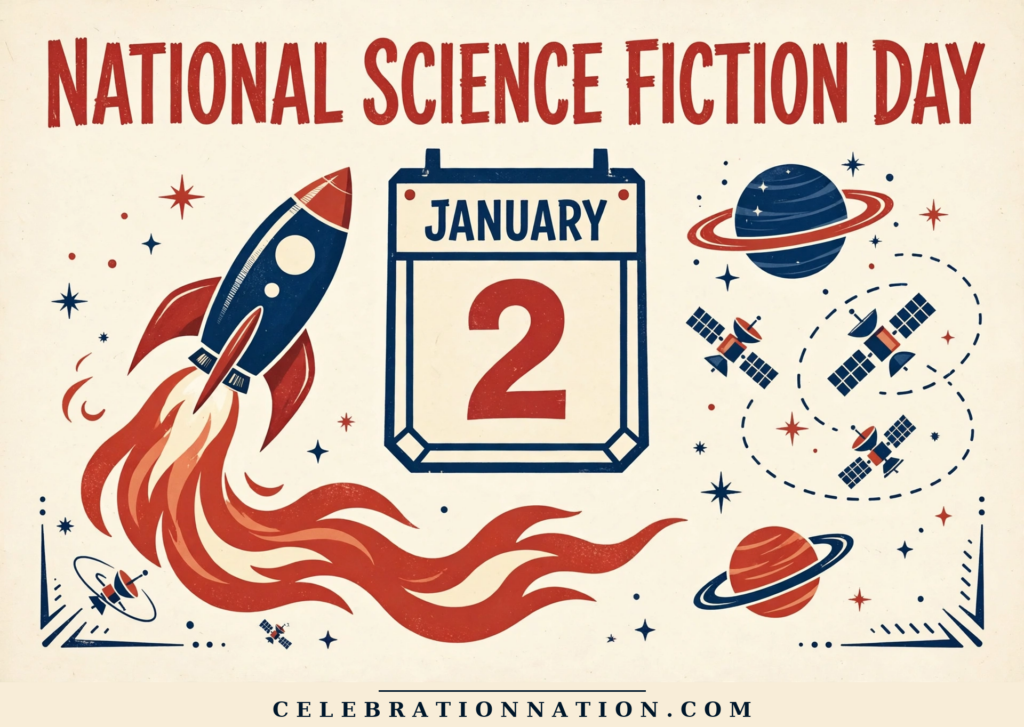
National Science Fiction Day is a unique observance that celebrates one of the most innovative genres in literature and film. It is observed every year on January 2, aligning with the birthday of Isaac Asimov, a titan of science fiction. Asimov's contributions to the genre are monumental, with works ranging from the 'Foundation' series to 'I, Robot,' which have significantly influenced modern science fiction and popular culture.
Read the full story
The celebration of this day serves as a reminder of how science fiction has not only entertained but also inspired generations of thinkers and creators. From the early works of Jules Verne and H.G. Wells to contemporary authors like N.K. Jemisin and Ted Chiang, the genre continues to push boundaries and explore complex themes such as technology, humanity, and the universe.
In recent years, science fiction has gained momentum in mainstream culture, evident in blockbuster films, television series, and expansive franchises. Events such as Comic-Con and various literary festivals showcase the genre's popularity and its ability to foster community among fans. National Science Fiction Day encourages enthusiasts to engage with the genre, whether through reading, writing, or discussing their favorite works.
Celebrating National Science Fiction Day can take many forms, from participating in local events to enjoying a quiet evening with a beloved book. Many fans take this opportunity to reflect on the impact of science fiction on society, as it often serves as a lens through which to view the future and contemplate the possibilities that lie ahead.
Did you know?
First Sci-Fi Novel
Mary Shelley's 'Frankenstein' is often considered the first science fiction novel, published in 1818.
Hugo Awards
The Hugo Awards have been celebrating the best in science fiction since 1953.
Popular Subgenres
Common subgenres include space opera, dystopian, and cyberpunk.
Diversity in Sci-Fi
More authors from diverse backgrounds are being recognized in recent years.
Asimov's Robots
Asimov's Three Laws of Robotics have influenced real-world discussions on AI.
Sci-Fi's Cultural Impact
Science fiction often reflects societal issues and challenges, from climate change to ethics.
Fandom Growth
The global sci-fi fandom continues to grow, with conventions attracting thousands.
Around the world
Every culture celebrates a little differently.
- USUnited StatesHome to many iconic sci-fi authors and events.
- GBUnited KingdomBirthplace of classic sci-fi literature.
- CACanadaFostering new sci-fi talents and narratives.
- AUAustraliaContributing unique perspectives in sci-fi storytelling.
- JPJapanKnown for influential anime and manga in the genre.
- DEGermanyHome to the early sci-fi movement in literature.
Keep the party going
See the calendar
Celebrate every day, all year
Official gear from the people who track 1,700+ celebrations.
Browse the shop 2027 National Day Wall CalendarGet the 2026 edition free. 1,700+ observances.
Never miss a reason to celebrate.
One quick morning email with today's celebrations, ideas and posters. Free, unsubscribe anytime.
🎉 You're on the list! Watch your inbox for The Daily Confetti.