


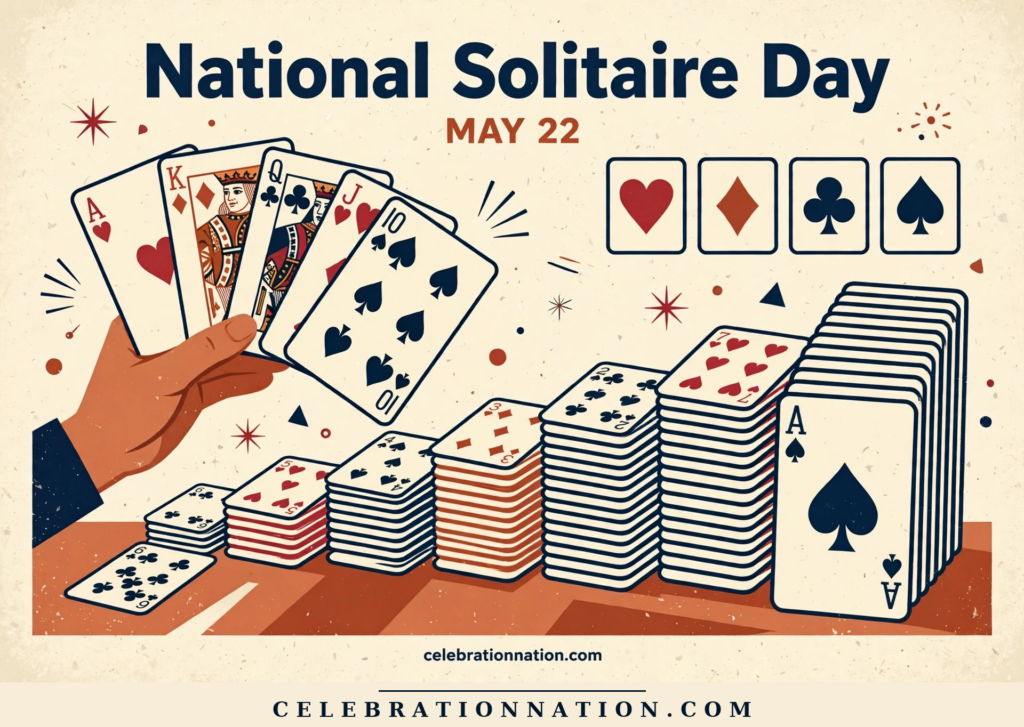
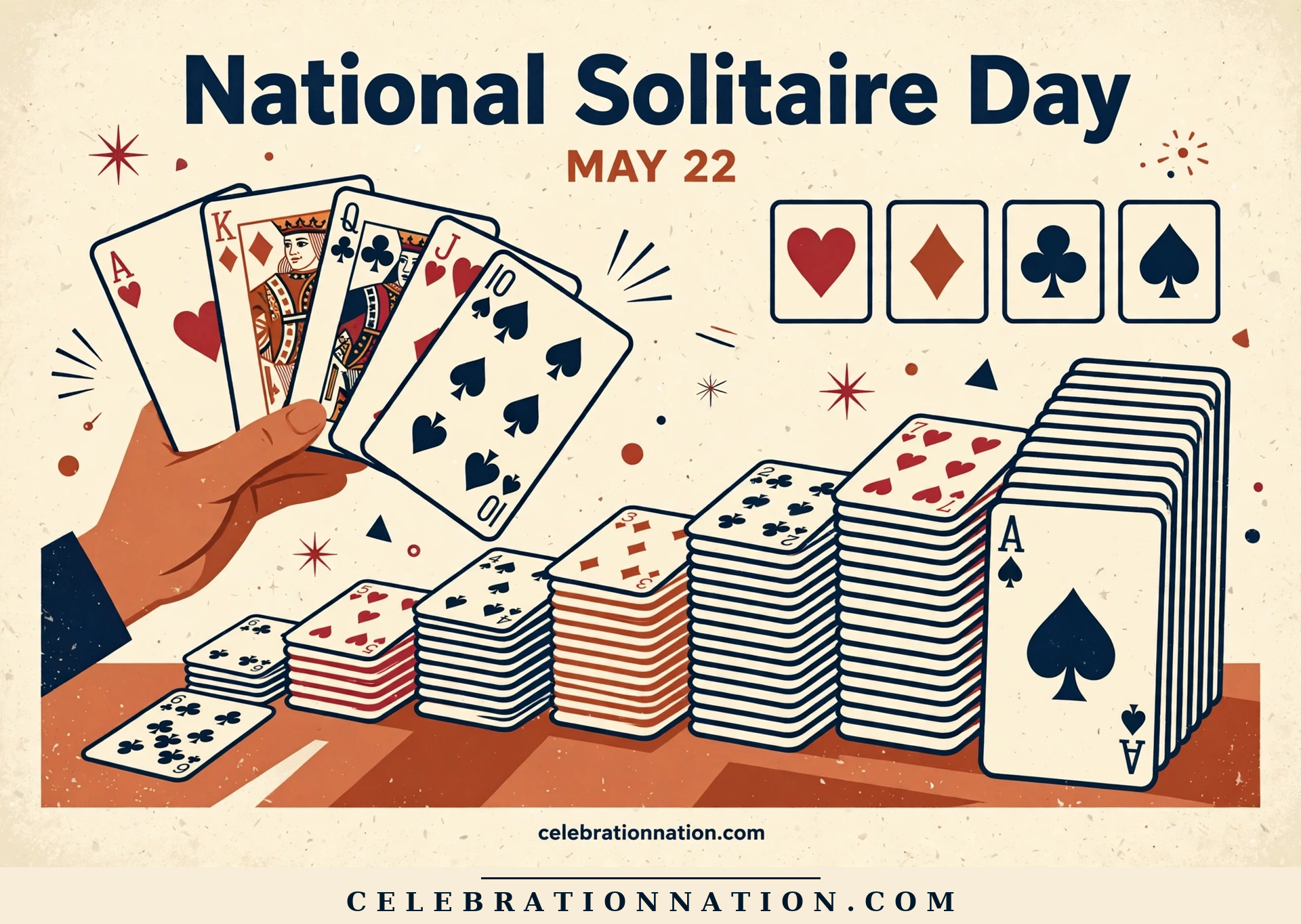
National Solitaire Day
On National Solitaire Day, we make a little room on the calendar for the thing that makes us who we are.
- Roots
- Established by Microsoft in 2018
- Vibe
- Relaxed and reflective
- Also on May 22
- International Day for Biological Diversity · Buy a Musical Instrument Day · Craft Distillery Day
- Hashtag
- #NationalSolitaireDay
Ways to celebrate
Small, doable ways to celebrate National Solitaire Day.
- Do one small thing that makes the day feel marked.
- Tell someone what you're celebrating and why.
- Share a post, a photo, or a memory connected to it.
- Make a tiny tradition — something you could do again next year.
- Let it be simple. Not every celebration has to be a production.
Make it your kind of celebration
Family
Do one small thing together that everyone will remember.
Kids
Turn it into a craft, a story, or a snack — meet them where they are.
Couples
Use the day as an excuse for a little intentional time together.
Office
Acknowledge the day in the team chat or at a stand-up. Small, sincere, fast.
School
Anchor a short lesson or activity around the day.
Community
Share, volunteer, or donate to make the day mean something locally.
Just me
Celebrate quietly and completely. One person can still mark a day.
Plan ahead
National Solitaire Day is observed on May 22 every year. Here is where it lands for the next ten years, handy for planners, marketers and party people.
Fast facts
The story
Solitaire, a card game with roots tracing back to 17th century France, has evolved into a beloved pastime, particularly in the United States. Initially played with physical cards, it transformed dramatically with the advent of personal computers. The digital version, popularized in 1990 with Windows 3.0, introduced solitaire to a new generation, making it a staple on Windows operating systems.
Read the full story
May 22 marks National Solitaire Day, a day dedicated to celebrating this simple yet profound game. Whether played alone or with friends, solitaire provides not just entertainment but also a moment of peace amid a busy world. Its various formats, including Klondike, FreeCell, and Spider, offer players a wide range of challenges and strategies.
The beauty of solitaire lies in its accessibility; anyone can pick up a deck of cards or click on a digital game and engage. The game teaches patience, strategy, and problem-solving skills, making it an excellent tool for children and adults alike. Many have fond memories of playing solitaire during quiet evenings or while waiting for appointments, reinforcing its place in American culture.
As we celebrate National Solitaire Day, consider gathering with friends or family to enjoy a few rounds or even to explore new variations. This day serves as a reminder of the timeless joy that comes from a simple deck of cards, bridging generations and cultures through shared experiences.
Did you know?
Did you know?
The name 'solitaire' derives from the French word for solitary.
Fun fact
Solitaire is often used in psychology to teach patience.
Historical context
Solitaire was originally played with a 52-card deck in France.
Common variations
Klondike, FreeCell, and Spider are among the most popular.
Game benefits
Playing solitaire can improve cognitive skills.
Cultural impact
The game has appeared in films and literature, symbolizing solitude.
Competitive play
There are competitive solitaire tournaments held worldwide.
Around the world
Every culture celebrates a little differently.
- USNorth AmericaCelebrated widely across the U.S. and Canada.
- GBEuropeOriginated in France and remains popular throughout the continent.
- AUAustraliaA favorite past time for many Australians.
- JPAsiaDigital versions of solitaire are gaining popularity.
- DEGermanyKnown for unique variations enjoyed by many.
- CACanadaCanadians enjoy solitaire during long winters.
Keep the party going
See the calendar

Celebrate every day, all year
Official gear from the people who track 1,700+ celebrations.
Browse the shop 2027 National Day Desk CalendarA new celebration every morning. Daily tear-off.
Never miss a reason to celebrate.
One quick morning email with today's celebrations, ideas and posters. Free, unsubscribe anytime.
🎉 You're on the list! Watch your inbox for The Daily Confetti.