
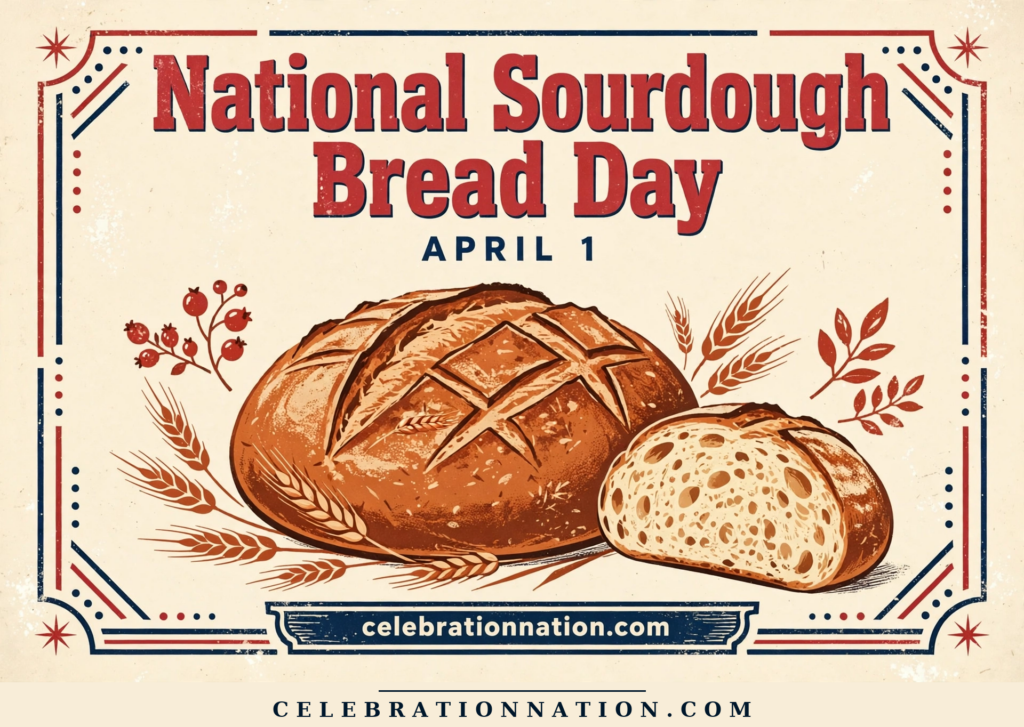
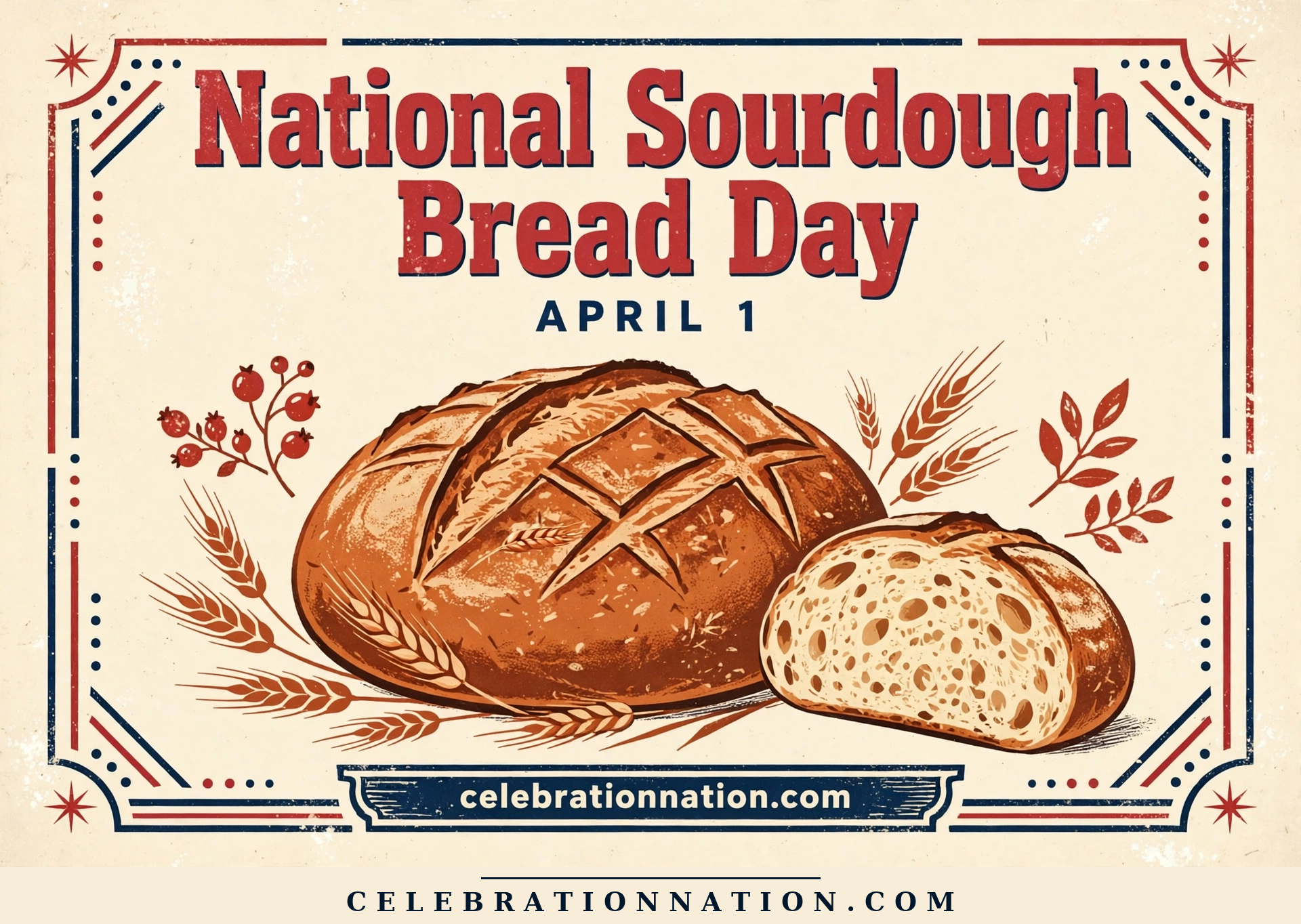
National Sourdough Bread Day
National Sourdough Bread Day is a reminder that the best table is a crowded one — plates passing, seconds offered, everyone fed.
- Roots
- Ancient Egypt
- Vibe
- Warm & Crusty
- Also on Apr 1
- Take Down Tobacco National Day of Action · April Fools’ Day · ChildHelp National Day of Hope
- Hashtag
- #NationalSourdoughBreadDay
Ways to celebrate
Small, doable ways to celebrate National Sourdough Bread Day.
- Host a low-stakes dinner — everyone brings one thing.
- Cook sourdough bread the way a family member taught you, if you can.
- Order from a locally owned spot that could use the business.
- Make a double batch and drop half off to a friend.
- Eat together without screens — even for 20 minutes.
Make it your kind of celebration
Family
Pick a recipe together, assign jobs, and serve it family-style. The cooking is the conversation.
Kids
Let the kids build their own version — tacos, pizzas, sandwiches. Their plate, their rules.
Couples
Pick one recipe you've both never made and cook it together, no outside help.
Office
Do a shared lunch instead of the usual — team potluck, takeout from a local spot, or a catered tray.
School
Tie the meal into a cultural or geography lesson — ingredients, origins, stories.
Community
Organize a neighborhood potluck or contribute to a community meal at a shelter or church.
Just me
Cook one real meal for yourself. Plate it like company's coming.
Plan ahead
National Sourdough Bread Day is observed on April 1 every year. Here is where it lands for the next ten years, handy for planners, marketers and party people.
Fast facts
The story
Bread is older than writing. Older than agriculture. Older than almost any tradition humanity still practices, and sourdough is the oldest bread we still make.
Read the full story
The earliest evidence comes from Egypt around 1500 BCE, where bakers figured out that a paste of flour and water, left out long enough, would begin to bubble on its own. The loaves they baked rose; the bread kept better; the flavor was tangier and more interesting. For the next 3,000 years, that was simply how bread was made.
Commercial yeast didn't exist until the 1860s. Industrial bread got faster and blander; sourdough got relegated to the niche. But it never fully disappeared. In 1849, a French-born baker named Isidore Boudin arrived in San Francisco during the Gold Rush and found local wild yeasts so flavorful that he built a business around them. The Boudin mother starter has been fed continuously since. It is older than the state of California.
Then came 2020. When the pandemic sent Americans home for weeks on end, millions of them decided this was the moment to finally make bread. Flour disappeared from grocery shelves nationwide. Instagram filled with proof shots. "Sourdough" became one of the most-searched terms on Google. Starters multiplied; some survive to this day, named and fed and passed between friends like heirlooms. That's the part of sourdough culture we're honoring today.
Four reasons your great-great-grandparents knew and we're just rediscovering:
A living colony of wild yeast and lactic acid bacteria, cultivated from nothing but flour and water. Once established, it can last generations. Here's the simplest path in.
Every baking culture has its own sourdough. Six worth tasting (or making) at least once.
Did you know?
Boudin's mother starter has been alive since 1849.
It survived the 1906 San Francisco earthquake. Every loaf they bake today is descended from that 19th-century batch.
There's a Sourdough Library in Belgium.
The Puratos Sourdough Library in Sankt Vith houses 150+ starters from around the world, kept alive as genetic preservation.
Pandemic flour shortages were real.
Spring 2020: U.S. flour sales jumped 155% year-over-year. Mills ran 24/7; shelves stayed empty for months. The cause? Home sourdough.
Astronauts fermented sourdough in space.
A NASA-partnered study sent starters to the ISS to test microgravity effects on fermentation. Spoiler: it changed.
Keep the party going
See the calendar
Celebrate every day, all year
Official gear from the people who track 1,700+ celebrations.
Browse the shop "Can't Wait to Celebrate" children's bookA picture book for little celebrators.
Never miss a reason to celebrate.
One quick morning email with today's celebrations, ideas and posters. Free, unsubscribe anytime.
🎉 You're on the list! Watch your inbox for The Daily Confetti.