




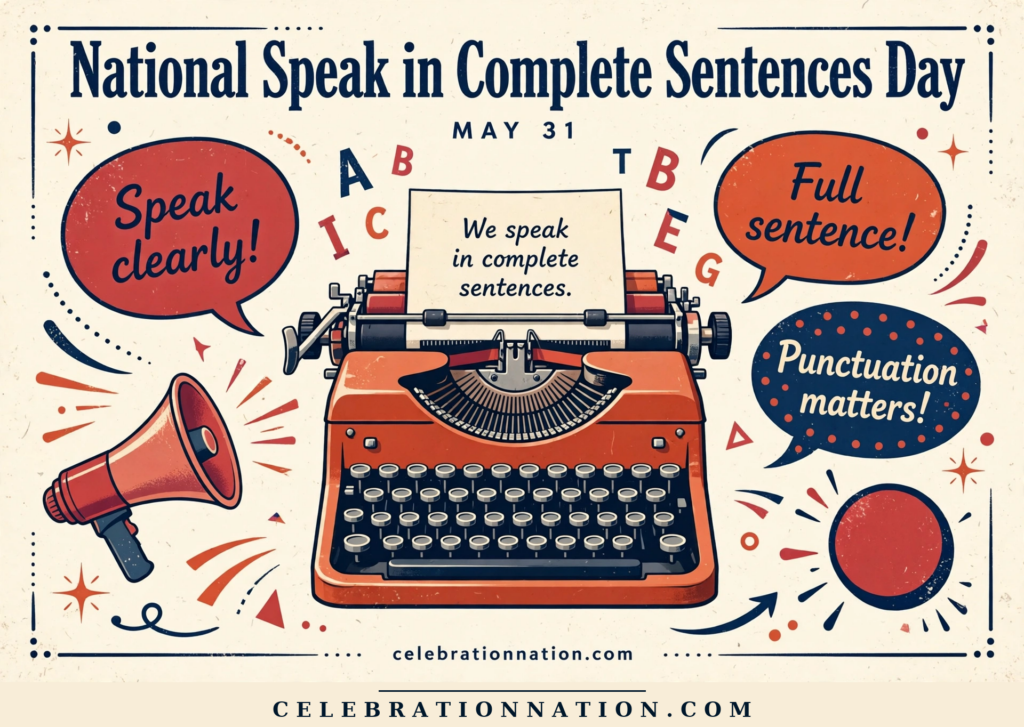
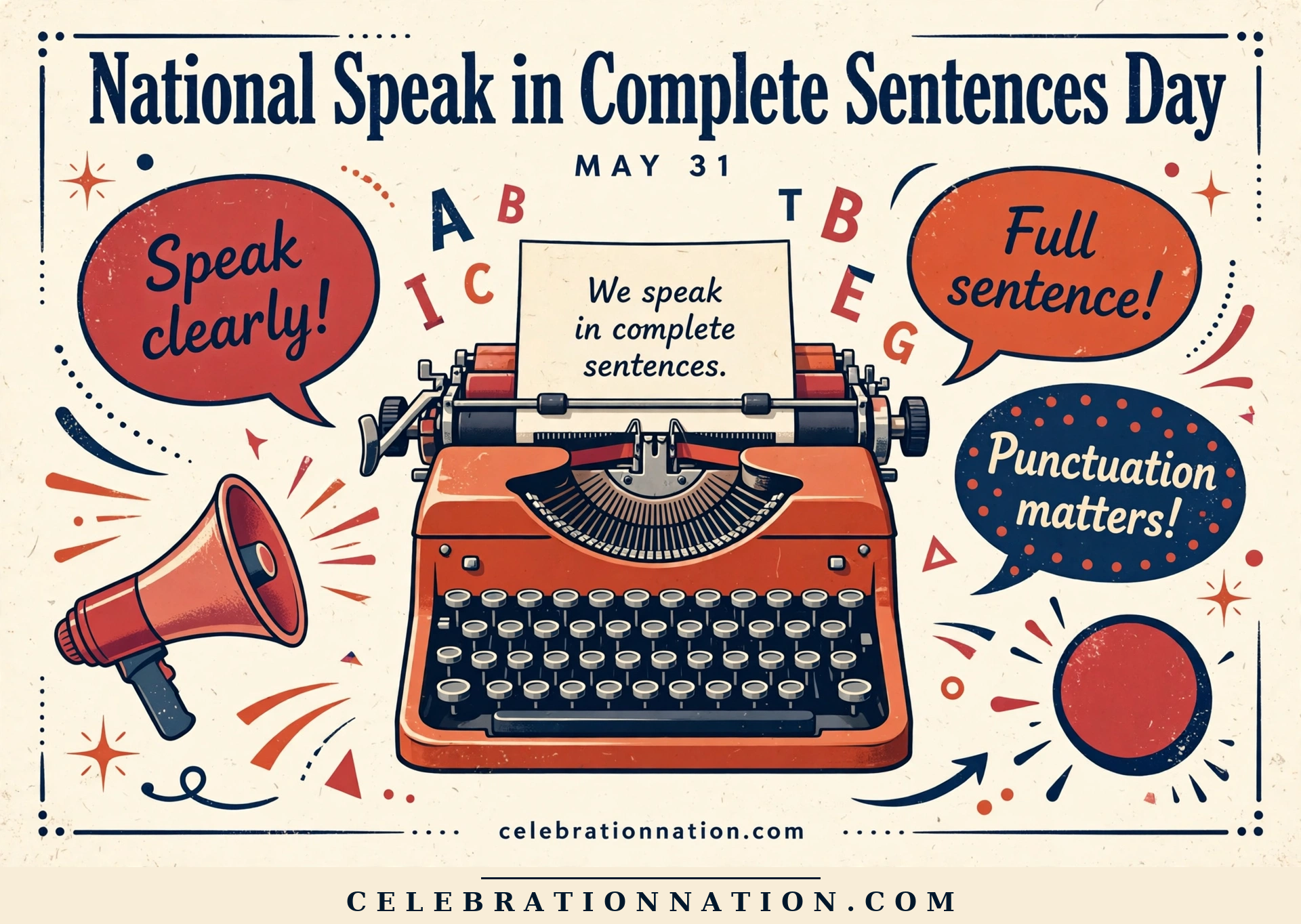
National Speak in Complete Sentences Day
On National Speak in Complete Sentences Day, we make a little room on the calendar for the thing that makes us who we are.
- Roots
- The founder and origin of this observance are unknown.
- Vibe
- A day dedicated to enhancing communication skills.
- Also on May 31
- International Flight Attendant Day · Save Your Hearing Day · Smile Day
- Hashtag
- #NationalSpeakInCompleteSentencesDay
Ways to celebrate
Small, doable ways to celebrate National Speak in Complete Sentences Day.
- Do one small thing that makes the day feel marked.
- Tell someone what you're celebrating and why.
- Share a post, a photo, or a memory connected to it.
- Make a tiny tradition — something you could do again next year.
- Let it be simple. Not every celebration has to be a production.
Make it your kind of celebration
Family
Do one small thing together that everyone will remember.
Kids
Turn it into a craft, a story, or a snack — meet them where they are.
Couples
Use the day as an excuse for a little intentional time together.
Office
Acknowledge the day in the team chat or at a stand-up. Small, sincere, fast.
School
Anchor a short lesson or activity around the day.
Community
Share, volunteer, or donate to make the day mean something locally.
Just me
Celebrate quietly and completely. One person can still mark a day.
Plan ahead
National Speak in Complete Sentences Day is observed on May 31 every year. Here is where it lands for the next ten years, handy for planners, marketers and party people.
Fast facts
The story
National Speak in Complete Sentences Day, observed on May 31, serves as a reminder of the significance of clear communication. In a world where miscommunication can lead to misunderstandings, this day invites individuals to reflect on their language usage. It emphasizes the importance of coherent thoughts articulated through complete sentences, fostering better understanding and connection among people.
Read the full story
The founder and origin of this observance are unknown, though it is sometimes associated with concerns about the decline of language skills in digital communication. As texting and social media became prevalent, the art of conversation often diminished to fragments and abbreviations. This day aims to combat that trend, encouraging individuals of all ages to express themselves fully and thoughtfully.
Research indicates that adults speak an average of 16,000 words each day, making the opportunity to communicate effectively essential. For children, mastering the ability to form complete sentences typically occurs by age three, marking a crucial developmental milestone. By promoting this observance, we can help nurture better communicative habits in younger generations.
Celebrating National Speak in Complete Sentences Day can take many forms. From engaging in meaningful discussions to writing letters and practicing public speaking, individuals can enhance their communication skills. By valuing the clarity of expression, we not only improve our interactions but also enrich our relationships and communities.
Did you know?
Communication Breakdown
Misunderstandings often arise from incomplete sentences.
Children's Language Development
Kids start forming complete sentences between ages 2-3.
Sentence Length
A complete sentence contains a subject and a verb.
Digital Communication Impact
Texting has influenced concise expressions in speech.
Public Speaking Importance
Effective public speaking enhances personal and professional growth.
Language Skills
Strong language skills correlate with academic success.
Cultural Significance
Language reflects cultural values and societal norms.
Around the world
Every culture celebrates a little differently.
- USUnited StatesThe primary country celebrating this day.
- GBUnited KingdomEmphasizes the importance of clear communication.
- CACanadaPromotes language skills in educational settings.
- AUAustraliaEncourages effective speech in communities.
- INIndiaFocuses on clarity in diverse languages.
- ZASouth AfricaHighlights the significance of language in unity.
Keep the party going
See the calendar


Celebrate every day, all year
Official gear from the people who track 1,700+ celebrations.
Browse the shop 2027 Wall Calendar, signed by Marlo AndersonSigned by the founder of National Day Calendar.
Never miss a reason to celebrate.
One quick morning email with today's celebrations, ideas and posters. Free, unsubscribe anytime.
🎉 You're on the list! Watch your inbox for The Daily Confetti.