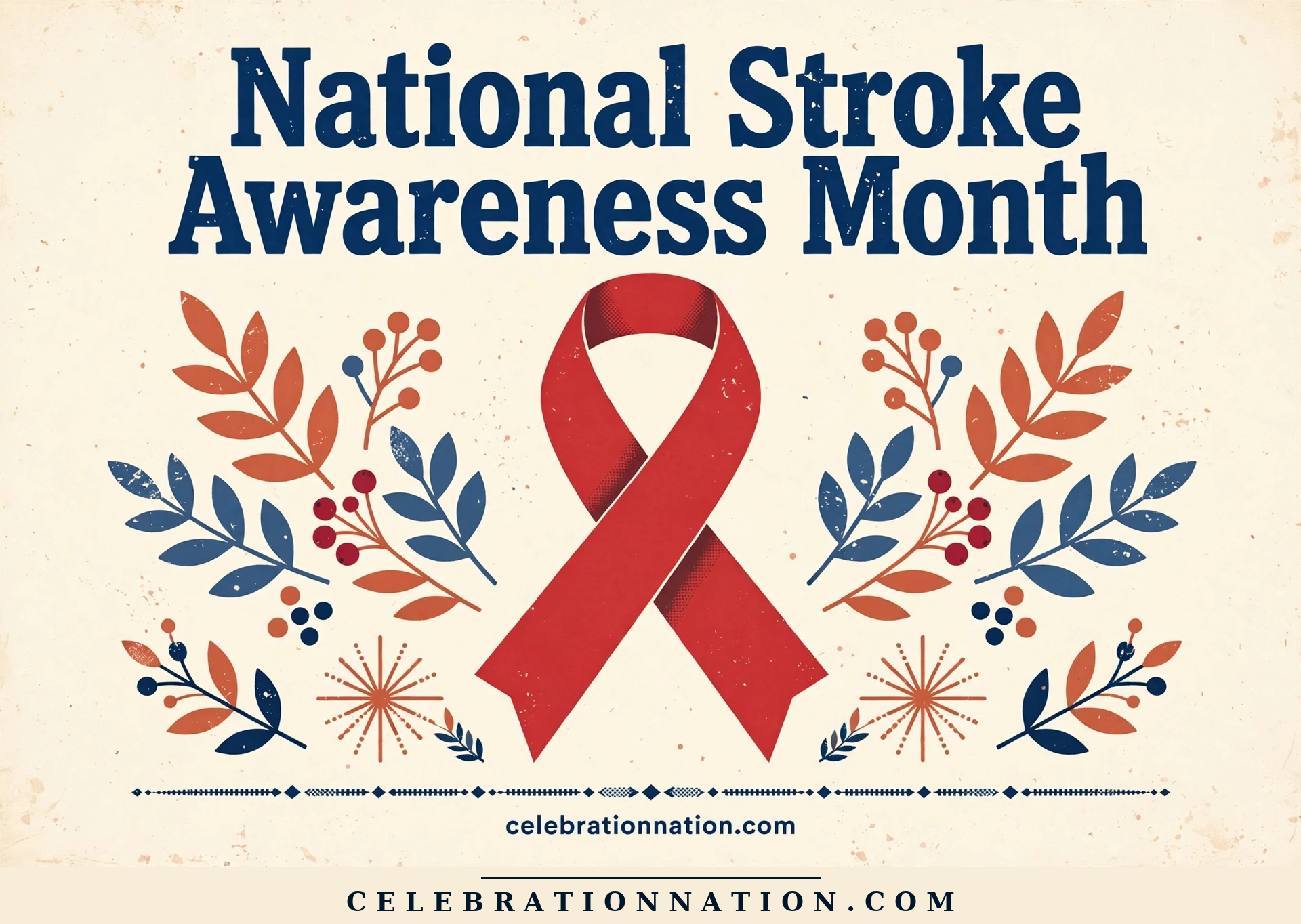
National Stroke Awareness Month
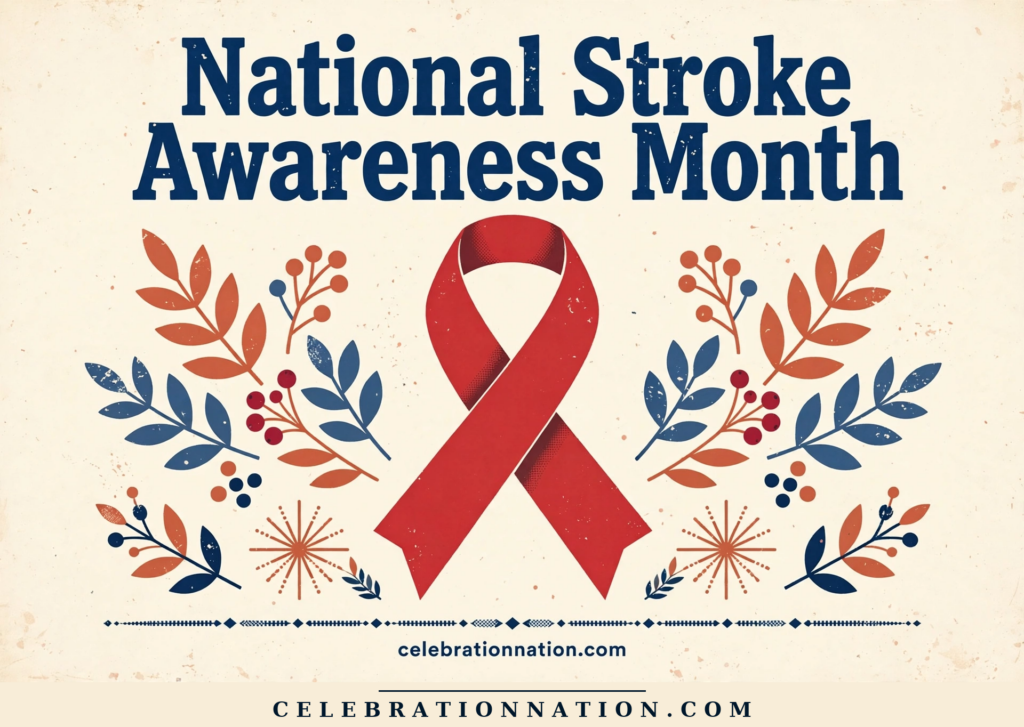
National Stroke Awareness Month isn't about diagnosis — it's about dignity. About showing up, showing support, and pushing for change.
- Roots
- Proclaimed in 1989 by President George H. W. Bush
- Vibe
- A month dedicated to education and prevention.
- Hashtag
- #NationalStrokeAwarenessMonth
Ways to celebrate
Small, doable ways to celebrate National Stroke Awareness Month.
- Share one reputable resource with your network.
- Donate to a patient-led organization working on stroke awareness.
- Check in on someone you know who's living with it.
- Book the screening or appointment you've been putting off.
- Listen more than you speak.
Fast facts
The story
National Stroke Awareness Month was established to educate the public about the signs, symptoms, and prevention of strokes. President George H. W. Bush proclaimed this observance in 1989, highlighting the need for awareness and proactive health measures. Strokes can occur suddenly and often without warning, making knowledge crucial for timely response. This month serves as a reminder to focus on risk factors such as hypertension, diabetes, and lifestyle choices.
Read the full story
Understanding the symptoms of a stroke can be life-saving, using the acronym FAST can help. F stands for face drooping, A for arm weakness, S for speech difficulties, and T for time to call emergency services. The quicker someone receives treatment, the better their chances of recovery. Awareness campaigns this month emphasize that recognizing these signs can empower individuals to save lives and improve outcomes.
In addition to recognizing symptoms, this month encourages individuals to engage in preventative measures. Regular check-ups, maintaining a healthy diet, and incorporating physical activity into daily routines are vital steps. Community events, health fairs, and educational workshops are organized nationwide to promote healthy lifestyles and reduce stroke risk. The more informed we are, the better equipped we become in fighting this leading cause of disability.
Sharing personal stories and experiences about strokes can foster a supportive community. Many survivors and caregivers participate in events and online discussions, shedding light on the recovery journey. These narratives not only raise awareness but also inspire hope and resilience. As we observe National Stroke Awareness Month, let us commit to educating ourselves and others, ensuring that stroke awareness becomes a priority for all.
Worth knowing
Know the Signs
Recognizing stroke symptoms can save lives.
Stay Active
Regular exercise reduces stroke risk.
Eat Healthy
A balanced diet promotes heart health.
Spread Awareness
Share information about stroke prevention.
Did you know?
First Stroke Awareness Month
Proclaimed in 1989 by President George H. W. Bush.
Global Impact
Strokes affect millions worldwide each year.
Age Factor
Risk increases with age, though stroke can happen at any age.
Gender Differences
Stroke affects both women and men.
Cultural Awareness
Different countries have unique campaigns.
Recovery Rates
Fast emergency care can mean less disability after a stroke.
Preventive Measures
Regular exercise can help reduce stroke risk.
Around the world
Every culture celebrates a little differently.
- USUnited StatesHome to National Stroke Awareness Month.
- GBUnited KingdomAlso recognizes stroke awareness initiatives.
- AUAustraliaParticipates in global stroke awareness efforts.
- CACanadaEngages in health campaigns similar to the U.S.
- NZNew ZealandFocuses on education and prevention.
- INIndiaIncreasingly aware of stroke-related health issues.
Coming up next
See the calendar
Celebrate every day, all year
Official gear from the people who track 1,700+ celebrations.
Browse the shop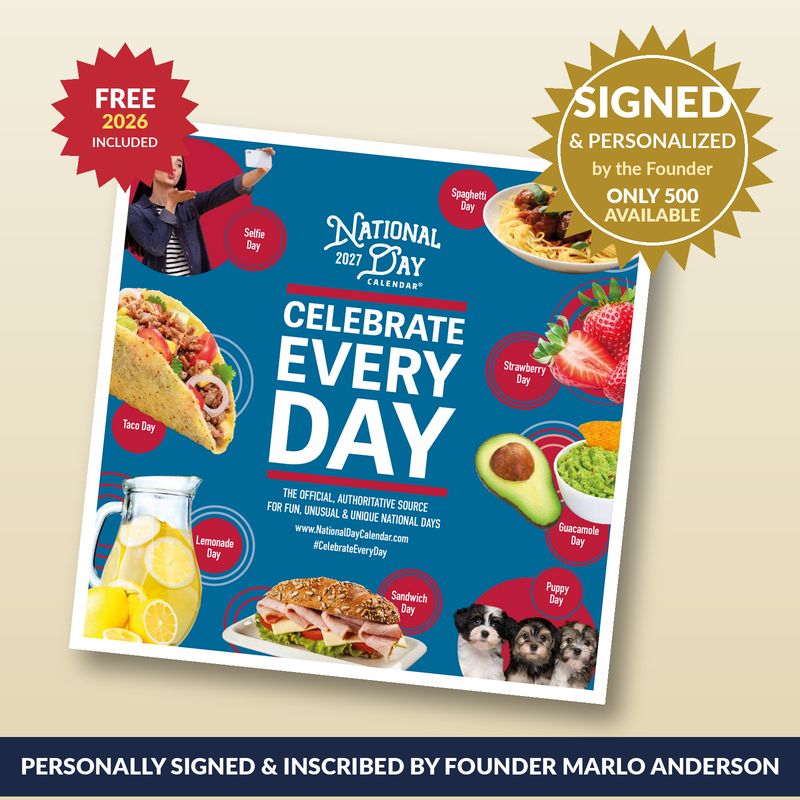 2027 Wall Calendar, signed by Marlo AndersonSigned by the founder of National Day Calendar.
Never miss a reason to celebrate.
One quick morning email with today's celebrations, ideas and posters. Free, unsubscribe anytime.
🎉 You're on the list! Watch your inbox for The Daily Confetti.