




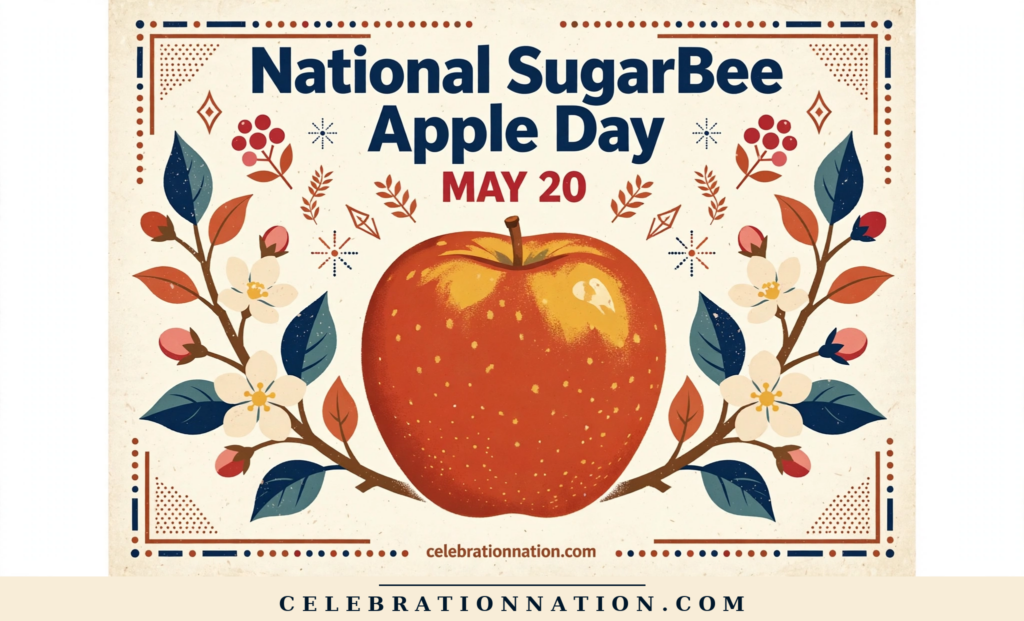
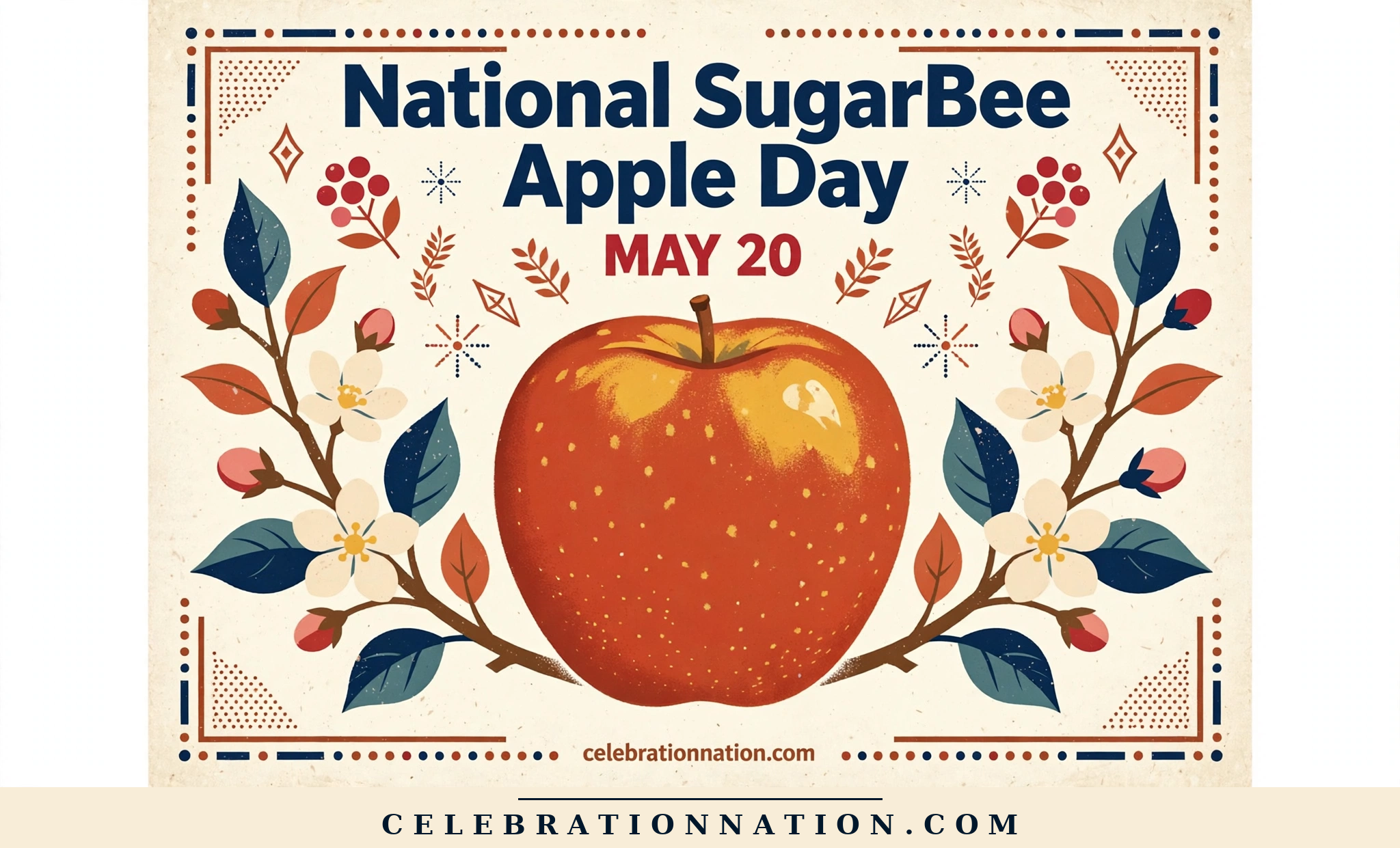
National SugarBee Apple Day
National SugarBee Apple Day turns sugarbee apple into the centerpiece — a bright, simple thing that still tastes like summer.
- Roots
- Developed in Minnesota, USA
- Vibe
- A celebration of harvest and flavor.
- Also on May 20
- World Bee Day · World Metrology Day · International Red Sneakers Day
- Hashtag
- #NationalSugarBeeAppleDay
Ways to celebrate
Small, doable ways to celebrate National SugarBee Apple Day.
- Pick up sugarbee apple at a farmers market this week.
- Make one simple thing with it — a galette, a smoothie, a salad.
- Send a kid home with a bag of it, fruit-bowl style.
- Try a new variety you've never bought before.
- Share whatever you can't eat before it goes.
Make it your kind of celebration
Family
Do a tasting with three varieties and pick a family favorite.
Kids
Let them help choose at the market and prep it at home.
Couples
Make one simple recipe together — fruit salad, galette, smoothie, anything.
Office
Bring a real fruit platter, not the sad office kind. It disappears fast.
School
Tie it into a nutrition lesson or a simple classroom tasting.
Community
Donate fresh produce to a food pantry — it's always needed and often missing.
Just me
Eat it at peak, slowly, outside if the weather allows.
Plan ahead
National SugarBee Apple Day is observed on May 20 every year. Here is where it lands for the next ten years, handy for planners, marketers and party people.
Fast facts
The story
The SugarBee apple, a delightful variety known for its sweet flavor and crisp texture, was discovered as a chance seedling in a Minnesota orchard in the early 1990s. This apple is a cross between Honeycrisp and an unknown variety, resulting in a unique taste that has captured the hearts of apple lovers across the country. Its distinctive flavor profile makes it a favorite for fresh eating, baking, and cooking, further solidifying its place in American culinary traditions.
Read the full story
Celebrated on May 20 each year, National SugarBee Apple Day invites apple enthusiasts to appreciate this exceptional fruit. The day is an opportunity to explore the history of apple cultivation in the U.S., where apples have been a staple since the early colonists. Today, commercial SugarBee production is centered in Washington state.
Local orchards often celebrate this day with special events, including apple picking, tastings, and educational sessions about the apple-growing process. Families can enjoy activities that emphasize the importance of apples in American culture and the agricultural practices that sustain them. The SugarBee apple, with its remarkable sweetness, adds a touch of joy to these festivities.
As you celebrate National SugarBee Apple Day, consider incorporating this unique apple variety into your meals. Whether enjoyed fresh, baked into a pie, or blended into a sauce, the SugarBee apple offers a distinctive taste that brightens up any dish. This day is not just for tasting but also for appreciating the hard work of farmers and the agricultural heritage that brings this delightful fruit to our tables.
Did you know?
Apple Origins
Apples originated in Central Asia, where wild ancestors still grow.
Crisp Texture
The SugarBee is known for its remarkably crisp texture.
Honeycrisp Influence
The SugarBee was developed from the Honeycrisp apple variety.
Health Benefits
Apples are rich in fiber and vitamin C.
Cider Production
Many apple varieties, including SugarBee, are used in cider-making.
Largest Producer
The United States is the largest apple producer in the world.
Apple Festivals
Numerous festivals celebrate apple harvests across the U.S.
Around the world
Every culture celebrates a little differently.
- USMidwest USAHome to the majority of SugarBee apple orchards.
- USNortheast USAMany apple festivals celebrate local varieties.
- USWest Coast USAGrowing regions also support diverse apple varieties.
- CACanadaCanadian orchards also grow unique apple varieties.
- AUAustraliaApples are a popular fruit, with diverse varieties.
- DEGermanyKnown for its apple cultivation and cider production.
Keep the party going
See the calendar


Celebrate every day, all year
Official gear from the people who track 1,700+ celebrations.
Browse the shop 2027 Wall + Desk Calendar BundleCelebrate every day at home and at work.
Never miss a reason to celebrate.
One quick morning email with today's celebrations, ideas and posters. Free, unsubscribe anytime.
🎉 You're on the list! Watch your inbox for The Daily Confetti.