





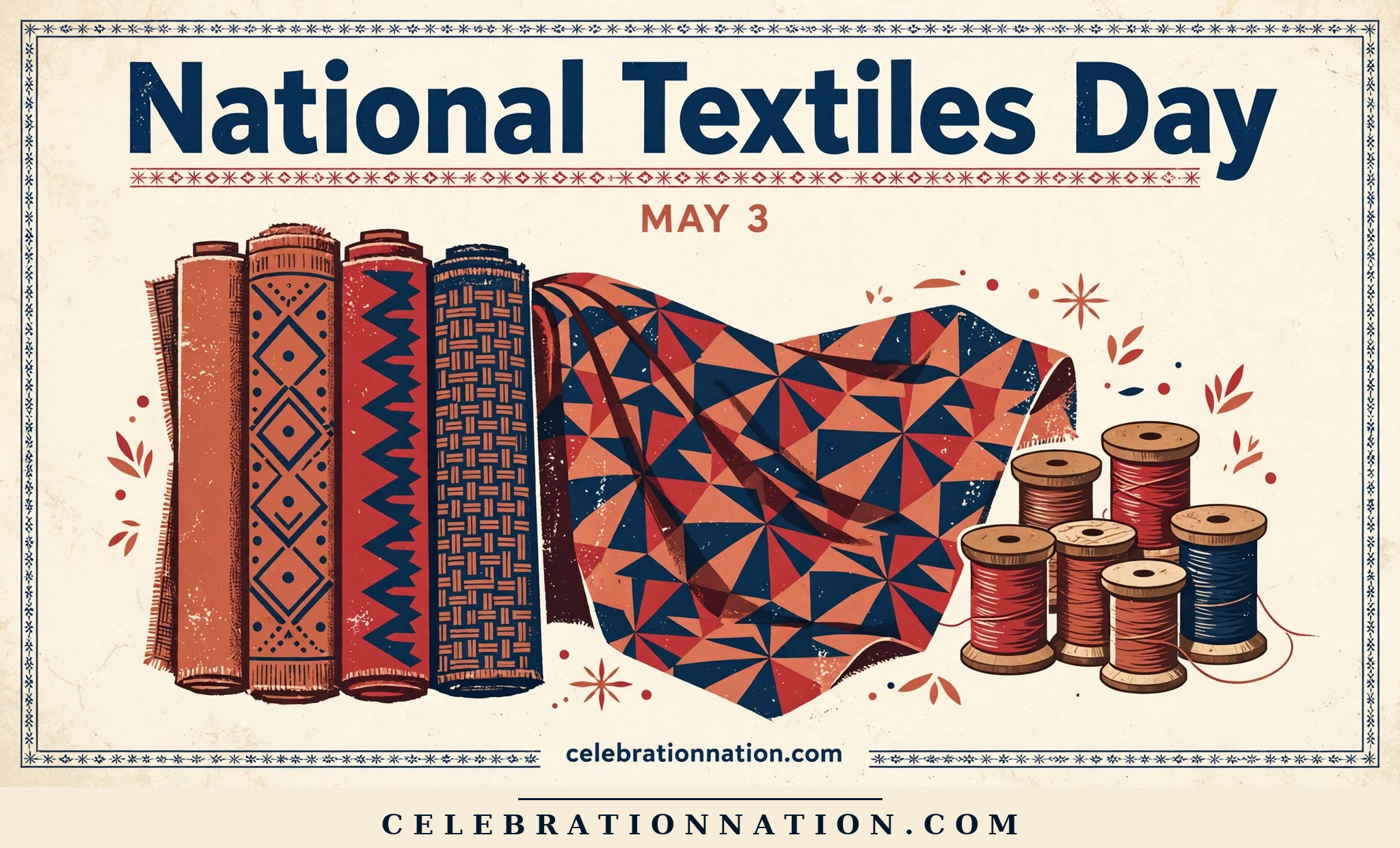
National Textiles Day
National Textiles Day is a small but real reason to pause, notice, and celebrate — together if we can.
- Roots
- Established in 2016 by the Valley Forge Fabrics
- Vibe
- A blend of tradition and modern innovation.
- Also on May 3
- International Bereaved Mother’s Day · Wave® Day · Infertility Survival Day
- Hashtag
- #NationalTextilesDay
Ways to celebrate
Small, doable ways to celebrate National Textiles Day.
- Do one small thing that makes the day feel marked.
- Tell someone what you're celebrating and why.
- Share a post, a photo, or a memory connected to it.
- Make a tiny tradition — something you could do again next year.
- Let it be simple. Not every celebration has to be a production.
Make it your kind of celebration
Family
Do one small thing together that everyone will remember.
Kids
Turn it into a craft, a story, or a snack — meet them where they are.
Couples
Use the day as an excuse for a little intentional time together.
Office
Acknowledge the day in the team chat or at a stand-up. Small, sincere, fast.
School
Anchor a short lesson or activity around the day.
Community
Share, volunteer, or donate to make the day mean something locally.
Just me
Celebrate quietly and completely. One person can still mark a day.
Plan ahead
National Textiles Day is observed on May 3 every year. Here is where it lands for the next ten years, handy for planners, marketers and party people.
Fast facts
The story
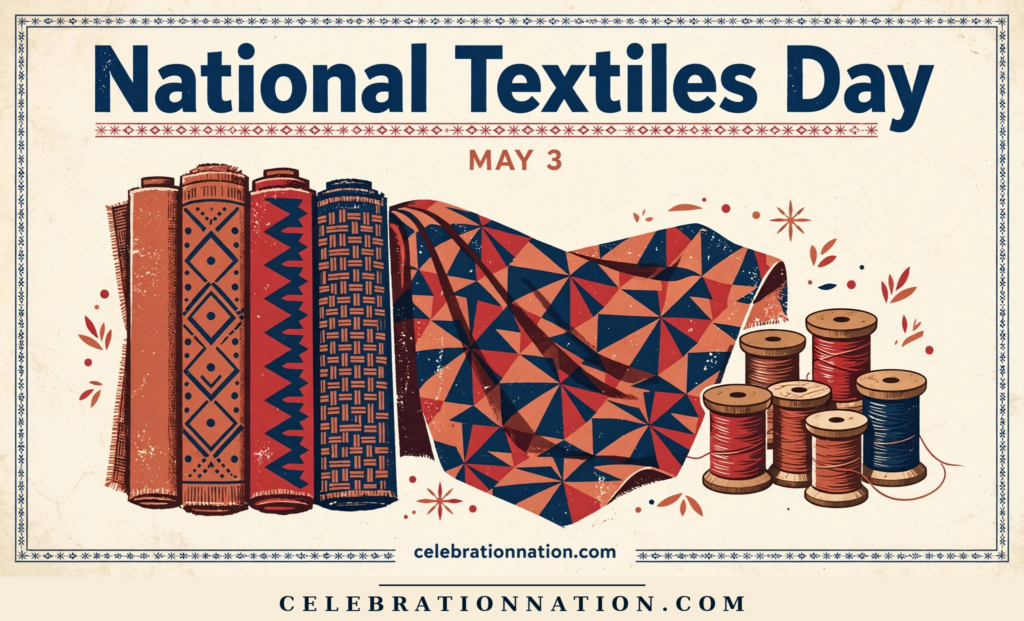
National Textiles Day, observed annually on May 3, is a celebration of the diverse and rich history of textiles in America. The day highlights the evolution of fabric, from the early days of handwoven cloth to today's advanced textiles used in fashion and technology. It serves as a reminder of the cultural significance textiles hold in American life, weaving together stories of communities and industries across the nation.
Read the full story
The textile industry has deep roots in the United States, with key historical centers established in regions such as New England and the Southern states. In the early 19th century, the introduction of industrial machinery revolutionized fabric production, leading to the establishment of large textile mills. These facilities were pivotal in shaping the economy and workforce of these areas, providing jobs and fostering a culture of craftsmanship and innovation.
Today, the textile industry continues to evolve, embracing sustainable practices and innovative technologies. From eco-friendly materials to smart textiles that enhance functionality, the industry reflects a growing awareness of environmental responsibility. This shift not only preserves the legacy of American textiles but also opens new avenues for creativity and design, engaging a new generation of artisans and consumers.
As we celebrate National Textiles Day, we invite everyone to explore the artistry behind textiles, support local artisans, and appreciate the intricate stories woven into every fabric. Whether through visiting museums, attending workshops, or simply sharing favorite fabric stories, there are countless ways to engage with this vital aspect of American culture.
Did you know?
First Textile Mill
The first successful textile mill in the U.S. was established in 1789 in Pawtucket, Rhode Island.
Cotton Production
The U.S. is one of the world's largest producers of cotton, crucial for the textile industry.
Textile Exports
Textiles are among the top exports from the U.S., showcasing American innovation.
Historic Patterns
Quilting has a long history in America, with patterns often telling stories of the past.
Sustainable Practices
Many modern textile companies are adopting eco-friendly practices to reduce waste.
Fashion Influence
American textiles influence global fashion trends significantly.
Textile Art
Textile arts are recognized as a prominent form of contemporary art.
Around the world
Every culture celebrates a little differently.
- USNew EnglandHome to some of the earliest textile mills in the U.S.
- USThe SouthKnown for cotton production and textile manufacturing.
- USThe MidwestA hub for innovation in textile technology.
- USWest CoastEmerging center for sustainable textile practices.
- USAppalachiaRich in traditional textile crafting heritage.
- USSouthwestFamous for vibrant textiles and Native American designs.
Keep the party going
See the calendar

Celebrate every day, all year
Official gear from the people who track 1,700+ celebrations.
Browse the shop 2027 Wall + Desk Calendar BundleCelebrate every day at home and at work.
Never miss a reason to celebrate.
One quick morning email with today's celebrations, ideas and posters. Free, unsubscribe anytime.
🎉 You're on the list! Watch your inbox for The Daily Confetti.