



National Walnut Day
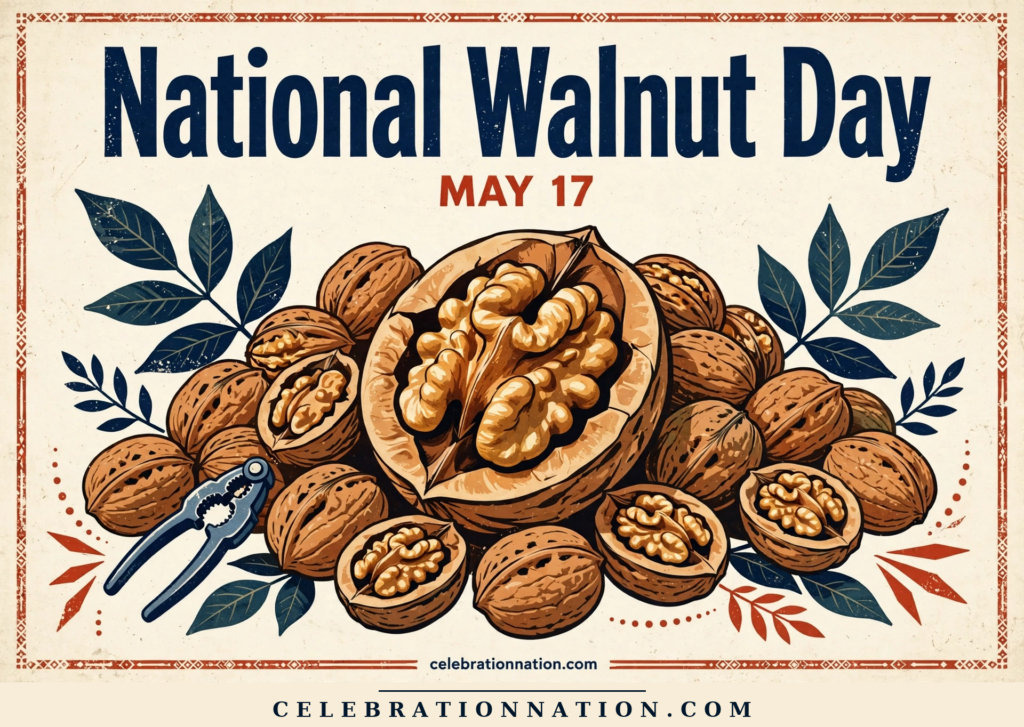
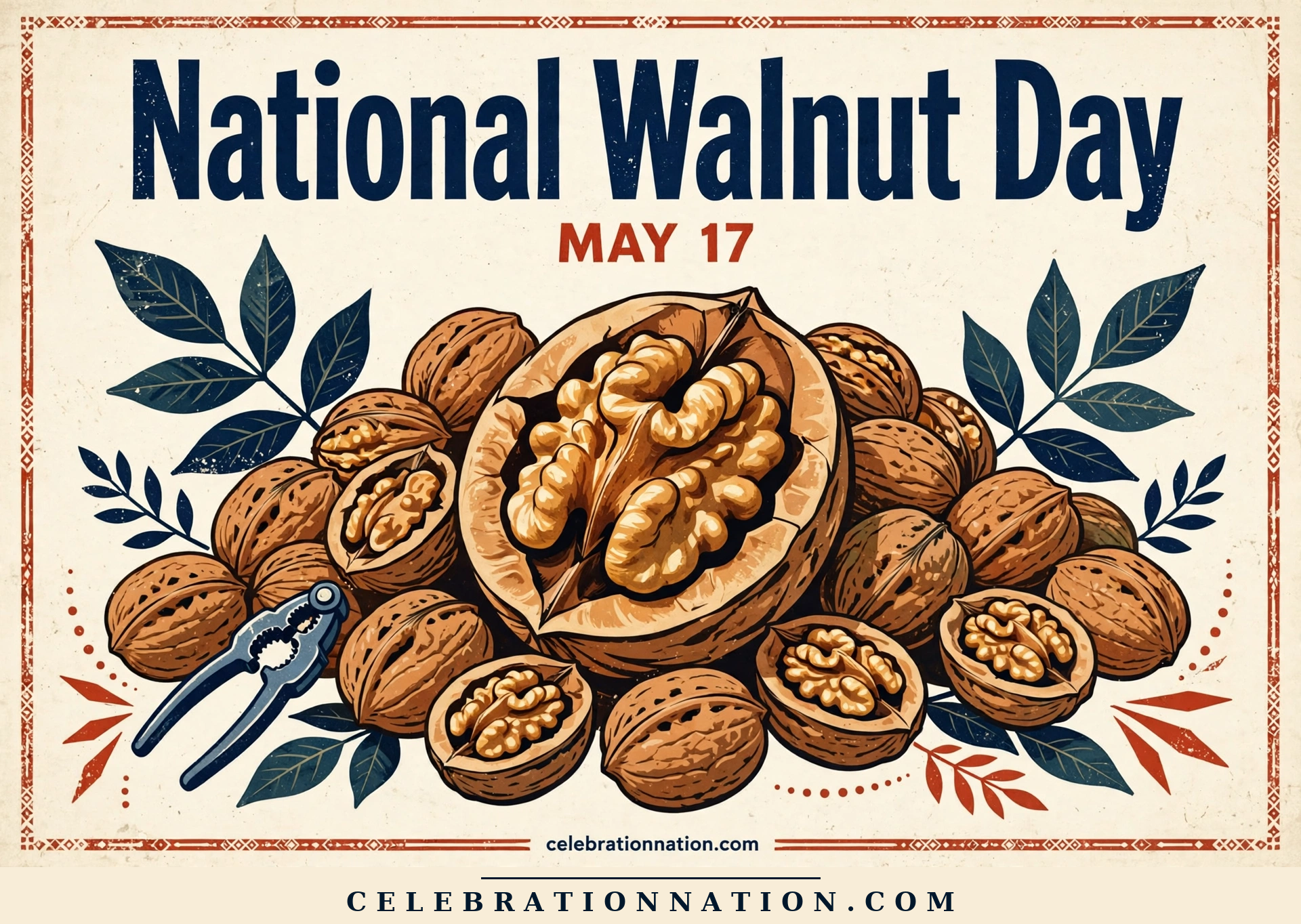
National Walnut Day on May 17 honors America's most versatile nut — the English walnut that grows in California's Central Valley, the black walnut that grows wild from Missouri to the Atlantic, and the thousand American recipes that feature them. Established in 1949 by the Walnut Marketing Board and signed by President Truman in 1958. California grows 99% of the US walnut crop.
- Vibe
- Hearty & Homespun
- Also on May 17
- World Baking Day · World Hypertension Day · World Telecommunication and Information Society Day
- Hashtag
- #NationalWalnutDay
Ways to celebrate
Crack, bake, and snack:
- 🌰 Buy fresh California walnuts. Unshelled if possible — crack your own. The flavor difference from pre-shelled bagged walnuts is significant.
- 🍪 Bake walnut cookies. Oatmeal-walnut-raisin, walnut chocolate chip, classic chocolate-walnut brownies. Universal American baking classics.
- 🥗 Make a walnut salad. Toasted walnuts + goat cheese + pear + arugula + balsamic. Restaurant-quality, 10 minutes.
- 🔨 Try black walnuts. Order a pound from Hammons (Missouri's Hammons Black Walnuts is the major commercial supplier). Far richer flavor than English walnuts.
- 🥧 Bake a walnut pie. Like pecan pie, but walnut. Common in California and Missouri. Maple syrup + walnuts + butter + eggs.
Make it your kind of celebration
Family
Nut-cracking afternoon with a bowl of unshelled walnuts, a nutcracker, and a fireplace. Kids love the physical act; adults get nostalgic.
Kids
Walnut 'boat' crafts — half-shells + toothpicks + paper sails. Classic preschool activity; takes 5 minutes to set up.
Couples
Bake brownies with toasted walnuts for a Friday night at home. Simple, perfect, 45 minutes.
Office
Bowl of walnuts at the reception desk. A classic afternoon-slump pickup; plus the cracking sound discourages needless stopping.
School
Great life-science lesson: tree growth, pollination, crop agriculture. California walnut farming is an excellent case study.
Community
Walnut-themed bake sale at a community event. Brownies, walnut cookies, walnut breads — universally popular.
Just me
A handful of toasted walnuts + a pear + a glass of red wine. One of the great solo-evening snacks.
Plan ahead
National Walnut Day is observed on May 17 every year. Here is where it lands for the next ten years, handy for planners, marketers and party people.
Fast facts
The story
There are two walnuts in American agriculture. The English (or Persian) walnut, Juglans regia, imported to California by Franciscan missionaries in the 1770s, commercialized in the 1870s, and now grown on ~4,500 California family farms in the Central Valley. And the black walnut, Juglans nigra, native to eastern North America from Missouri to the Atlantic, a prized hardwood for furniture, and a distinctly American culinary tradition all its own.
Read the full story
California built the American walnut industry. The first successful commercial orchard was planted by Joseph Sexton in Goleta (Santa Barbara County) in 1867. The climate, dry summers, mild winters, long growing seasons, proved ideal. By 1900, California was a major US supplier. By 1950, it was the dominant domestic producer. Today, ~99% of US walnuts come from California, a leading walnut exporter. The industry is almost entirely family-owned; Diamond of California (the cooperative) represents California walnut growers.
Black walnuts, meanwhile, have never been industrialized. They grow wild across the Eastern US, particularly Missouri, which harvests roughly 20 million pounds per year from wild trees. Hammons Products Company in Stockton, Missouri has been the single major commercial buyer since 1946, processing ~95% of America's black walnut crop. The hull that surrounds a black walnut is so hard that modern industrial crackers still rely on specialized machinery developed in the 1940s. Black walnuts are richer, more intense, and more expensive than English walnuts, a true American delicacy.
National Walnut Day was officially recognized in 1958 by a Senate resolution signed by President Eisenhower, honoring California walnut consumption. The date, May 17, falls strategically between harvest seasons, when marketing boards want to stoke summer demand. The day honors both American walnuts: the California commercial giant and the wild Midwestern heirloom.
Four walnuts that actually taste different:
Six regions shaping American walnut culture:
Did you know?
Walnuts are technically drupes, not nuts.
Botanically, a walnut is a 'drupe' (fleshy-fruited seed, like a peach or olive), the 'shell' is actually the seed, and the discarded green hull is the fruit. Americans call it a nut; botanists call it a drupe. The English walnut tree is specifically Juglans regia.
Walnut trees inhibit other plants.
Black walnut trees produce a chemical called juglone in their roots, leaves, and hulls. Juglone is toxic to many plants, tomatoes, blueberries, rhododendrons die near black walnut trees. Allelopathy; a botanical curiosity that frustrates American gardeners.
Walnuts look like brains for a reason, sort of.
The walnut-brain visual similarity is noted in Western folk medicine since ancient Greece (the 'doctrine of signatures', a plant's shape indicates its medical use). Modern research: walnuts are genuinely good for brain health, high in omega-3 fatty acids. Coincidence or intuition, debatable.
The Hermitage had Jackson-era walnuts.
Many trees on Andrew Jackson’s Nashville estate were reportedly planted by Jackson himself nearly 200 years ago, until a 1998 tornado toppled about 1,000 of them.
Keep the party going
See the calendar

Celebrate every day, all year
Official gear from the people who track 1,700+ celebrations.
Browse the shop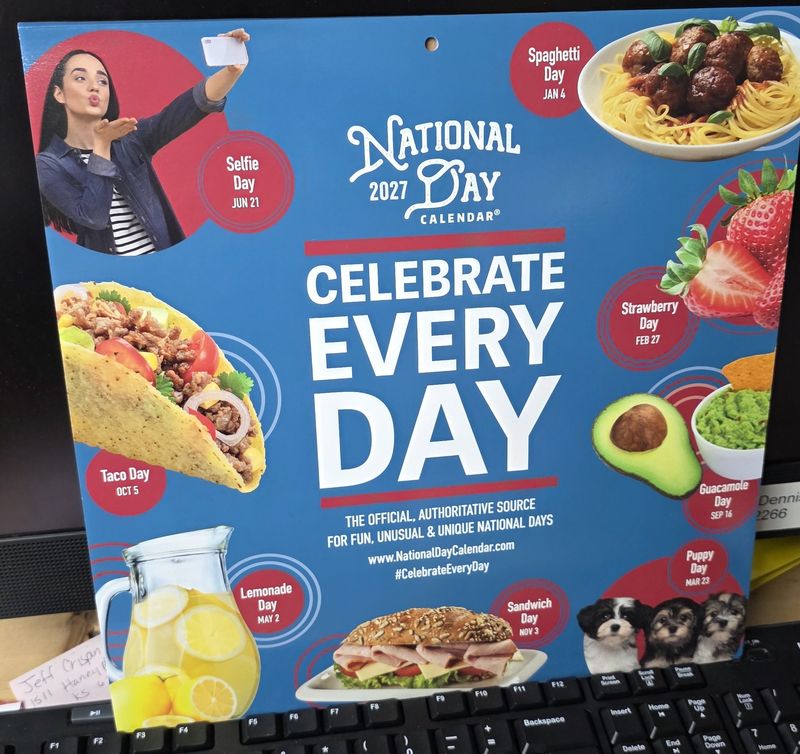 2027 Wall + Desk Calendar BundleCelebrate every day at home and at work.
Never miss a reason to celebrate.
One quick morning email with today's celebrations, ideas and posters. Free, unsubscribe anytime.
🎉 You're on the list! Watch your inbox for The Daily Confetti.