
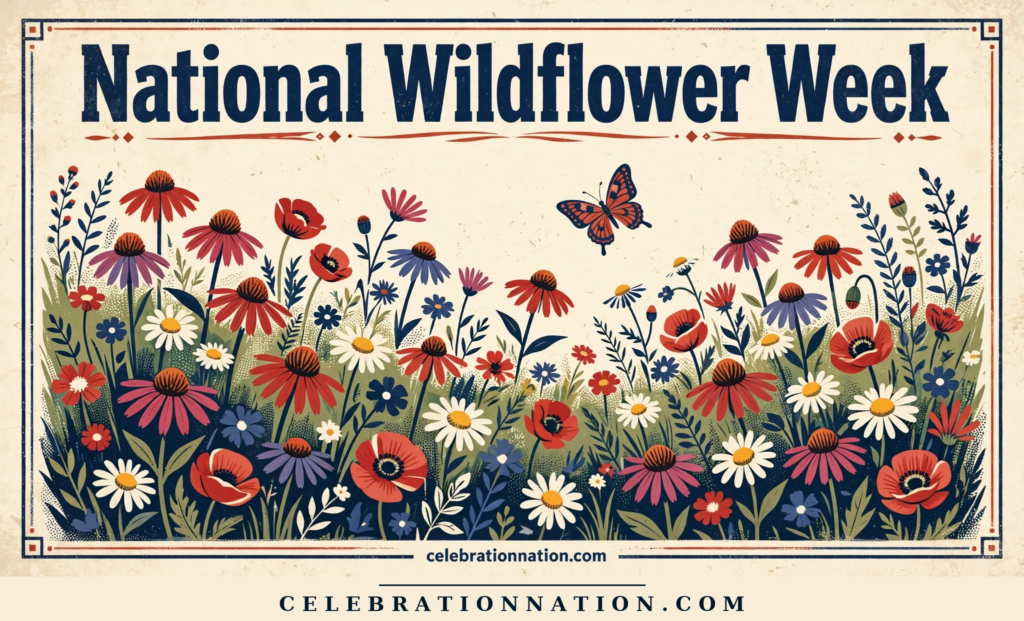
National Wildflower Week
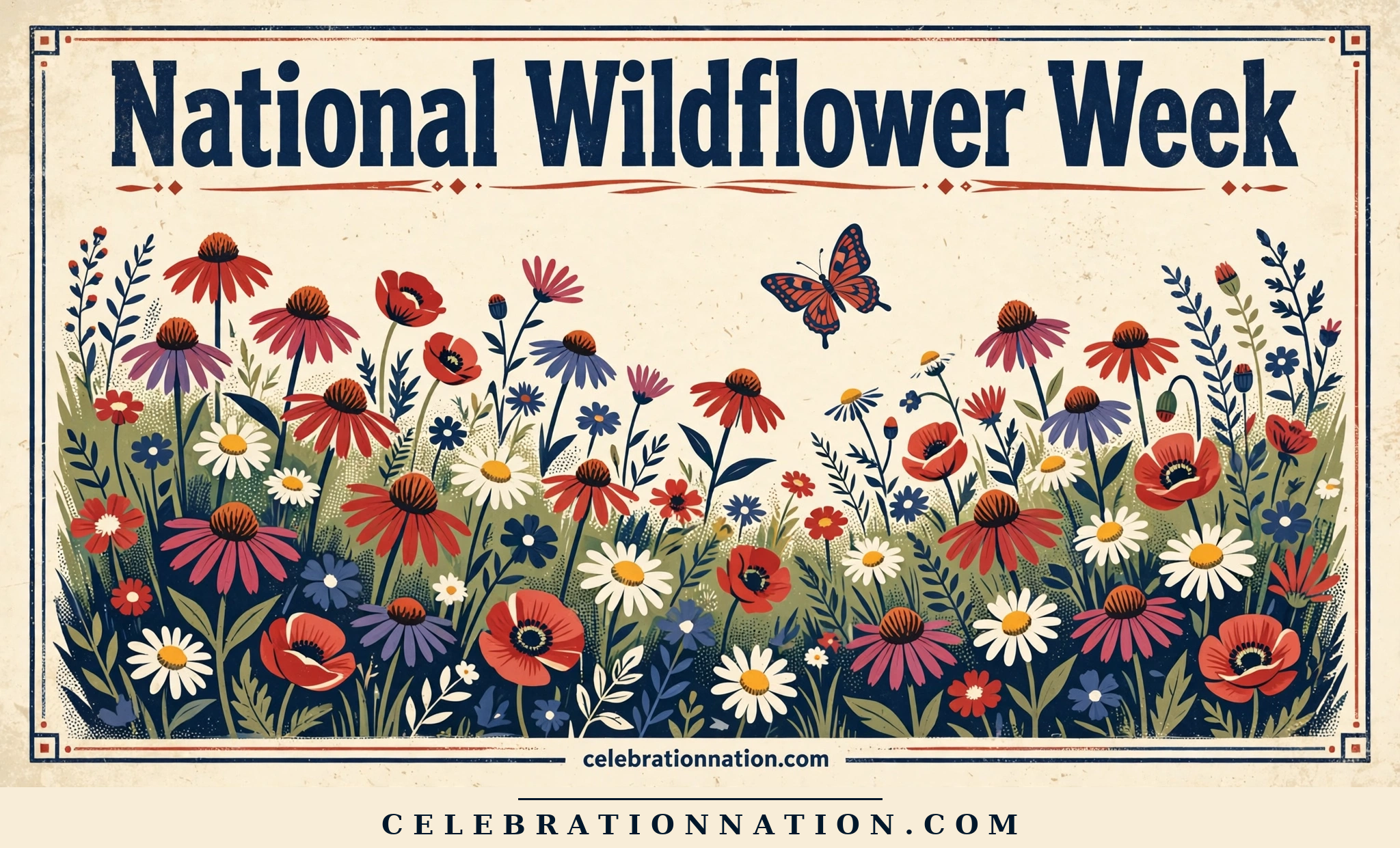
National Wildflower Week celebrates the outdoors as a kind of national living room — the big one, with a better view.
- Roots
- Creator unknown
- Vibe
- Joyful appreciation of nature's beauty
- Hashtag
- #NationalWildflowerWeek
Ways to celebrate
Small, doable ways to celebrate National Wildflower Week.
- Take a walk without your phone — just the walk.
- Plant something. Anything.
- Pick up ten pieces of litter from a place you love.
- Learn the name of one tree, bird, or wildflower in your neighborhood.
- Leave a place a little better than you found it.
Fast facts
The story
National Wildflower Week, celebrated in the first full week of May each year, serves as a reminder of the beauty and ecological significance of wildflowers. Though its creator is unknown, this event encourages all Americans to explore and appreciate the diverse array of wildflower species that flourish across the country. From the delicate bluebells of the Appalachian Mountains to the vibrant California poppies, wildflowers are a vital part of our natural heritage.
Read the full story
During this week, communities across the nation engage in various activities aimed at promoting awareness about native plants and their habitats. Events may include guided wildflower walks, educational workshops, and volunteer opportunities for planting and maintaining wildflower gardens. These gatherings not only celebrate the aesthetic appeal of wildflowers but also highlight their crucial role in supporting local ecosystems and pollinators.
Wildflowers are more than just beautiful; they provide essential services to the environment. They attract pollinators such as bees, butterflies, and hummingbirds, which are vital for the reproduction of many plants, including those we rely on for food. Additionally, wildflowers help prevent soil erosion, improve water quality, and offer habitat for various wildlife species. Understanding the importance of these plants fosters a sense of stewardship and encourages conservation efforts.
As National Wildflower Week approaches, take the opportunity to connect with your local environment. Search for wildflower trails, participate in community events, or simply take a moment to appreciate the blooms around you. By celebrating wildflowers, we not only honor their beauty but also commit to preserving the natural landscapes that support them.
Worth knowing
Discover Local Flora
Explore wildflower trails in your area.
Plant a Garden
Create a habitat for native wildflowers.
Join Community Events
Participate in local planting and educational activities.
Capture the Beauty
Take photos and share them with friends.
Did you know?
Wildflower Symbolism
Different wildflowers symbolize various emotions and events.
Pollinator Dependence
Many wildflowers rely on specific pollinators for reproduction.
Cultural Importance
Wildflowers have been celebrated in art and literature for centuries.
Medicinal Uses
Some wildflowers have been used for traditional medicine.
Invasive Species
Invasive plants can threaten native wildflower populations.
Seasonal Blooms
Wildflowers typically bloom in spring and summer months.
State Flowers
Each U.S. state has an official state flower, often a wildflower.
Around the world
Every culture celebrates a little differently.
- USUnited StatesHome to a rich diversity of wildflower species.
- CACanadaFeatures unique wildflowers in its varied ecosystems.
- MXMexicoKnown for its vibrant wildflowers in deserts and mountains.
- AUAustraliaBoasts unique species like the Sturt's Desert Pea.
- DEGermanyHome to beautiful meadows filled with wildflowers.
- GBUnited KingdomKnown for its iconic bluebells and poppy fields.
Coming up next
See the calendar
Celebrate every day, all year
Official gear from the people who track 1,700+ celebrations.
Browse the shop 2027 National Day Wall CalendarGet the 2026 edition free. 1,700+ observances.
Never miss a reason to celebrate.
One quick morning email with today's celebrations, ideas and posters. Free, unsubscribe anytime.
🎉 You're on the list! Watch your inbox for The Daily Confetti.