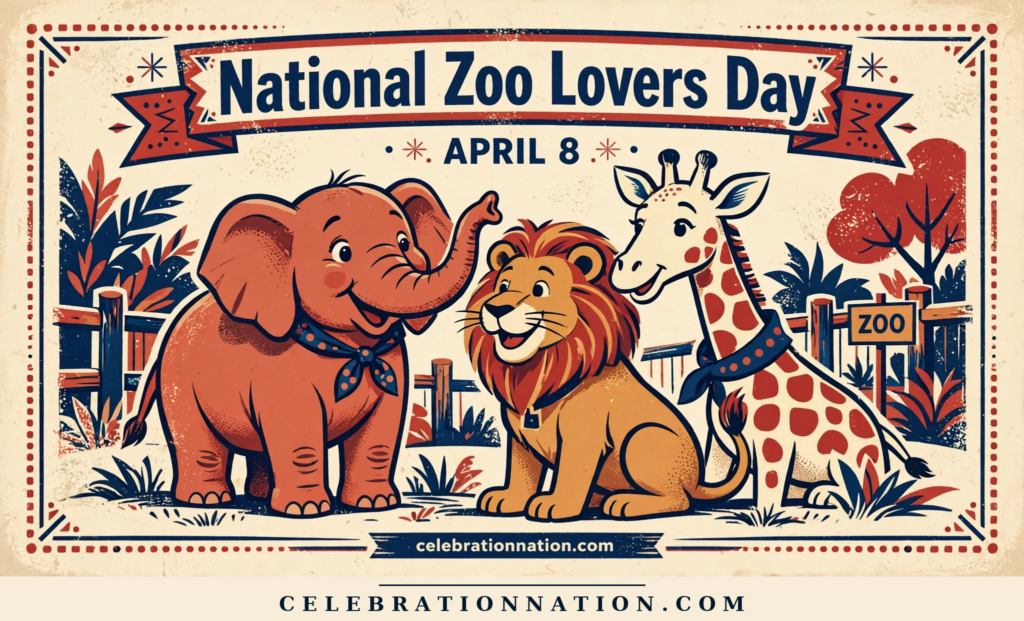
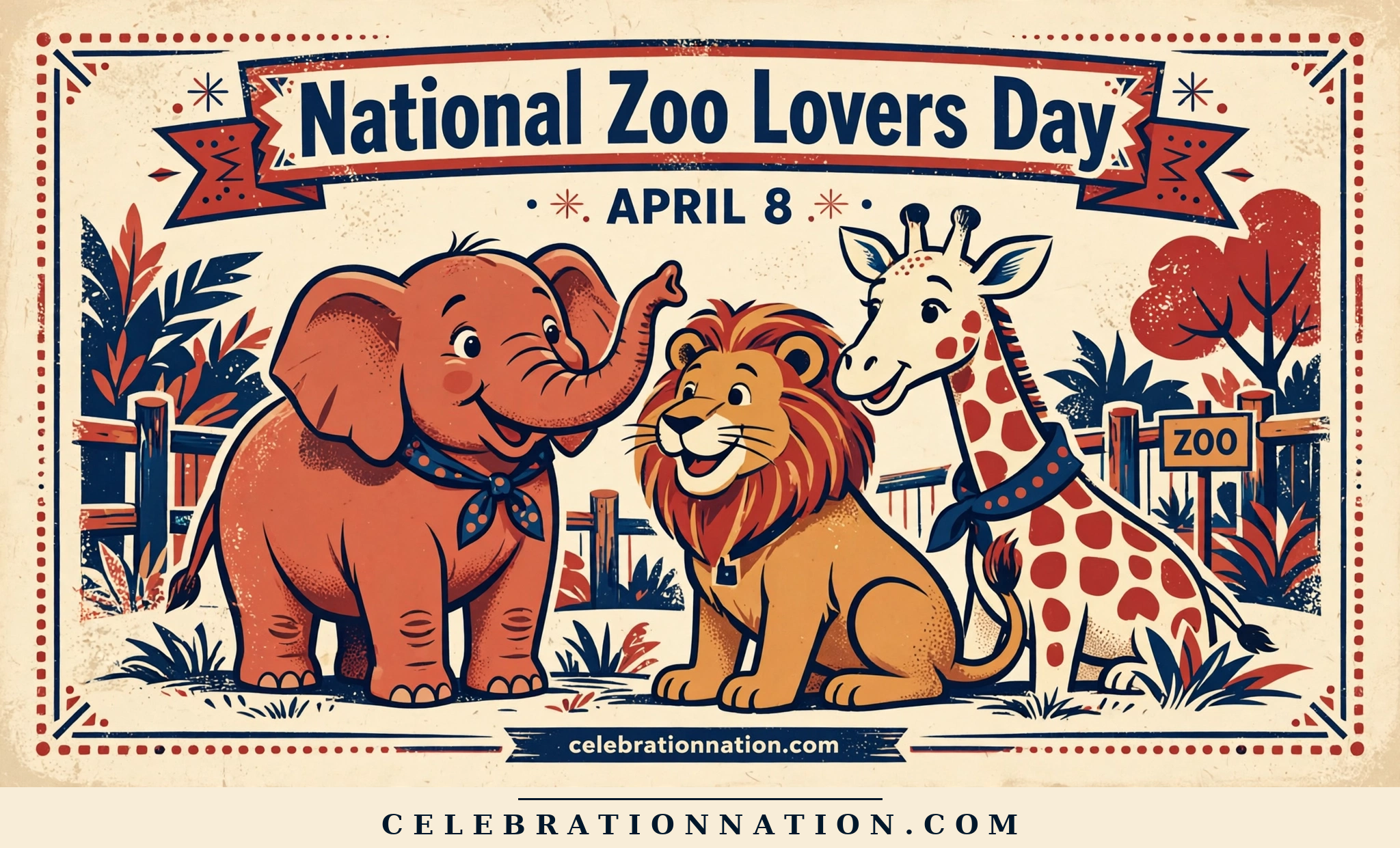
National Zoo Lovers Day
National Zoo Lovers Day on April 8 celebrates one of America's most widely-shared civic institutions — the 230+ accredited zoos and aquariums that educate 200 million visitors a year, anchor more than $22 billion in conservation funding, and keep countless endangered species from disappearing. Go visit. Walk the grounds. Support the work.
- Vibe
- Curious & Civic
- Also on Apr 8
- International Pageant Day · International Romani Day · All Is Ours Day
- Hashtag
- #NationalZooLoversDay
Ways to celebrate
Visit. Support. Learn:
- 🦁 Visit an AZA-accredited zoo. Look for the AZA sticker at entry. Not all facilities calling themselves 'zoos' meet the standard — accreditation matters enormously.
- 🎟️ Buy a membership. If you visit once, you've already paid for half a year's membership. Two visits = break-even. Plus supports conservation work.
- 📖 Learn before you go. Pick one species you don't know much about (the okapi, the red panda, the Andean condor). Read about them first. Changes the visit.
- 🏦 Donate directly to conservation. Most zoos have a species-adoption program or conservation fund. A $20 'adoption' funds real field work.
- 👪 Take a kid. Zoos are where half of us first learned what 'endangered species' meant. Passing that on matters.
Make it your kind of celebration
Family
Saturday at the zoo is the most reliably great family outing in America. Pack a picnic; arrive at open; plan around nap schedules.
Kids
Kids ages 3-10 may never love anything more than a day at the zoo. It's a universal experience.
Couples
A zoo date is underrated. Walking, talking, cool animals, no phones buzzing. Great for first dates and long marriages both.
Office
Corporate zoo memberships are a surprisingly popular and cheap employee perk — most zoos offer bulk pricing for businesses.
School
Field trip classic. But go a step deeper: call ahead; most zoos have curriculum-aligned education programs led by actual zookeepers.
Community
Volunteer as a docent. Takes training, but zoo docents are typically the happiest volunteer cohort in any city.
Just me
Weekday morning at a zoo. Almost empty. Go slow. Watch the animals actually being animals, not just posing for families.
Plan ahead
National Zoo Lovers Day is observed on April 8 every year. Here is where it lands for the next ten years, handy for planners, marketers and party people.
Fast facts
The story
Humans have kept animals in collections for 5,000 years, Egyptian pharaohs had them, the Aztecs had them, medieval European courts had them. But the modern 'zoo', open to the public, organized scientifically, housing animals by habitat, is a 19th-century European invention. The London Zoo (1828) was the first. Paris followed. Berlin followed. Philadelphia opened America's first zoo in 1874.
Read the full story
For a long time, American zoos were just menageries: animals in cages for entertainment. That started changing in the 1960s-70s. Carl Hagenbeck had pioneered moat-based exhibits (instead of bars) in Hamburg in 1907, but it wasn't until the 1970s that American zoos rebuilt around naturalistic habitats, enrichment programs, and serious research departments.
The pivot accelerated in the 1980s. The AZA (Association of Zoos and Aquariums) began a rigorous accreditation system that redefined what a real zoo is. Accredited zoos must meet standards for animal welfare, conservation budget, research programs, education, and veterinary care. Today 230+ zoos and aquariums in the US hold AZA accreditation. Many more call themselves zoos but don't, those are often roadside collections with very different standards.
Modern accredited zoos are serious conservation institutions. The San Diego Zoo Wildlife Alliance spends over $50 million a year on wildlife research and field work in 60+ countries. The Bronx Zoo's parent organization (WCS) has saved dozens of species. The California condor, extinct in the wild in 1987, was brought back entirely by a zoo-based captive breeding program led by the San Diego and Los Angeles zoos. 500+ condors fly again today.
Four main missions of a modern AZA-accredited zoo, beyond just showing animals:
Six of America's finest. Each worth a serious day trip:
Did you know?
The first zoo was 4,500 years old.
Archaeologists found a royal menagerie in the ancient Egyptian city of Hierakonpolis dating to ~3500 BCE. It held elephants, hippos, baboons, and leopards. Evidence of intentional feeding, an actual zoo, not just a trophy collection.
One US zoo saved a whole species from extinction.
The San Diego Zoo in 1987 took in the last 22 California condors on Earth. 37 years later, there are 500+ flying wild. The species exists today because of an American zoo.
Zoos are #3 in US family attractions.
Only behind movie theaters (#1) and shopping malls (#2). Ahead of museums, art galleries, amusement parks, and sports events. 50%+ of American families visit a zoo at least once a year.
Aquariums count as zoos for accreditation.
The AZA accredits both zoos and aquariums under one standard. The oldest American public aquarium is the New York Aquarium, opened 1896, now part of the Wildlife Conservation Society.
Keep the party going
See the calendar

Celebrate every day, all year
Official gear from the people who track 1,700+ celebrations.
Browse the shop National Day Celebration Card GameA party in a box, any day of the year.
Never miss a reason to celebrate.
One quick morning email with today's celebrations, ideas and posters. Free, unsubscribe anytime.
🎉 You're on the list! Watch your inbox for The Daily Confetti.