




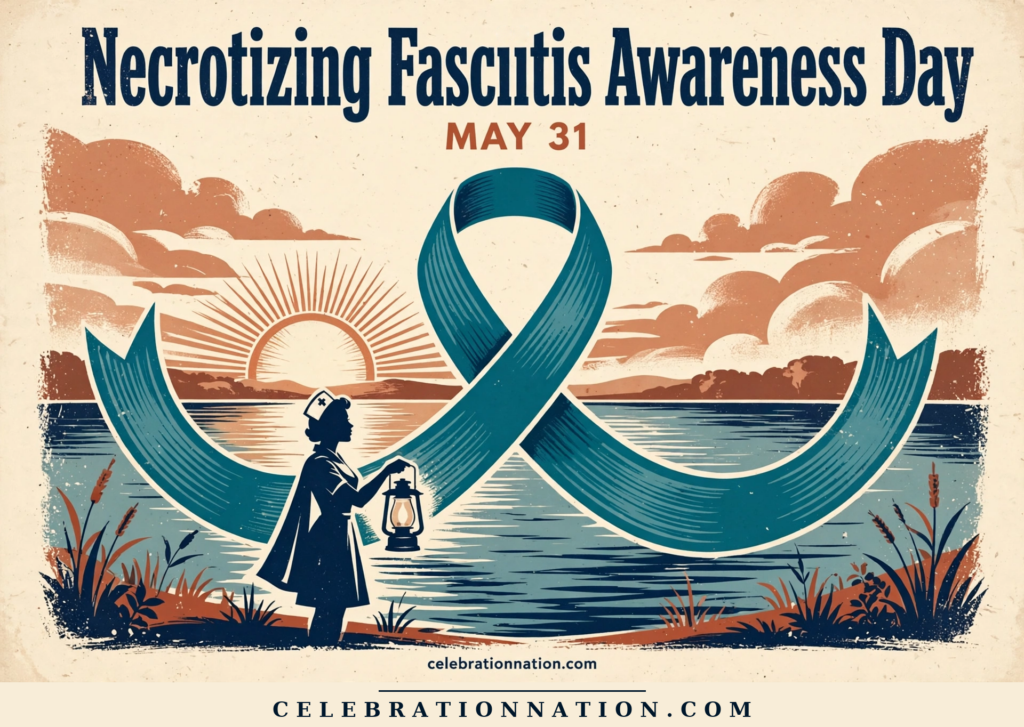
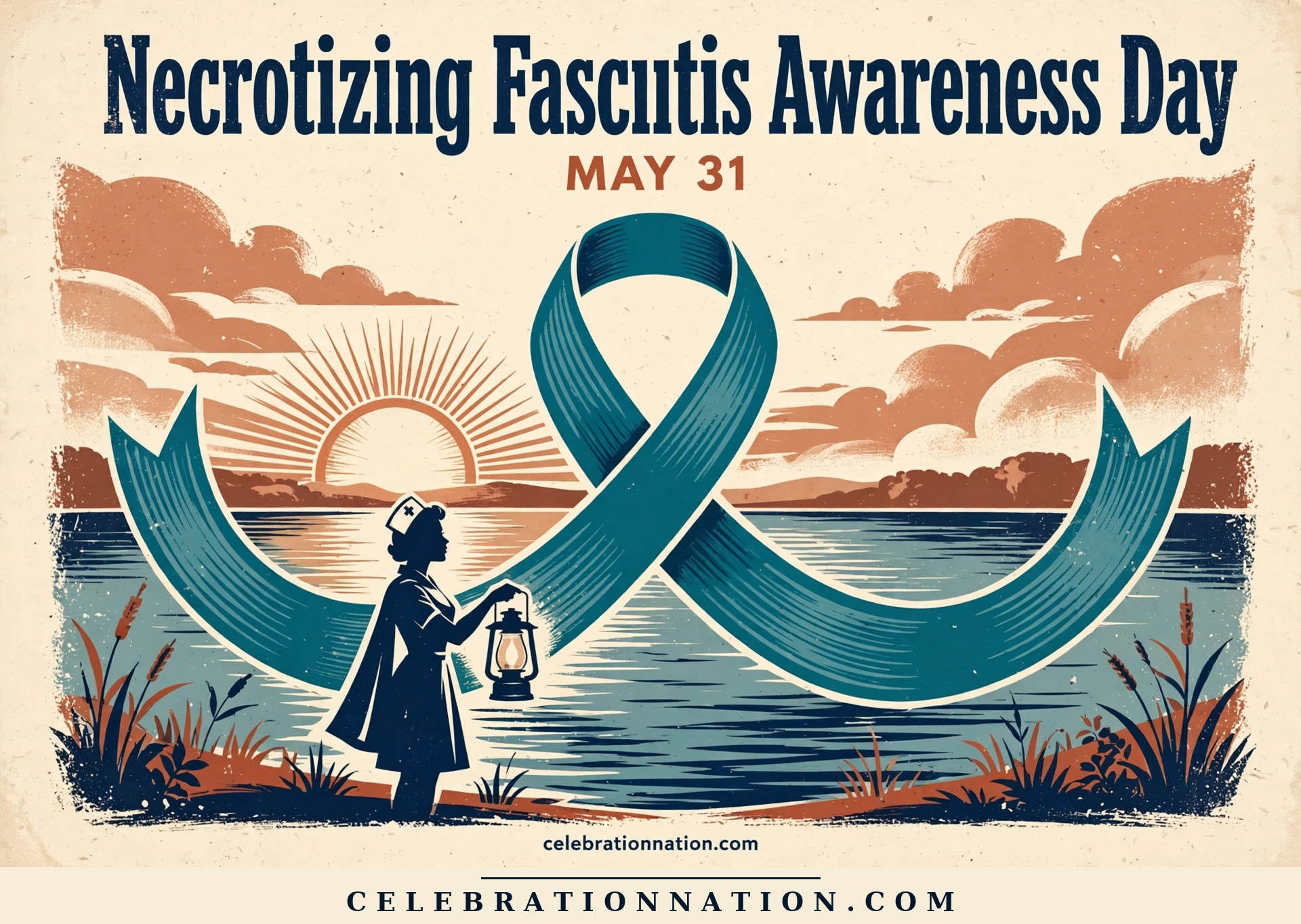
Necrotizing Fasciitis Awareness Day
Necrotizing Fasciitis Awareness Day is a hand extended — to the patients, caregivers, researchers, and families living with necrotizing fasciitis awareness.
- Roots
- Observed on May 31 since 2017
- Vibe
- Awareness and education are key
- Also on May 31
- International Flight Attendant Day · Save Your Hearing Day · Smile Day
- Hashtag
- #NecrotizingFasciitisAwarenessDay
Ways to celebrate
Small, doable ways to celebrate Necrotizing Fasciitis Awareness Day.
- Share one reputable resource with your network.
- Donate to a patient-led organization working on necrotizing fasciitis awareness.
- Check in on someone you know who's living with it.
- Book the screening or appointment you've been putting off.
- Listen more than you speak.
Make it your kind of celebration
Family
Have the real conversation at the table — stigma-free, no lecture.
Kids
Answer questions honestly and age-appropriately.
Couples
Check in with each other's appointments, screenings, and follow-ups.
Office
Share vetted resources and encourage people to use their benefits.
School
Bring in an expert, survivor, or advocate to speak for a class period.
Community
Run a donation drive, a walk, or a listening session for those affected.
Just me
Reach out to someone you know is living with it. Ask how they're doing for real.
Plan ahead
Necrotizing Fasciitis Awareness Day is observed on May 31 every year. Here is where it lands for the next ten years, handy for planners, marketers and party people.
Fast facts
The story
Necrotizing fasciitis is a severe bacterial infection that causes tissue death and can lead to life-threatening complications. First identified in the 18th century, its rapid progression requires immediate medical attention. It often arises from common skin bacteria, making awareness of its symptoms vital for timely treatment. On May 31, communities across the United States and beyond gather to spread knowledge about this dangerous condition.
Read the full story
Symptoms can initially resemble common infections, including fever, chills, and fatigue. However, as the condition progresses, individuals may experience severe pain and swelling in affected areas. Early recognition is crucial, delaying treatment can lead to devastating outcomes. By educating ourselves and others, we can help reduce the incidence of necrotizing fasciitis.
Necrotizing Fasciitis Awareness Day has been observed on May 31 since 2017, growing out of survivor-led advocacy for greater public knowledge. Health advocates and survivors have worked tirelessly to provide resources and support for those affected. Events dedicated to this day often include educational seminars, fundraising for research, and community discussions, all aimed at emphasizing the importance of awareness and prevention.
Internationally, necrotizing fasciitis is recognized as a critical health issue. Countries across the globe implement various strategies for early detection and treatment. As awareness spreads, the hope is to improve outcomes and save lives, reinforcing the message that knowledge is our strongest weapon against this infection.
Did you know?
What causes necrotizing fasciitis?
Commonly caused by bacteria, including group A streptococcus.
How is it treated?
Immediate surgical intervention and antibiotics are crucial.
What are the risk factors?
Diabetes, obesity, and recent surgery increase risk.
Can it spread?
Yes, it can spread rapidly through tissue.
Is it contagious?
No, it is not spread from person to person.
What is the survival rate?
Survival rates vary, but early treatment improves outcomes.
Are there long-term effects?
Some survivors may face physical and psychological challenges.
Around the world
Every culture celebrates a little differently.
- USUnited StatesRaising awareness through community events and online campaigns.
- GBUnited KingdomHealth organizations promote educational resources.
- AUAustraliaLocal hospitals provide workshops about prevention.
- CACanadaCommunity health initiatives focus on awareness.
- INIndiaGrowing awareness through health seminars and talks.
- BRBrazilNational campaigns aim to educate the public.
Keep the party going
See the calendar



Celebrate every day, all year
Official gear from the people who track 1,700+ celebrations.
Browse the shop 2027 Wall + Desk Calendar BundleCelebrate every day at home and at work.
Never miss a reason to celebrate.
One quick morning email with today's celebrations, ideas and posters. Free, unsubscribe anytime.
🎉 You're on the list! Watch your inbox for The Daily Confetti.