
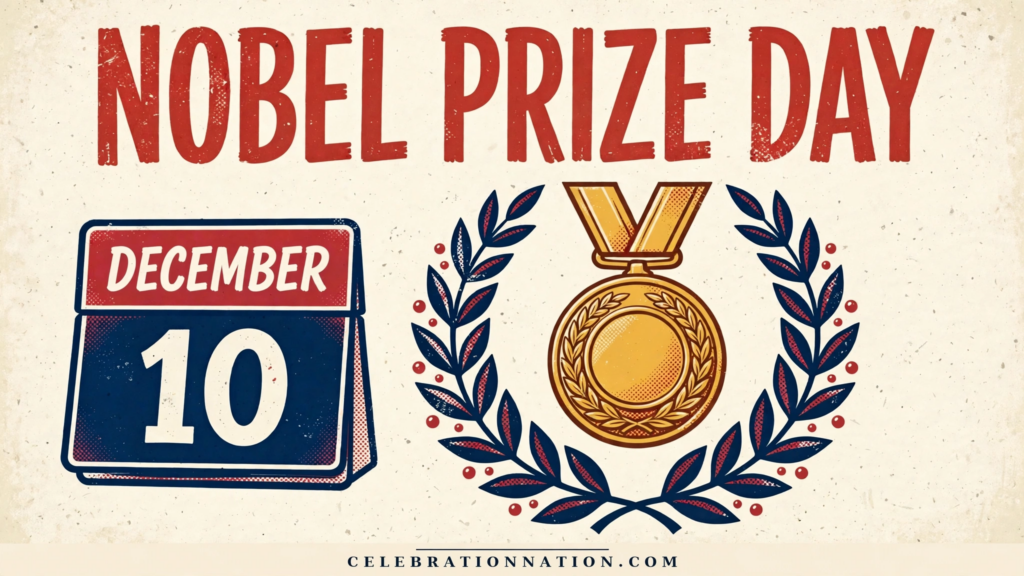
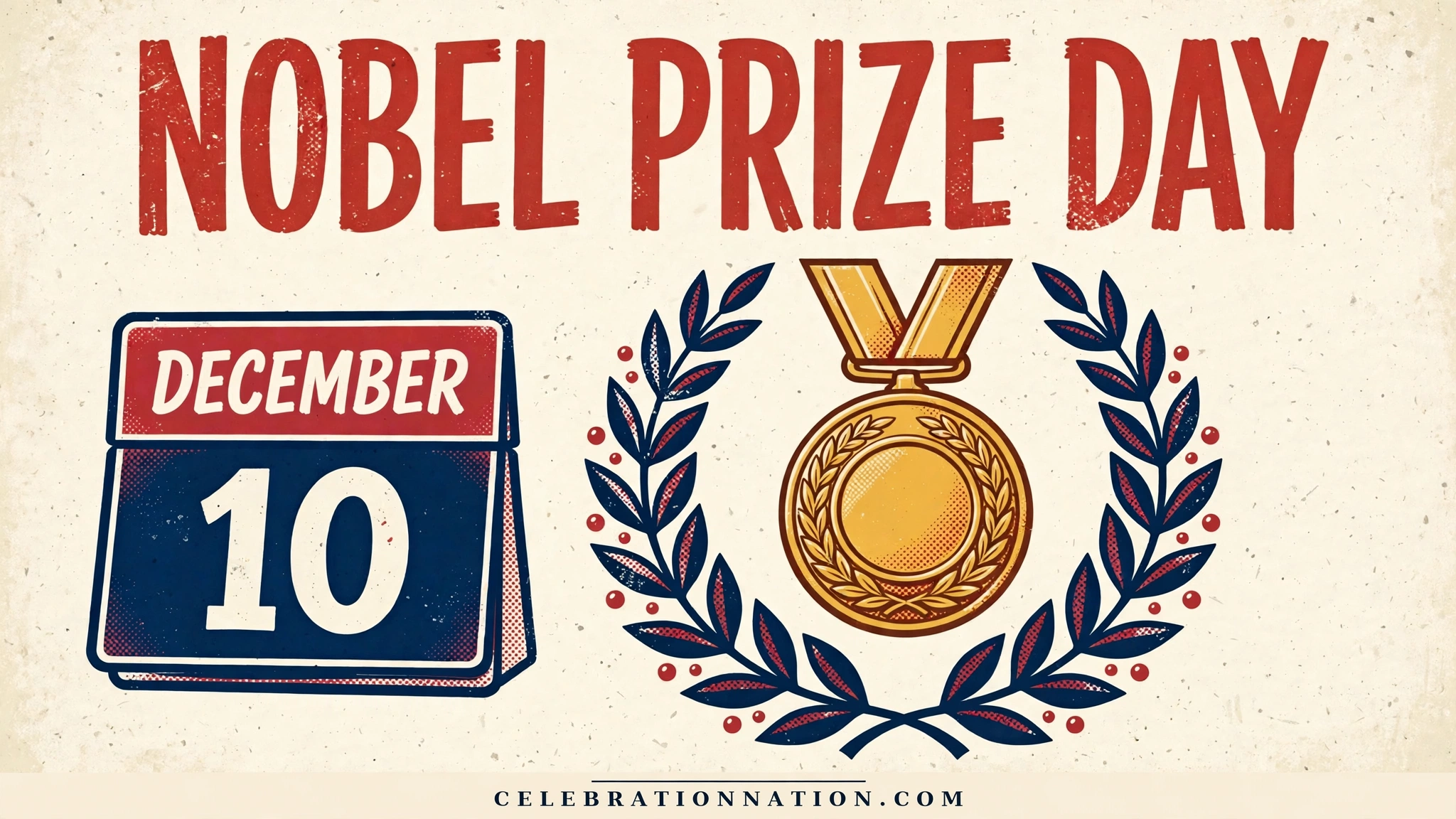
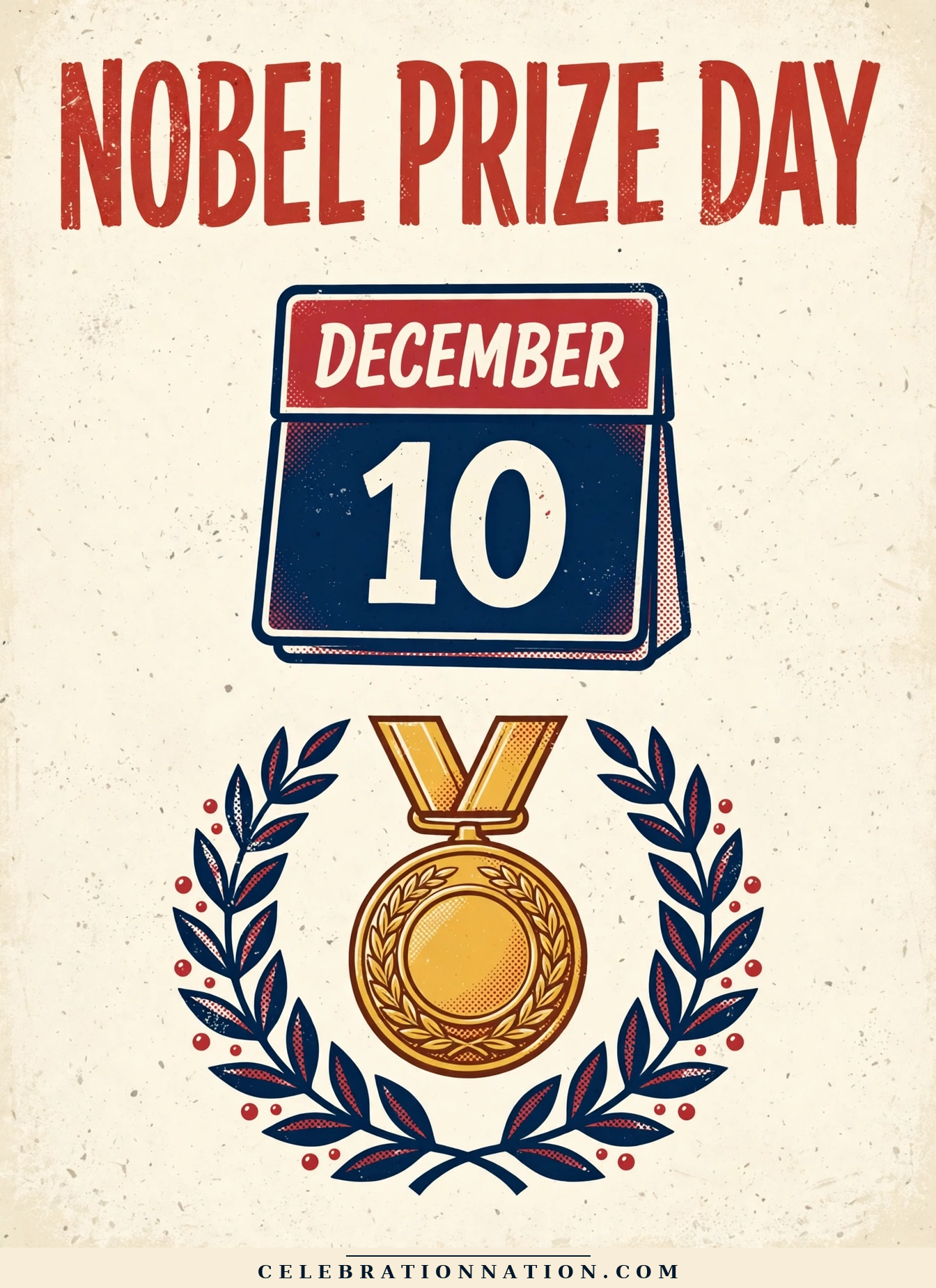
Nobel Prize Day
On December 10, we honor Nobel laureates and their lasting impact on our world.
- Roots
- Established by Alfred Nobel's will in 1895
- Vibe
- Celebration of excellence and human achievement
- Also on Dec 10
- Dewey Decimal System Day · Human Rights Day · International Animal Rights Day
- Hashtag
- #NobelPrizeDay
3 ways to celebrate
Learn the laureates
Read about this year's winners and what they discovered at home.
Watch the ceremony
Gather friends to watch highlights of the Nobel ceremony together.
Share big ideas
Post a favorite Nobel-winning idea on the office board for discussion.
Plan ahead
Nobel Prize Day is observed on December 10 every year. Here is where it lands for the next ten years, handy for planners, marketers and party people.
Fast facts
The story
The Nobel Prize, established by the will of Alfred Nobel in 1895, is awarded annually on December 10, the anniversary of his death. Now awarded in six fields, Peace, Literature, Physics, Chemistry, Medicine, and Economic Sciences (added in 1968), the prizes celebrate those whose work has had a profound impact on humanity. Each year, the global community comes together to recognize these achievements, reflecting on the power of innovation and human spirit.
Read the full story
Celebrations take place in various forms around the world, with the most notable event being the Nobel Prize ceremony held in Stockholm, Sweden, and Oslo, Norway, for the Peace Prize. During the ceremony, laureates receive a medal, a diploma, and prize money, a recognition that not only honors their past work but also encourages future endeavors in their respective fields. This day serves as a reminder of the dedication and perseverance required to effect change.
American laureates have made a significant mark on the Nobel history, with notable figures like Martin Luther King Jr. (Peace, 1964), Toni Morrison (Literature, 1993), and Richard Feynman (Physics, 1965). Their contributions not only enriched the American cultural landscape but also inspired movements and ideas that resonate worldwide. By celebrating their legacies, we acknowledge the ongoing pursuit of knowledge, peace, and artistic expression.
On Nobel Prize Day, individuals and communities can take part in discussions, educational programs, or even simple reflections on the importance of these achievements. By engaging with the legacies of Nobel laureates, we can inspire the next generation to contribute positively to society, fostering a culture of innovation and compassion that honors the spirit of the Nobel Prize.
Did you know?
First Nobel Prize Awarded
The first Nobel Prizes were awarded on December 10, 1901.
Nobel Peace Prize
Awarded to individuals or organizations that have made significant contributions to peace.
Literature Laureates
Authors from diverse backgrounds have received the Nobel Prize in Literature.
Record Holders
Marie Curie is the only person to win Nobel Prizes in two different sciences.
Economic Sciences
The Sveriges Riksbank Prize in Economic Sciences was established in 1968.
Youngest Laureate
Malala Yousafzai won the Peace Prize at age 17 in 2014.
US Dominance
The United States has the highest number of Nobel laureates.
Around the world
Every culture celebrates a little differently.
- SESwedenHome to the Nobel Prize ceremonies, particularly in Stockholm.
- NONorwayHosts the Nobel Peace Prize award in Oslo.
- USUnited StatesMany American laureates have made significant contributions to various fields.
- DEGermanyA notable number of laureates hail from Germany, especially in science.
- GBUnited KingdomBritish writers and scientists are frequently recognized among Nobel laureates.
- FRFranceHome to many literary Nobel Prize winners throughout history.
Keep the party going
See the calendar

Celebrate every day, all year
Official gear from the people who track 1,700+ celebrations.
Browse the shop National Day Celebration Card GameA party in a box, any day of the year.
Never miss a reason to celebrate.
One quick morning email with today's celebrations, ideas and posters. Free, unsubscribe anytime.
🎉 You're on the list! Watch your inbox for The Daily Confetti.