



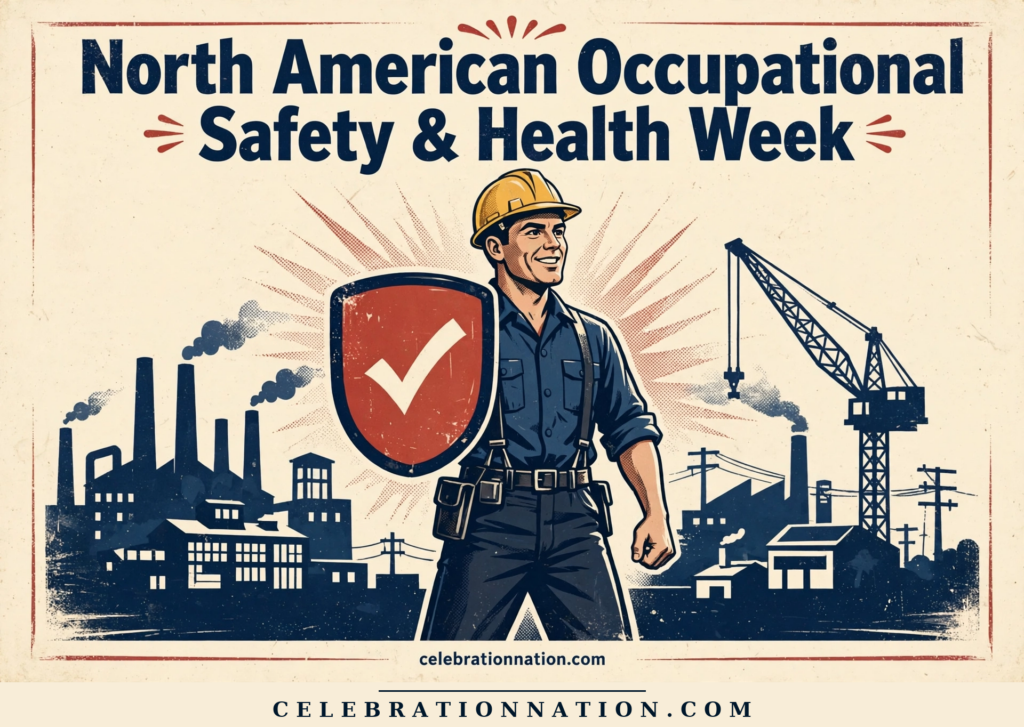
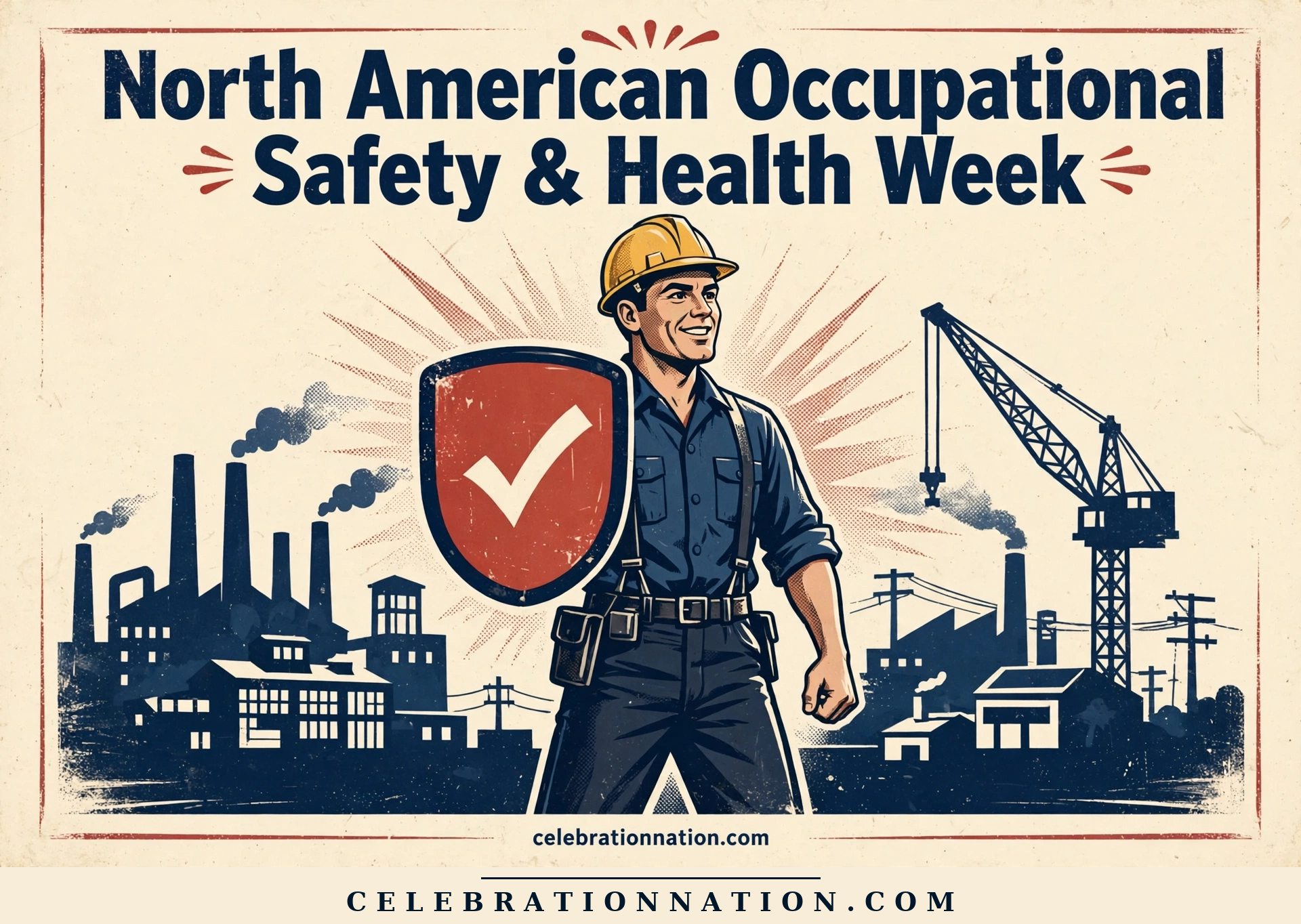
North American Occupational Safety & Health Week
North American Occupational Safety & Health Week is a hand extended — to the patients, caregivers, researchers, and families living with north american occupational safety & health.
- Roots
- Observed since 1997 by Canada, the U.S., and Mexico
- Vibe
- Community engagement and proactive safety measures
- Hashtag
- #NorthAmericanOccupationalSafety038HealthWeek
Ways to celebrate
Small, doable ways to celebrate North American Occupational Safety & Health Week.
- Share one reputable resource with your network.
- Donate to a patient-led organization working on north american occupational safety & health.
- Check in on someone you know who's living with it.
- Book the screening or appointment you've been putting off.
- Listen more than you speak.
Fast facts
The story
North American Occupational Safety and Health Week, observed the first full week of May, serves as a vital reminder of the importance of safety in the workplace. Observed since 1997 through an agreement between Canada, the United States, and Mexico, this week emphasizes the collective responsibility of employers, employees, and communities to promote safe working conditions. As workplaces evolve, so too do the strategies for ensuring safety and health across various sectors.
Read the full story
During this week, organizations across the continent engage in a variety of activities aimed at raising awareness about occupational safety and health. Workshops, training sessions, and community events are commonplace, encouraging dialogue about best practices and innovative solutions to workplace hazards. This initiative fosters collaboration between businesses, government agencies, and labor organizations, highlighting the shared goal of preventing workplace injuries.
Statistics illustrate the urgency of this mission, 5,070 fatal work injuries were recorded in the United States in 2024 alone, with millions more experiencing non-fatal injuries. By promoting a culture of safety, North American Occupational Safety and Health Week aims to reduce these numbers significantly. It encourages individuals to take proactive steps, whether through education, training, or simply fostering a dialogue about safety within their workplaces.
As we observe this week, it is essential to remember that safety is not just a legal obligation but a moral one. Workers have the right to safe working conditions, and employers have the responsibility to provide them. By participating in North American Occupational Safety and Health Week, communities can reinforce the importance of safety, ensuring that everyone returns home safely at the end of each workday.
Worth knowing
Safety Training
Engage in hands-on safety training to reduce workplace accidents.
Health Awareness
Promote health screenings and wellness programs in the workplace.
Equipment Safety
Ensure all tools and machinery are properly maintained.
Community Engagement
Foster partnerships with local safety organizations.
Did you know?
Global Context
Many countries observe their own safety weeks, emphasizing international standards.
Historical Impact
OSHA was created in 1970 to ensure safe working conditions.
Youth Engagement
Schools often participate by teaching students about safety.
Industry Focus
Workplace hazards include physical, biological, chemical, ergonomic, and psychological risks.
Technology Role
Emerging technologies are transforming safety practices in workplaces.
Health Programs
Companies are increasingly offering mental health support as part of safety.
Community Contribution
Community safety events help raise awareness and promote local initiatives.
Around the world
Every culture celebrates a little differently.
- USUnited StatesHome to the largest workforce in North America, promoting diverse safety initiatives.
- CACanadaFocuses on health and safety regulations that protect workers across provinces.
- MXMexicoEmphasizes improving workplace conditions through local initiatives.
- BZBelizeAdvocates for safety training in tourism and agriculture sectors.
- GTGuatemalaWorks to enhance safety regulations in manufacturing and agriculture.
- HNHondurasEncourages grassroots movements for better workplace safety.
Coming up next
See the calendar

Celebrate every day, all year
Official gear from the people who track 1,700+ celebrations.
Browse the shop 2027 Wall + Desk Calendar BundleCelebrate every day at home and at work.
Never miss a reason to celebrate.
One quick morning email with today's celebrations, ideas and posters. Free, unsubscribe anytime.
🎉 You're on the list! Watch your inbox for The Daily Confetti.