





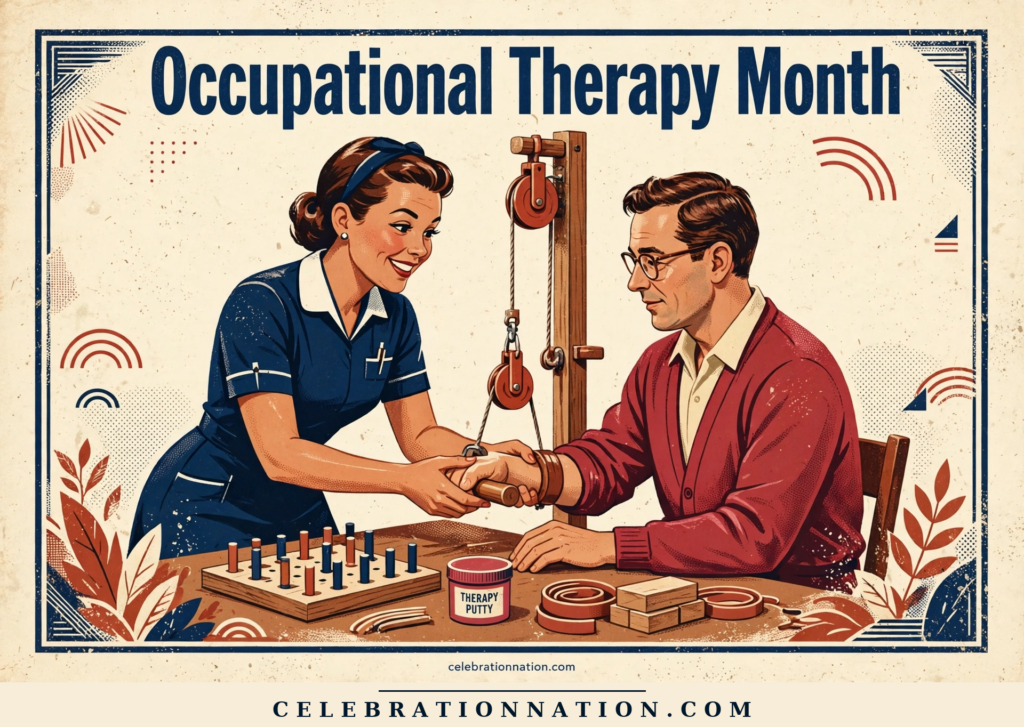
Occupational Therapy Month
On Occupational Therapy Month, we make a little room on the calendar for the thing that makes us who we are.
- Roots
- Established in 1980 by the American Occupational Therapy Association (AOTA)
- Vibe
- Supportive and empowering community engagement.
- Hashtag
- #OccupationalTherapyMonth
Ways to celebrate
Small, doable ways to celebrate Occupational Therapy Month.
- Do one small thing that makes the day feel marked.
- Tell someone what you're celebrating and why.
- Share a post, a photo, or a memory connected to it.
- Make a tiny tradition — something you could do again next year.
- Let it be simple. Not every celebration has to be a production.
Fast facts
The story
Occupational Therapy Month, observed every April, serves as a reminder of the transformative power of occupational therapy in individuals' lives. This annual celebration highlights the contributions of occupational therapists who empower people to overcome challenges and enhance their daily functioning. From children with developmental delays to seniors recovering from surgery, occupational therapy is a vital resource that fosters independence and improves quality of life.
Read the full story
The roots of Occupational Therapy Month trace back to 1980, when the American Occupational Therapy Association (AOTA) established this observance to honor the profession and raise awareness about its benefits. The month-long celebration encourages practitioners and communities to engage in activities that promote understanding of occupational therapy's role in rehabilitation and health.
Throughout April, various events take place across the nation, including community outreach programs, educational seminars, and social media campaigns aimed at spreading awareness. These initiatives often include opportunities for individuals to share their personal stories related to occupational therapy, highlighting how these services have made a difference in their lives.
As we celebrate Occupational Therapy Month, it is essential to recognize the dedication of therapists and their contributions to health and wellness. By fostering a supportive environment and encouraging dialogue about the importance of occupational therapy, we can help ensure that more individuals receive the care and support they need to thrive.
Worth knowing
What is OT?
Occupational therapy helps individuals achieve independence in daily living activities.
Creative Therapies
OT utilizes creative methods like art and music to engage clients.
Community Focus
OT programs often involve community participation for better outcomes.
Lifelong Learning
Occupational therapists engage in continuous education to stay current in their practice.
Did you know?
Early Beginnings
Occupational therapy emerged in the early 20th century, focusing on mental health treatment.
Diverse Settings
OT practitioners work in hospitals, schools, and community centers.
Personalized Care
OT services are tailored to meet individual needs and goals.
Global Impact
Occupational therapy is a recognized profession in many countries worldwide.
Funding Sources
Occupational therapy is often covered by health insurance plans.
Historical Figures
Notable figures in OT history include Eleanor Clarke Slagle and Susan Tracy.
Innovative Techniques
Therapists use technology, like virtual reality, in modern practice.
Around the world
Every culture celebrates a little differently.
- USUnited StatesHome to a vast network of occupational therapy practitioners and educational programs.
- CACanadaOccupational therapy is also recognized and widely practiced throughout Canada.
- GBUnited KingdomOT services play a crucial role in the UK's National Health Service.
- AUAustraliaAustralia boasts a strong community of occupational therapists across urban and rural areas.
- DEGermanyOccupational therapy is integrated into healthcare systems in Germany.
- NZNew ZealandOccupational therapy is essential in New Zealand's approach to holistic health.
Coming up next
See the calendar


Celebrate every day, all year
Official gear from the people who track 1,700+ celebrations.
Browse the shop 2027 National Day Wall CalendarGet the 2026 edition free. 1,700+ observances.
Never miss a reason to celebrate.
One quick morning email with today's celebrations, ideas and posters. Free, unsubscribe anytime.
🎉 You're on the list! Watch your inbox for The Daily Confetti.