

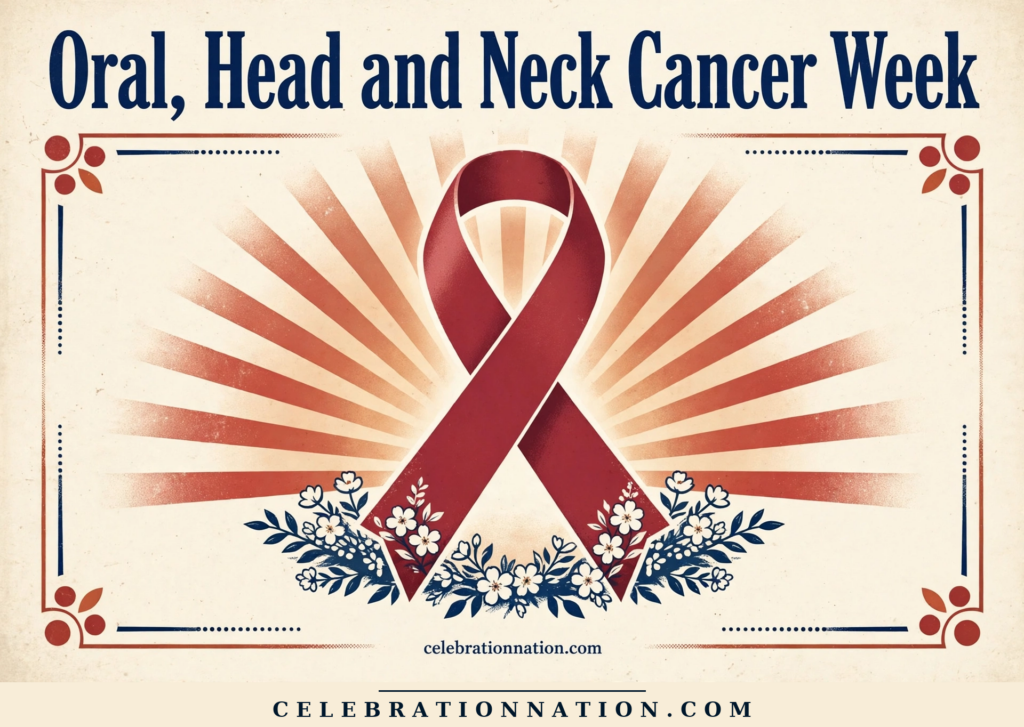
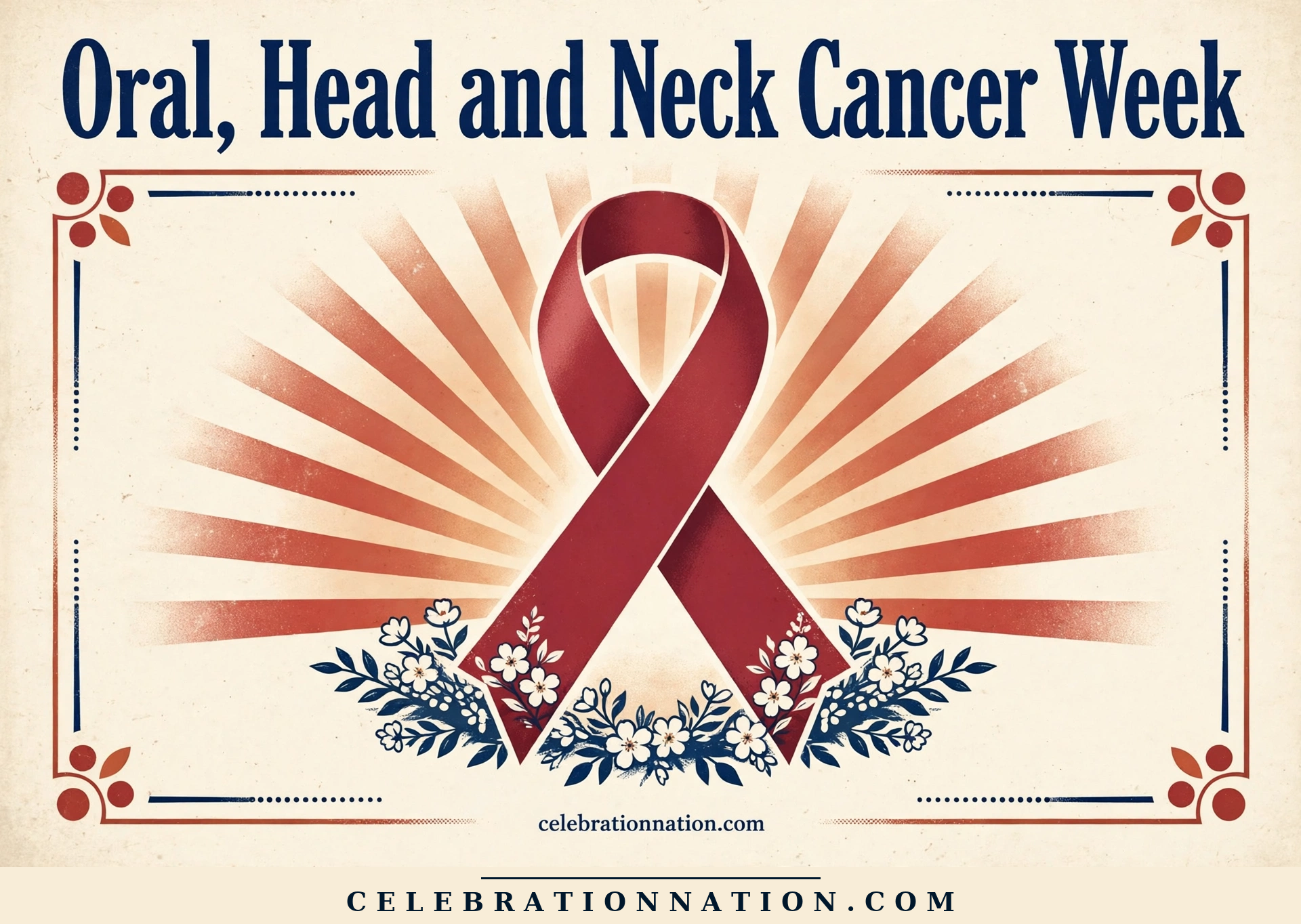
Oral, Head and Neck Cancer Week
On Oral, Head and Neck Cancer Week, we listen louder, learn more, and make sure no one feels invisible.
- Roots
- Led by the Head and Neck Cancer Alliance
- Vibe
- Community-driven support and education
- Hashtag
- #OralHeadAndNeckCancerWeek
Ways to celebrate
Small, doable ways to celebrate Oral, Head and Neck Cancer Week.
- Share one reputable resource with your network.
- Donate to a patient-led organization working on oral, head and neck cancer.
- Check in on someone you know who's living with it.
- Book the screening or appointment you've been putting off.
- Listen more than you speak.
Fast facts
The story
Oral, Head and Neck Cancer Week, observed annually during the first week of April, aims to illuminate the often-overlooked cancers affecting the mouth, throat, and neck. These cancers can profoundly impact individuals, both physically and emotionally, yet awareness remains significantly low among the general public. The observance is led by the Head and Neck Cancer Alliance, driven by the need for better education and prevention methods related to these diseases. As the number of cases rises, so does the importance of this awareness week.
Read the full story
The statistics surrounding oral and head and neck cancers are staggering, more than 60,000 new oral cavity and pharynx cancer cases are estimated in the United States for 2026, with approximately 13,000 deaths annually. The majority of these cases are linked to lifestyle choices, such as tobacco and alcohol use, and the human papillomavirus (HPV). This week serves as a critical reminder for individuals to actively engage in preventive measures, including regular dental check-ups and screenings, to catch potential issues early.
Communities across the nation engage in various activities to promote awareness. Health fairs, workshops, and educational seminars are organized to provide resources and screenings to the public. Local health departments, schools, and organizations collaborate to spread the word about the signs and symptoms of these cancers, focusing on the importance of early detection and treatment options. Engaging the community helps foster a supportive environment for those affected.
As we observe this week, it is essential to remember that knowledge is power. By sharing information and resources, we can help reduce the stigma around head and neck cancers and encourage individuals to prioritize their health. Whether through social media campaigns or in-person events, every effort counts in raising awareness and supporting those impacted by these diseases.
Worth knowing
Oral Health Check
Regular dental visits can catch issues early.
Support Groups
Join local support groups for shared experiences.
Educational Resources
Access information on prevention and treatment.
Talk to Your Doctor
Discuss any symptoms or concerns with a healthcare provider.
Did you know?
What is HPV?
Human papillomavirus (HPV) is linked to head and neck cancers.
Symptoms to Watch For
Common symptoms include persistent sore throat and difficulty swallowing.
Risk Factors
Tobacco use and excessive alcohol are major risk factors.
Survival Rates
The five-year relative survival rate for oral cavity and pharynx cancers is about 70%.
Preventive Measures
Vaccinations against HPV can reduce risk significantly.
Global Impact
Head and neck cancers are a growing concern worldwide.
Annual Screening
Regular screenings can greatly increase early detection.
Around the world
Every culture celebrates a little differently.
- USNorth AmericaThe United States observes this week with numerous events.
- GBEuropeCountries in Europe also focus on awareness and prevention.
- AUAustraliaAustralia promotes community health initiatives.
- CACanadaCanada recognizes the importance of early detection.
- NZNew ZealandNew Zealand emphasizes education and screening.
- INAsiaAsian countries are increasing awareness efforts.
Coming up next
See the calendar

Celebrate every day, all year
Official gear from the people who track 1,700+ celebrations.
Browse the shop 2027 Wall Calendar, signed by Marlo AndersonSigned by the founder of National Day Calendar.
Never miss a reason to celebrate.
One quick morning email with today's celebrations, ideas and posters. Free, unsubscribe anytime.
🎉 You're on the list! Watch your inbox for The Daily Confetti.