



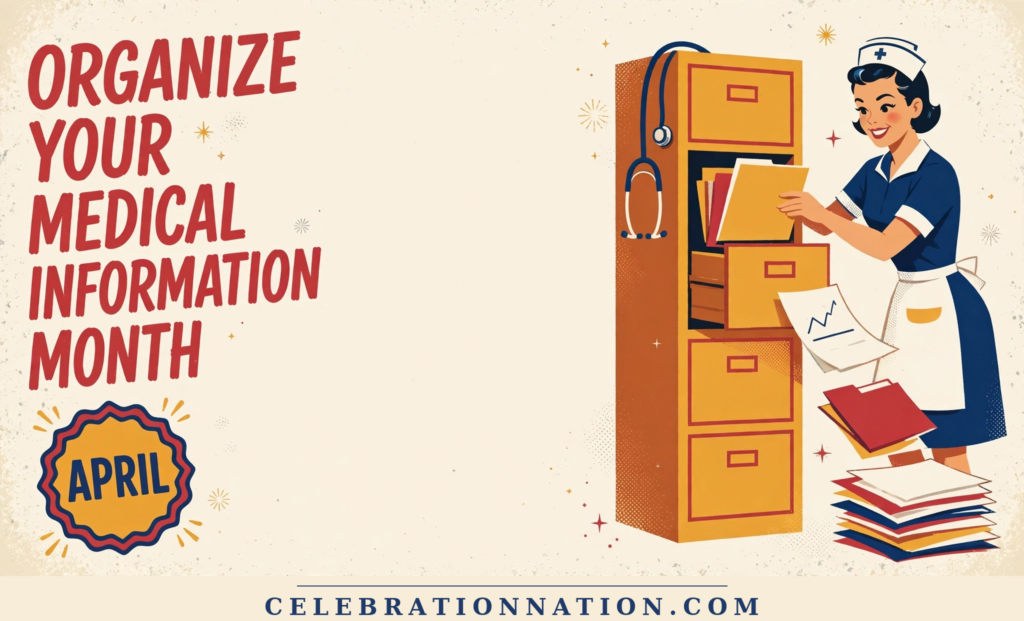
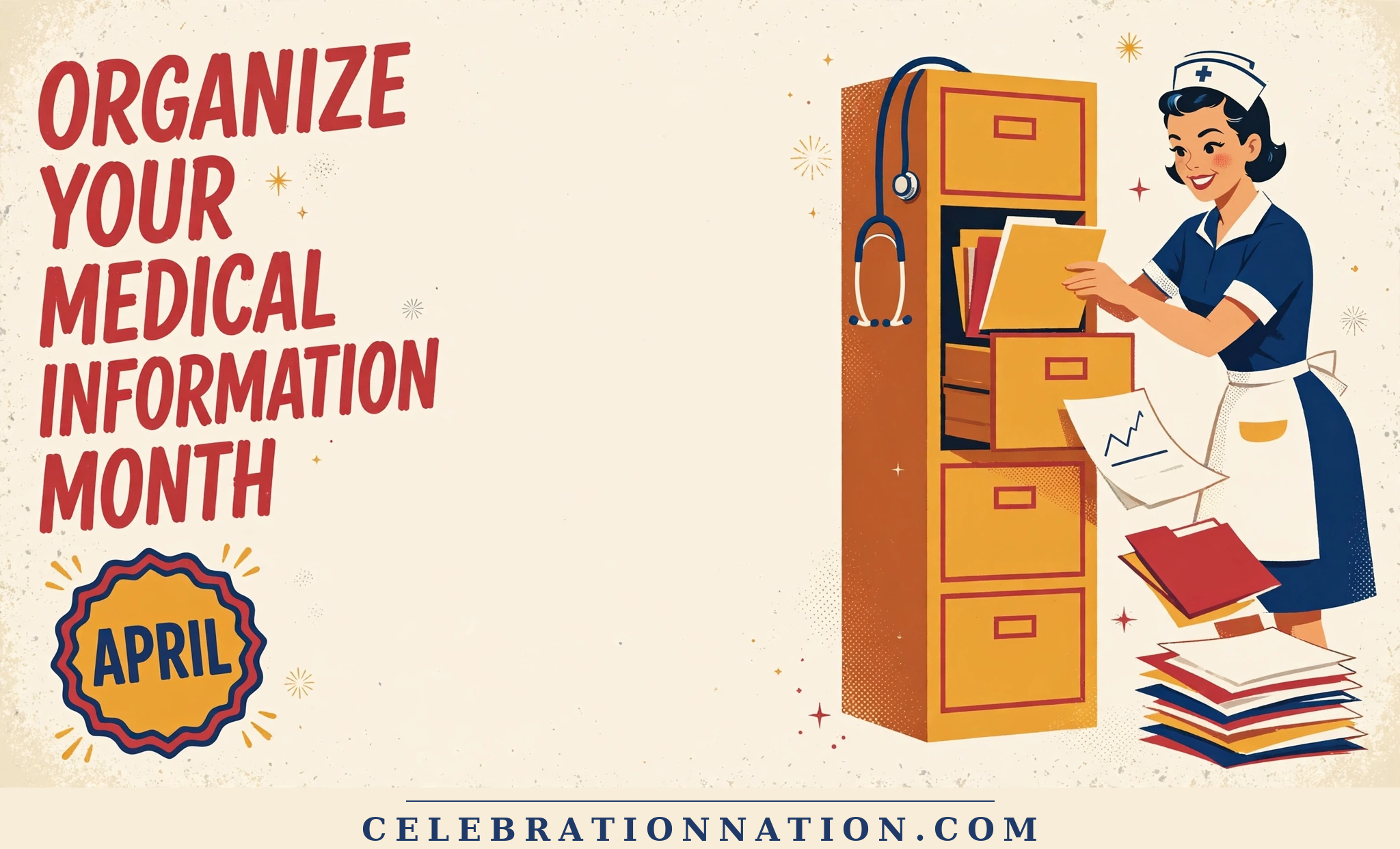
Organize Your Medical Information Month
This month, focus on organizing your medical information for a healthier future.
- Roots
- Established by health organizations in 2004
- Vibe
- Empowerment through organization and knowledge.
- Hashtag
- #OrganizeYourMedicalInformationMonth
Fast facts
The story
Organizing medical information is a crucial step toward effective healthcare management. Each April, we recognize Organize Your Medical Information Month, a time dedicated to helping individuals and families take control of their health data. As healthcare becomes increasingly complex, having organized medical records can streamline communication with healthcare providers and enhance patient outcomes.
Read the full story
This observance began in 2004, initiated by various health organizations to raise awareness about the importance of maintaining accurate medical records. The goal is to empower patients by encouraging them to compile their health history, medications, allergies, and healthcare appointments in one accessible location. By doing so, individuals can make informed decisions about their health and well-being.
According to recent studies, only about 30% of Americans keep their health records organized. This statistic highlights the need for better awareness and proactive measures in health management. When patients have easy access to their medical information, they are more likely to engage in preventative care and communicate effectively with their healthcare providers.
To celebrate this month, individuals are encouraged to gather their medical records, utilize digital tools, and educate family members about the importance of health documentation. By promoting organization, we can work toward a healthier society where everyone is empowered to take charge of their health journeys.
Worth knowing
Create a Health Binder
Compile all essential documents for easy access.
Digital Tools Matter
Use apps to track appointments and medications.
Family Health History
Discuss and document family medical histories.
Emergency Preparedness
Ensure you have vital information ready for emergencies.
Did you know?
Historical Context
Organizing medical records dates back to the 19th century.
Digital Age
Over 60% of U.S. hospitals now use electronic health records.
Patient Engagement
Informed patients tend to have better health outcomes.
Health Apps
There are over 300,000 health-related apps available today.
Cultural Significance
Organized health records are critical in many cultures.
Emergency Access
Having organized records can save lives in emergencies.
Insurance Claims
Proper records can expedite insurance claims processes.
Around the world
Every culture celebrates a little differently.
- USUnited StatesThe U.S. observes Organize Your Medical Information Month every April.
- CACanadaCanadians are encouraged to organize their health records as well.
- GBUnited KingdomThe UK promotes health awareness, aligning with similar initiatives.
- AUAustraliaAustralians are also urged to keep their medical info organized.
- DEGermanyGermany emphasizes patient empowerment through organized records.
- NZNew ZealandKiwis are encouraged to maintain personal health documentation.
Coming up next
See the calendar


Celebrate every day, all year
Official gear from the people who track 1,700+ celebrations.
Browse the shop 2027 Wall + Desk Calendar BundleCelebrate every day at home and at work.
Never miss a reason to celebrate.
One quick morning email with today's celebrations, ideas and posters. Free, unsubscribe anytime.
🎉 You're on the list! Watch your inbox for The Daily Confetti.