


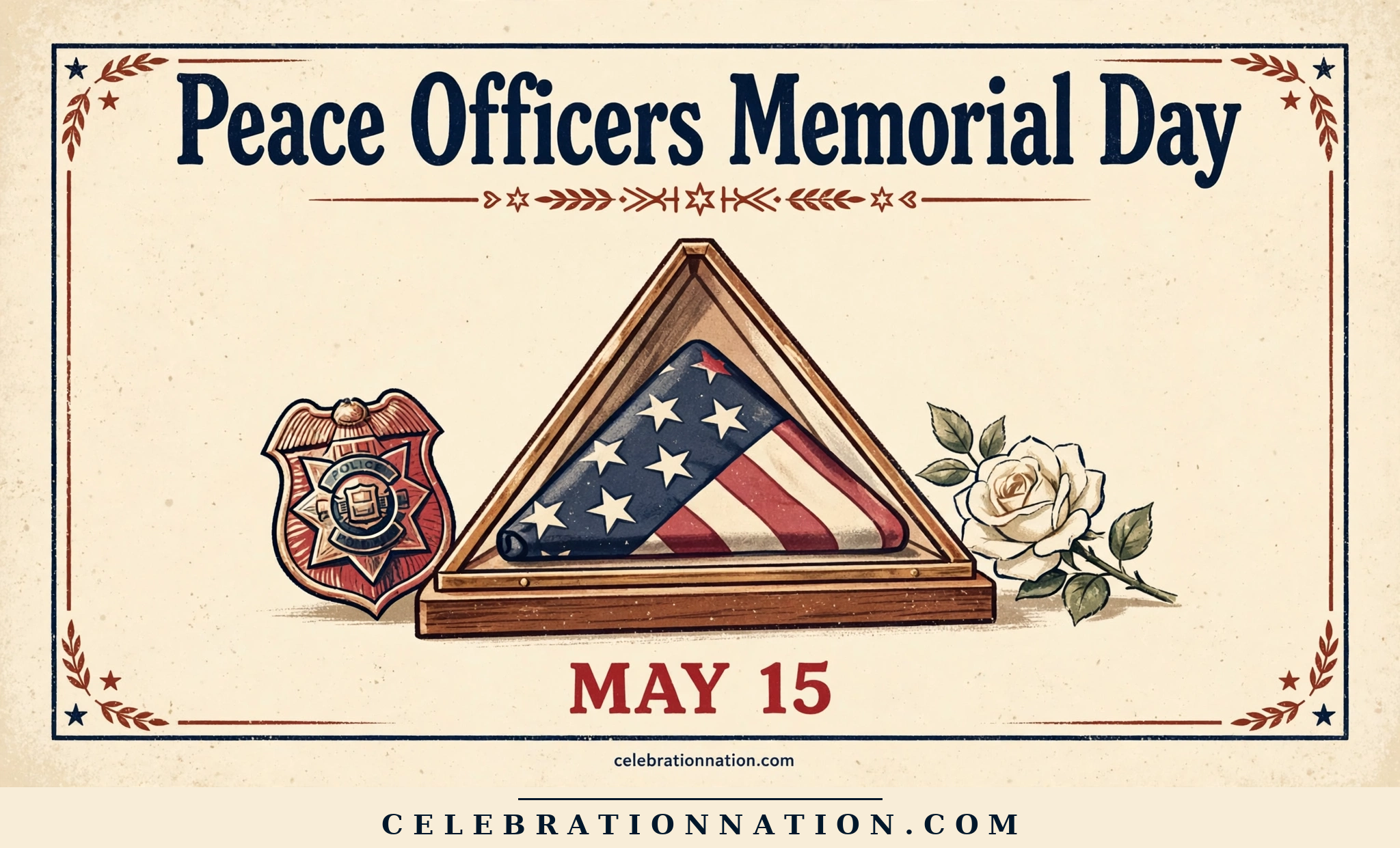
Peace Officers Memorial Day
On Peace Officers Memorial Day, we honor the quiet acts of citizenship — in uniform, at the ballot box, in our communities.
- Roots
- Established by President John F. Kennedy in 1962
- Vibe
- A solemn day of remembrance and gratitude
- Also on May 15
- Pizza Party Day · Defense Transportation Day · Endangered Species Day
- Hashtag
- #PeaceOfficersMemorialDay
Ways to celebrate
Small, doable ways to celebrate Peace Officers Memorial Day.
- Send a note to someone who has served.
- Attend a local ceremony or observance if there is one.
- Fly a flag properly, or don't fly one you can't maintain.
- Donate to a veterans' service organization.
- Teach a kid one piece of local history they don't know yet.
Make it your kind of celebration
Family
Watch a documentary or read a local history piece together and discuss it.
Kids
Help them write a short thank-you card to a veteran or service member.
Couples
Attend a local ceremony or observance together.
Office
Host a moment of recognition — a short announcement, a card circulated, a donation drive.
School
Invite a local veteran to speak, or visit a nearby historic site.
Community
Volunteer with an organization that serves veterans and their families.
Just me
Read one first-person account by someone who served. Let it sit.
Plan ahead
Peace Officers Memorial Day is observed on May 15 every year. Here is where it lands for the next ten years, handy for planners, marketers and party people.
Fast facts
The story
Peace Officers Memorial Day is observed each year on May 15, a day set aside to honor the courage and sacrifice of law enforcement officers who have died in the line of duty. The observance was established by a proclamation from President John F. Kennedy in 1962, as part of National Police Week, which takes place during the week of May 15. It serves as a reminder of the risks taken by officers to keep our communities safe and the profound loss felt by their families and communities.
Read the full story
The day is marked by ceremonies across the United States, with many cities hosting memorial services where the names of fallen officers are read aloud. The National Law Enforcement Officers Memorial in Washington, D.C., serves as a focal point for these commemorations, where families and colleagues gather to honor their loved ones. The memorial itself is a poignant reminder of the sacrifices made, bearing the names of over 22,000 fallen officers etched into its walls.
In addition to memorial services, communities often engage in various acts of remembrance, including candlelight vigils and community service projects supporting law enforcement families. Schools and organizations may also hold educational events to teach the importance of peace officers and their role in society. These observances not only honor those who have died but also foster a deeper understanding of the challenges faced by law enforcement personnel.
As we observe Peace Officers Memorial Day, it is essential to reflect on the ongoing commitment of law enforcement officers across the nation. Each day, they put their lives on the line to protect us, often facing dangerous situations with bravery and dedication. By recognizing their sacrifices and contributions, we can foster a greater sense of community and support for those who serve.
Did you know?
First National Memorial
The first National Police Memorial was dedicated in 1991.
Annual Event
National Police Week is observed every May during the week of May 15.
Rising Numbers
The number of officers killed in the line of duty has fluctuated over the years.
Global Remembrance
Many countries around the world observe their own police memorial days.
Historical Roots
The first recorded police officer death in the U.S. was in 1791.
Symbol of Honor
The blue line flag symbolizes support for law enforcement.
Scholarships Available
Many organizations offer scholarships for the children of fallen officers.
Around the world
Every culture celebrates a little differently.
- USUnited StatesHome to the National Police Week and numerous memorials.
- CACanadaAlso observes similar remembrance days for officers.
- GBUnited KingdomHosts memorials for police officers and their sacrifices.
- AUAustraliaRemembers fallen officers with various ceremonies.
- NZNew ZealandHonors police officers through national memorial services.
- DEGermanyObserves days of remembrance for fallen law enforcement.
Keep the party going
See the calendar



Celebrate every day, all year
Official gear from the people who track 1,700+ celebrations.
Browse the shop 2027 National Day Wall CalendarGet the 2026 edition free. 1,700+ observances.
Never miss a reason to celebrate.
One quick morning email with today's celebrations, ideas and posters. Free, unsubscribe anytime.
🎉 You're on the list! Watch your inbox for The Daily Confetti.