
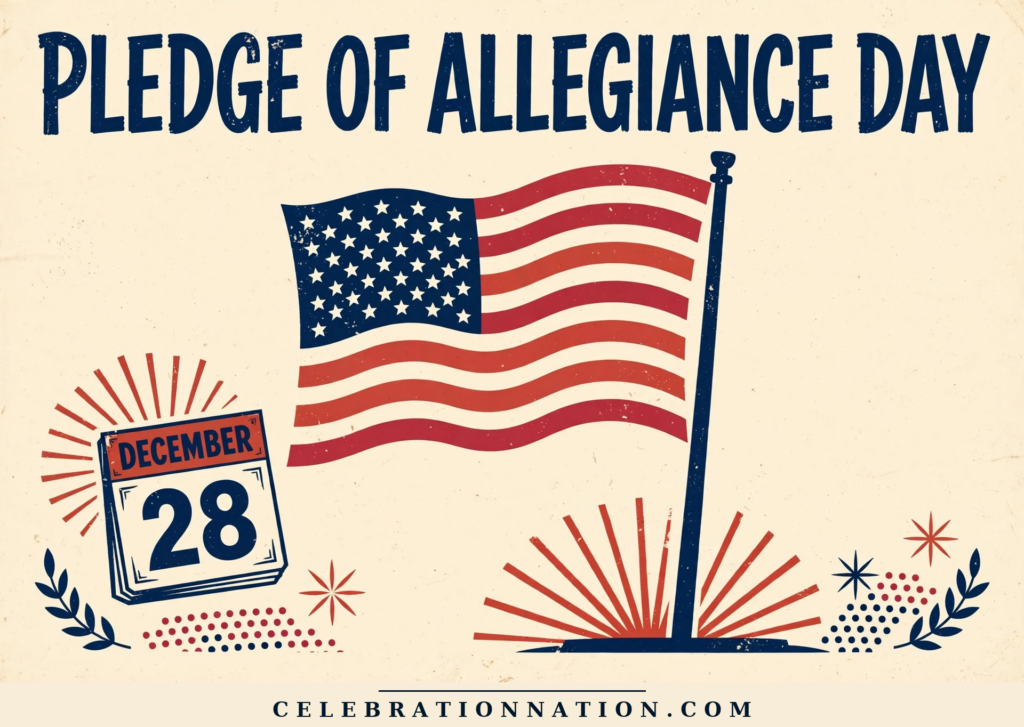
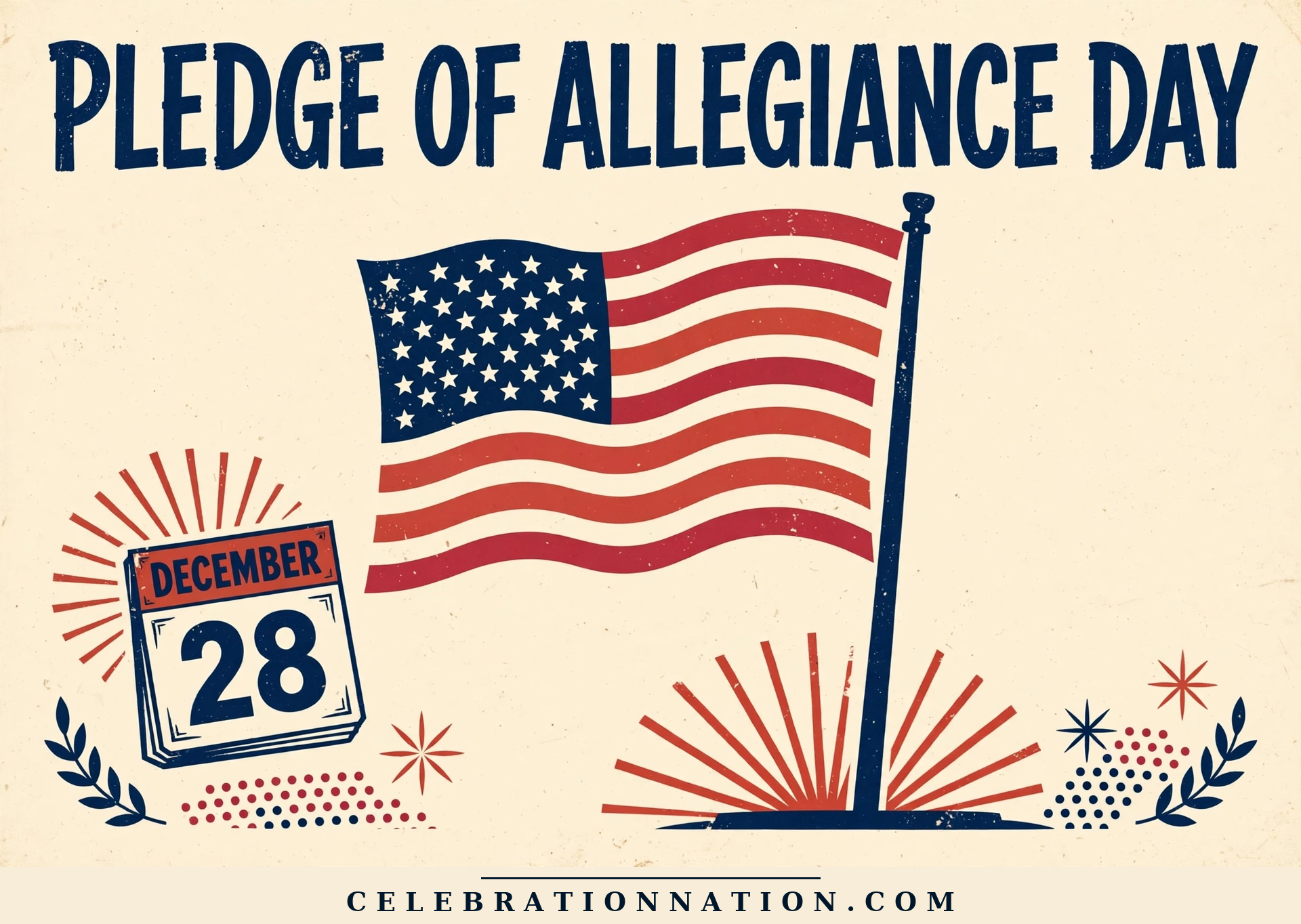
Pledge of Allegiance Day
Join us in honoring this national symbol of unity and civic pride.
- Roots
- Written in 1892 by Francis Bellamy
- Vibe
- A sense of unity and patriotism
- Also on Dec 28
- Holy Innocents Day · Card Playing Day · Chocolate Candy Day
- Hashtag
- #PledgeOfAllegianceDay
3 ways to celebrate
Recite the pledge
Say the Pledge of Allegiance with meaning today.
Learn flag etiquette
Read up on proper flag display with family.
Civic discussion
Talk about citizenship in class or at work.
Plan ahead
Pledge of Allegiance Day is observed on December 28 every year. Here is where it lands for the next ten years, handy for planners, marketers and party people.
Fast facts
The story
The Pledge of Allegiance was first published on September 8, 1892, by Francis Bellamy, a Baptist minister, as part of a campaign to promote patriotism in American schools. This simple yet profound declaration has since become a staple of American life, recited daily in classrooms and public events across the nation. It reinforces a collective identity among Americans and serves as a reminder of the values of liberty and justice.
Read the full story
Initially, the Pledge was intended to be a brief declaration of loyalty, but it has evolved to hold deeper significance over the years. In 1954, Congress, with President Dwight D. Eisenhower's support, approved the addition of the words 'under God,' further embedding the Pledge in the fabric of American life. This change reflected the cultural climate of the Cold War era, emphasizing the contrast between American democracy and communist ideologies.
Pledge of Allegiance Day not only recognizes the history of this important statement but also invites reflection on its meaning in contemporary society. As debates about inclusion and representation continue, the Pledge serves as a reminder of the ideals that many strive to uphold. The day encourages Americans to consider what it means to pledge allegiance to a nation that values liberty, justice, and equality for all.
Communities across the country celebrate Pledge of Allegiance Day with various activities, including school assemblies, public recitations, and discussions about civic duty. These events foster a sense of belonging and encourage individuals to engage with their communities. By celebrating this day, Americans reaffirm their commitment to the principles that unite them, promoting a spirit of patriotism that transcends individual differences.
Did you know?
Original Length
The original Pledge was significantly shorter.
First Recitation
The Pledge was first recited in schools on October 12, 1892.
Legal Challenges
The Pledge has faced legal scrutiny regarding the phrase 'under God'.
Cultural References
The Pledge has appeared in numerous films and literature.
International Influence
Several countries have similar pledges or oaths.
Revisions Over Time
The Pledge has undergone various changes since its inception.
Popular Misquotes
Many Americans misquote the Pledge.
Around the world
Every culture celebrates a little differently.
- USUnited StatesHome to the Pledge of Allegiance.
- CACanadaCelebrates diversity and unity.
- GBUnited KingdomHolds similar civic rituals.
- AUAustraliaValues national symbolism in communities.
- DEGermanyRecognizes historical pledges also.
- INIndiaPromotes unity in diversity.
Keep the party going
See the calendar
Celebrate every day, all year
Official gear from the people who track 1,700+ celebrations.
Browse the shop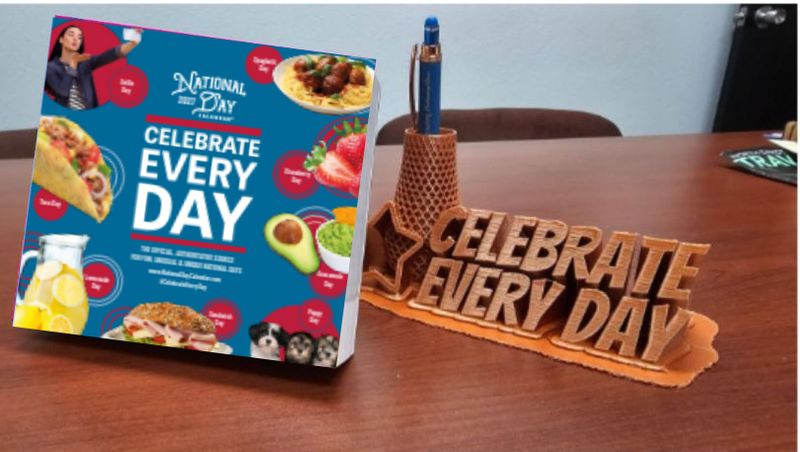 2027 National Day Desk CalendarA new celebration every morning. Daily tear-off.
Never miss a reason to celebrate.
One quick morning email with today's celebrations, ideas and posters. Free, unsubscribe anytime.
🎉 You're on the list! Watch your inbox for The Daily Confetti.