





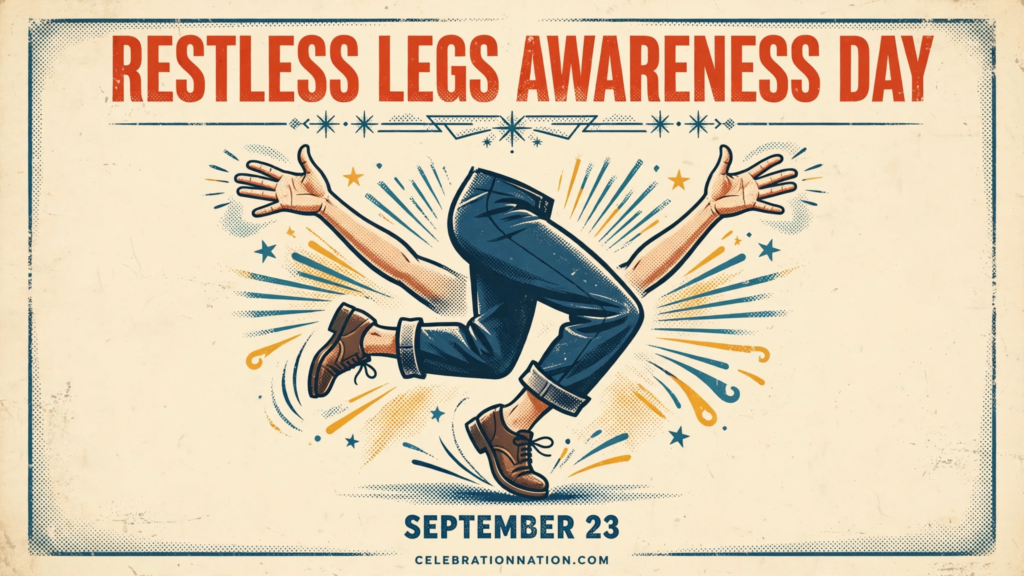
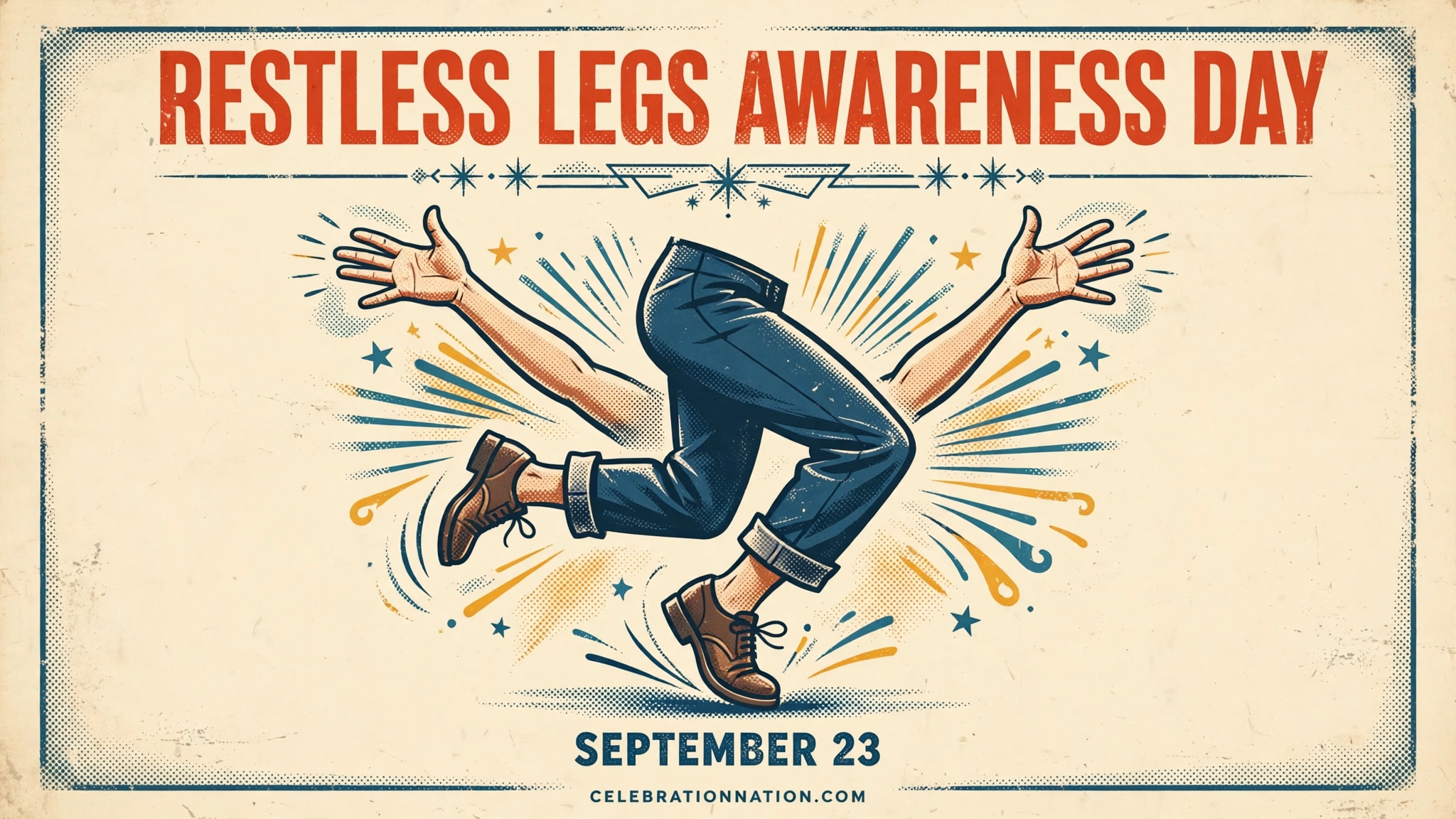
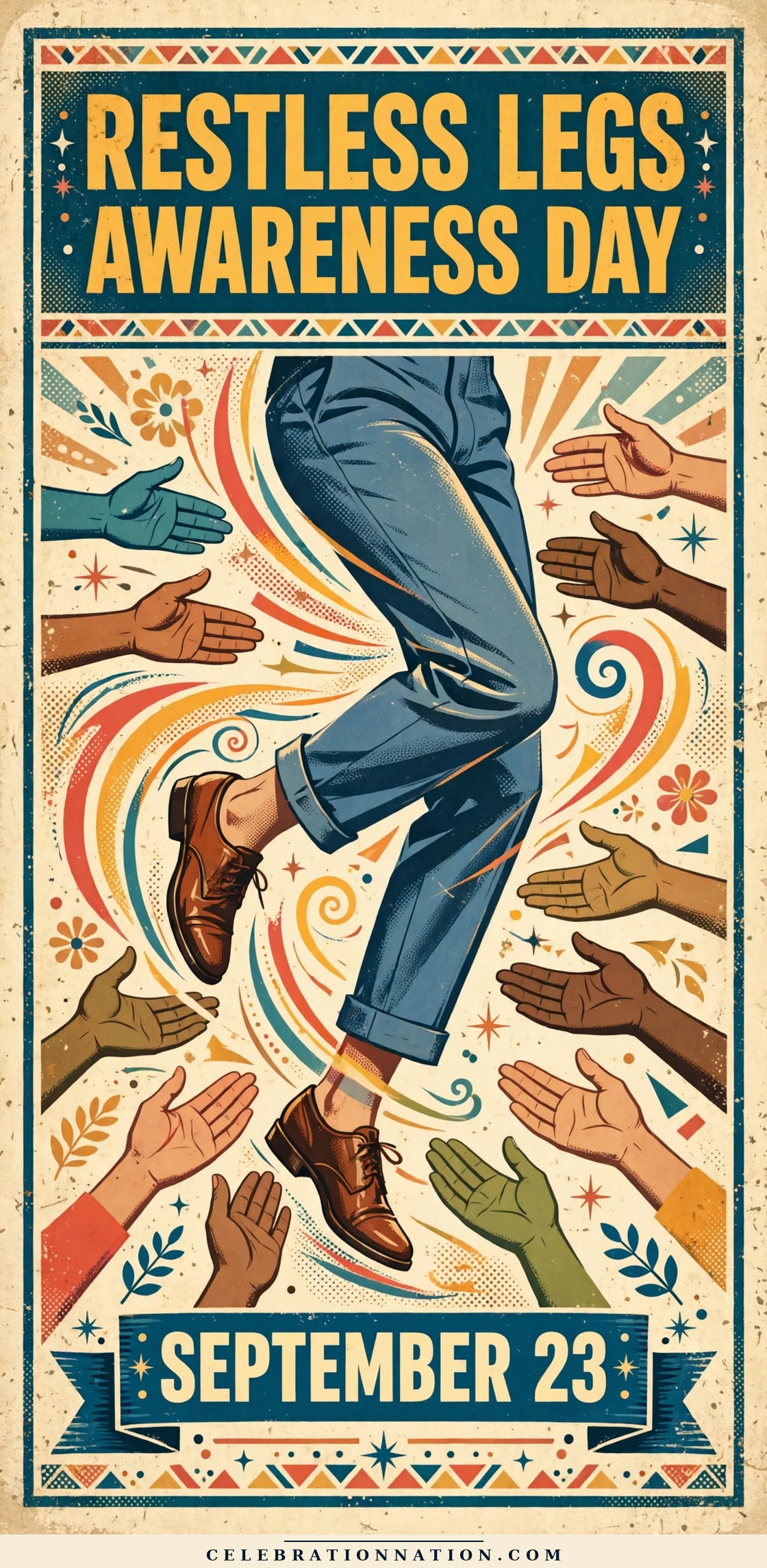
Restless Legs Awareness Day
On this special day, let's support those affected by restless legs syndrome.
- Roots
- Honors Karl-Axel Ekbom, who described the syndrome in detail in 1945
- Vibe
- An opportunity for education and support
- Also on Sep 23
- International Day of Sign Languages · Innergize Day · Celebrate Bisexuality Day
- Hashtag
- #RestlessLegsAwarenessDay
3 ways to celebrate
Learn about RLS
Read about symptoms and tips for managing restless legs.
Share support
Check in on friends who live with RLS and offer understanding.
Spread the word
Share info so more people recognize this common condition.
Plan ahead
Restless Legs Awareness Day is observed on September 23 every year. Here is where it lands for the next ten years, handy for planners, marketers and party people.
Fast facts
The story
Restless Legs Awareness Day is observed annually on September 23 to shed light on a condition that can disrupt sleep and quality of life. Restless legs syndrome (RLS), characterized by an uncontrollable urge to move the legs, often worsens during periods of inactivity. This day encourages people to share their experiences, creating a community of support for those affected.
Read the full story
The observance honors Karl-Axel Ekbom, who described the syndrome in detail in 1945. Since then, individuals and families affected by RLS have rallied together to advocate for better understanding and treatment options. Many find relief through lifestyle changes, medications, and support from healthcare professionals.
Statistics show that nearly 10% of Americans experience RLS, with symptoms often prevalent in the evening or night. Women are more likely than men to be diagnosed, and the condition can lead to significant disruptions in sleep patterns. The importance of awareness cannot be overstated, as many individuals remain undiagnosed or misdiagnosed, suffering in silence.
On this day, communities are encouraged to come together, whether through local events, online forums, or educational seminars, to discuss RLS and its impact. By fostering dialogue, we can help eliminate stigma and promote better understanding, ultimately leading to improved treatment options and support for those living with restless legs syndrome.
Did you know?
Historical Roots
The term 'restless legs' was first used in the 1940s.
Genetic Link
Research indicates a genetic component in many RLS cases.
Impact on Daily Life
RLS can affect work productivity and overall well-being.
Diagnosis
Diagnosis of RLS often includes patient interviews and sleep studies.
Management Techniques
Common management strategies include lifestyle changes, medication, and physical therapy.
Global Awareness
Restless Legs Awareness Day is recognized in several countries worldwide.
RLS and Pregnancy
Pregnant women may experience RLS due to hormonal changes.
Around the world
Every culture celebrates a little differently.
- USUnited StatesHome to millions of individuals living with RLS.
- GBUnited KingdomRLS awareness initiatives are gaining momentum here.
- CACanadaCanadians are encouraged to share their RLS experiences.
- AUAustraliaA growing number of support groups are forming across the country.
- DEGermanyHealth professionals are increasingly recognizing RLS in patients.
- FRFranceAwareness campaigns in France help educate the public about RLS.
Keep the party going
See the calendar



Celebrate every day, all year
Official gear from the people who track 1,700+ celebrations.
Browse the shop 2027 Wall + Desk Calendar BundleCelebrate every day at home and at work.
Never miss a reason to celebrate.
One quick morning email with today's celebrations, ideas and posters. Free, unsubscribe anytime.
🎉 You're on the list! Watch your inbox for The Daily Confetti.