


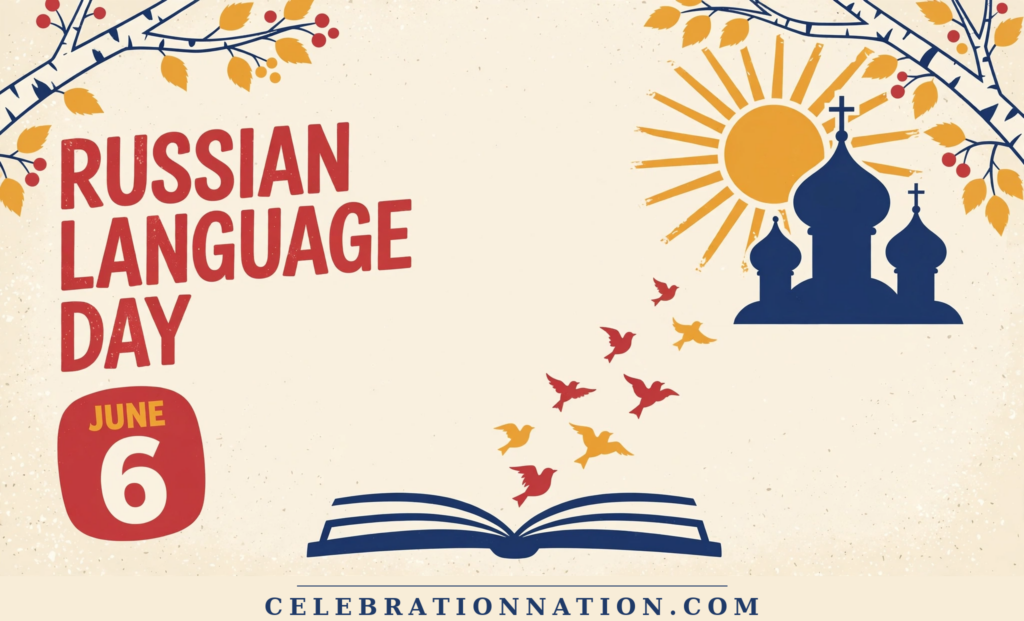
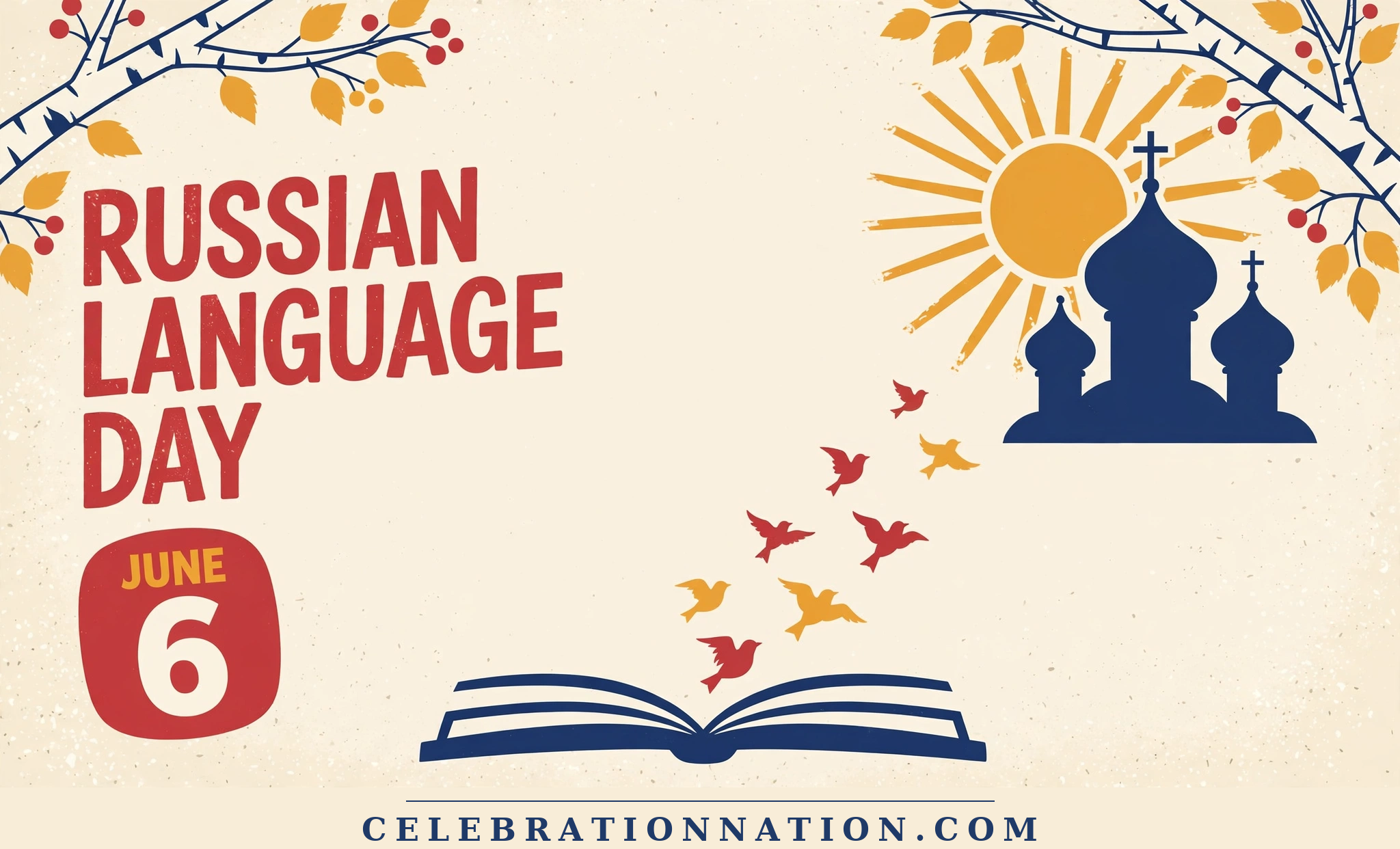
Russian Language Day
Join us in celebrating the rich heritage of the Russian language and its global impact.
- Roots
- Established by the UN in 2010
- Vibe
- A celebration of culture and literature
- Also on Jun 6
- Day of Sweden · Drive-In Movie Day · Eyewear Day
- Hashtag
- #RussianLanguageDay
3 ways to celebrate
Learn five words
Pick up basic Russian greetings today.
Cook Russian food
Make borscht or blini with friends.
Language mini-lesson
Teach classmates a few Russian phrases.
Plan ahead
Russian Language Day is observed on June 6 every year. Here is where it lands for the next ten years, handy for planners, marketers and party people.
Fast facts
The story
Russian Language Day is celebrated annually on June 6, marking the birthday of Alexander Pushkin, a pivotal figure in Russian literature. The day was established by the United Nations in 2010 to promote multilingualism and cultural diversity. This observance serves as a reminder of the significance of the Russian language in global communication and cultural exchange.
Read the full story
As one of the six official languages of the United Nations, Russian plays a vital role in diplomacy and international relations. With over 258 million speakers worldwide, Russian is not only the most widely spoken Slavic language but also a key to accessing a rich literary tradition that includes works by authors such as Tolstoy, Dostoevsky, and Nabokov.
In the United States, Russian Language Day is often celebrated within the Russian-speaking community through cultural events, language classes, and literary readings. These gatherings are an opportunity for individuals to engage with the language and its cultural significance, fostering a deeper understanding and appreciation of Russian heritage.
Celebrating Russian Language Day is not just about language; it is an invitation to explore the stories and histories that shape our world. By engaging with Russian literature, film, and cuisine, participants can connect with a vibrant cultural tapestry that enriches the American cultural landscape.
Did you know?
Rich Literary Heritage
Russian literature has produced numerous Nobel Prize winners.
Cyrillic Alphabet
Russian uses the Cyrillic script, created in the 9th century.
Global Influence
Russian is the most widely spoken Slavic language.
Cultural Festivals
Many cities host Russian cultural festivals annually.
Language and Identity
For many, speaking Russian is key to their cultural identity.
Learning Resources
Numerous online platforms offer Russian language courses.
Historical Significance
Russian was once the lingua franca of Eastern Europe.
Around the world
Every culture celebrates a little differently.
- RURussiaThe birthplace of the Russian language and culture.
- BYBelarusOfficial language along with Belarusian.
- KZKazakhstanWidely spoken in urban areas.
- UAUkraineSignificant Russian-speaking population.
- EEEstoniaHome to many Russian speakers.
- LVLatviaA large Russian-speaking community exists.
Keep the party going
See the calendar


Celebrate every day, all year
Official gear from the people who track 1,700+ celebrations.
Browse the shop 2027 National Day Desk CalendarA new celebration every morning. Daily tear-off.
Never miss a reason to celebrate.
One quick morning email with today's celebrations, ideas and posters. Free, unsubscribe anytime.
🎉 You're on the list! Watch your inbox for The Daily Confetti.