






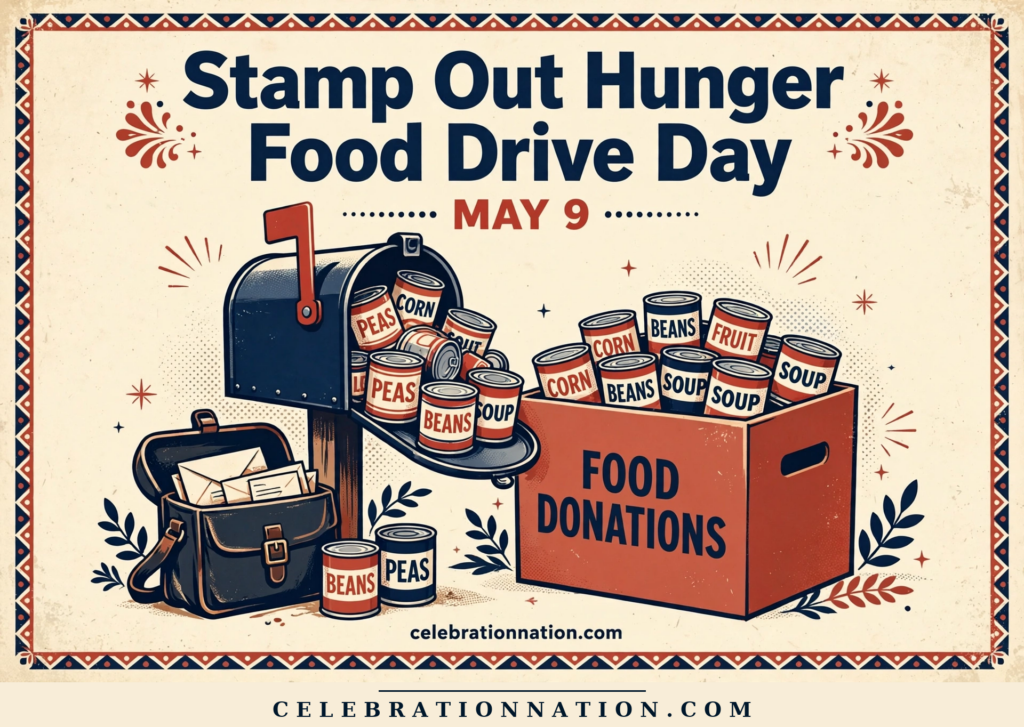
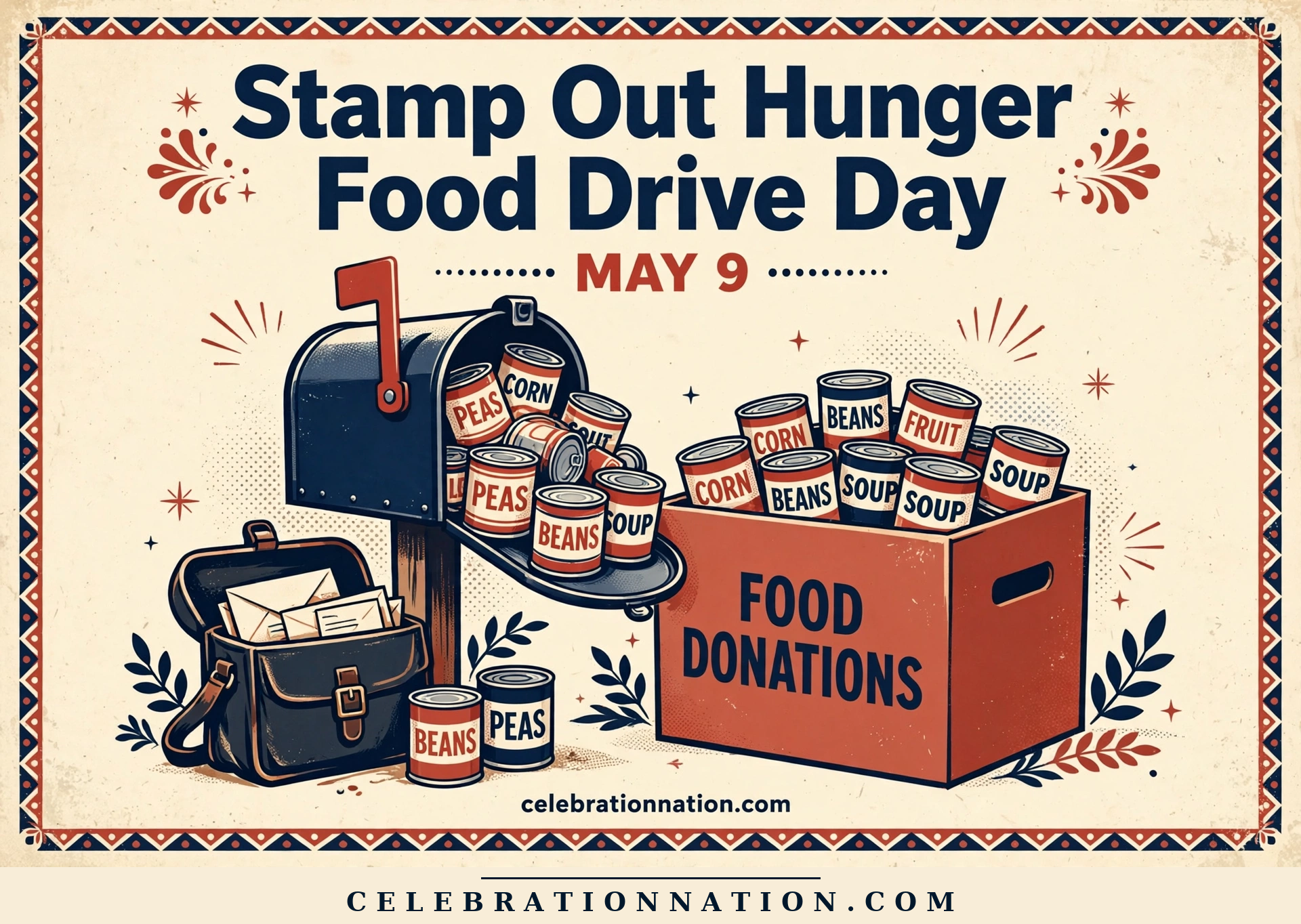
Stamp Out Hunger Food Drive Day
On Stamp Out Hunger Food Drive Day, we listen louder, learn more, and make sure no one feels invisible.
- Roots
- Started in 1993 by the National Association of Letter Carriers
- Vibe
- Community-focused and compassionate spirit
- Also on May 9
- Birth Mother’s Day · Wanna Have a Catch Day · World Fair Trade Day
- Hashtag
- #StampOutHungerFoodDriveDay
Ways to celebrate
Small, doable ways to celebrate Stamp Out Hunger Food Drive Day.
- Share one reputable resource with your network.
- Donate to a patient-led organization working on stamp out hunger food drive.
- Check in on someone you know who's living with it.
- Book the screening or appointment you've been putting off.
- Listen more than you speak.
Make it your kind of celebration
Family
Have the real conversation at the table — stigma-free, no lecture.
Kids
Answer questions honestly and age-appropriately.
Couples
Check in with each other's appointments, screenings, and follow-ups.
Office
Share vetted resources and encourage people to use their benefits.
School
Bring in an expert, survivor, or advocate to speak for a class period.
Community
Run a donation drive, a walk, or a listening session for those affected.
Just me
Reach out to someone you know is living with it. Ask how they're doing for real.
Plan ahead
Stamp Out Hunger Food Drive Day is observed on the second Saturday in May. Here is where it lands for the next ten years, handy for planners, marketers and party people.
Fast facts
The story
Stamp Out Hunger Food Drive Day takes place on the second Saturday in May, a product of a unique collaboration between the National Association of Letter Carriers and various food banks nationwide. Since its inception in 1993, the event has grown significantly, becoming the largest single-day food drive in the United States. Postal workers collect non-perishable food items left by residents near their mailboxes, helping to alleviate hunger in their local communities.
Read the full story
The initiative has seen remarkable results over the years. In recent years it has collected tens of millions of pounds of food annually, benefiting countless families facing food insecurity. Each contribution, no matter how small, plays a crucial role in addressing hunger and ensuring that food banks can provide for those in need. As the event approaches, communities come together to raise awareness and encourage participation.
In addition to the physical donations, Stamp Out Hunger serves as a platform to raise awareness about food insecurity in America. According to Feeding America, more than 38 million Americans, including 12 million children, live in households that are food insecure. By participating in this food drive, individuals and families can help combat this pressing issue and foster a spirit of community support.
To join the effort, residents are encouraged to gather non-perishable food items and place them in a bag near their mailbox on the designated day. Local postal workers will collect these items during their regular mail delivery. Additionally, many communities host events leading up to the food drive to engage residents and amplify the impact of their efforts. Together, we can stamp out hunger one can at a time.
Did you know?
First Year
The first Stamp Out Hunger Day was held in 1993.
National Participation
Over 10,000 cities participate annually.
Food Bank Impact
Food banks receive over 1 billion pounds of food per year.
Volunteer Efforts
Millions of volunteers help collect and distribute food.
Letter Carrier Role
Postal workers play a crucial role in the collection process.
Community Spirit
The event fosters a strong sense of community.
Global Hunger
Food insecurity is a global issue, affecting millions worldwide.
Around the world
Every culture celebrates a little differently.
- USUnited StatesThe primary focus of the food drive.
- CACanadaSimilar initiatives exist for food security.
- GBUnited KingdomCommunity food drives are also popular.
- AUAustraliaFood banks and drives help the needy.
- DEGermanyPromoting food donations to support the local population.
- INIndiaEfforts to combat hunger are ongoing.
Keep the party going
See the calendar



Celebrate every day, all year
Official gear from the people who track 1,700+ celebrations.
Browse the shop 2027 Wall + Desk Calendar BundleCelebrate every day at home and at work.
Never miss a reason to celebrate.
One quick morning email with today's celebrations, ideas and posters. Free, unsubscribe anytime.
🎉 You're on the list! Watch your inbox for The Daily Confetti.