



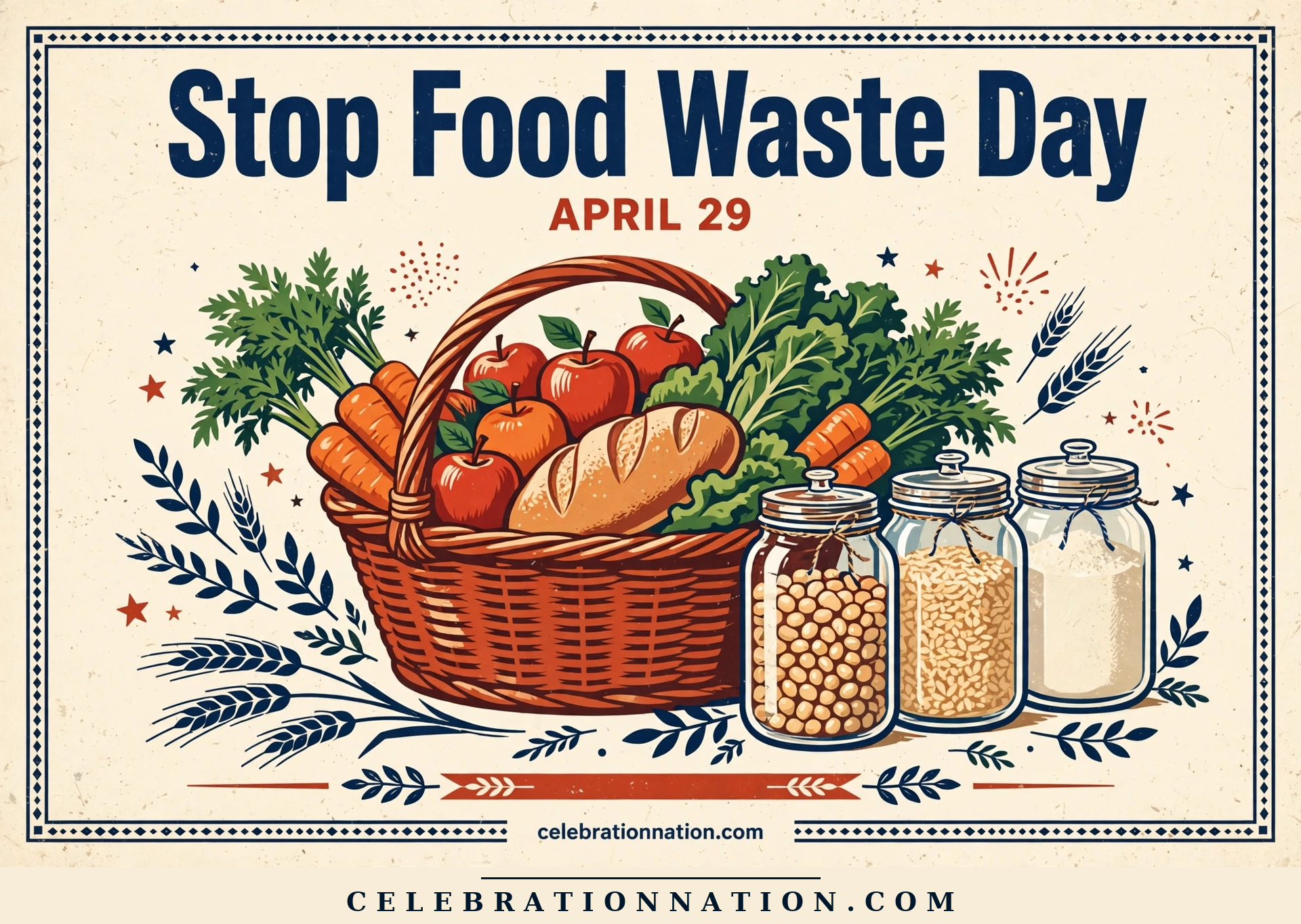
Stop Food Waste Day
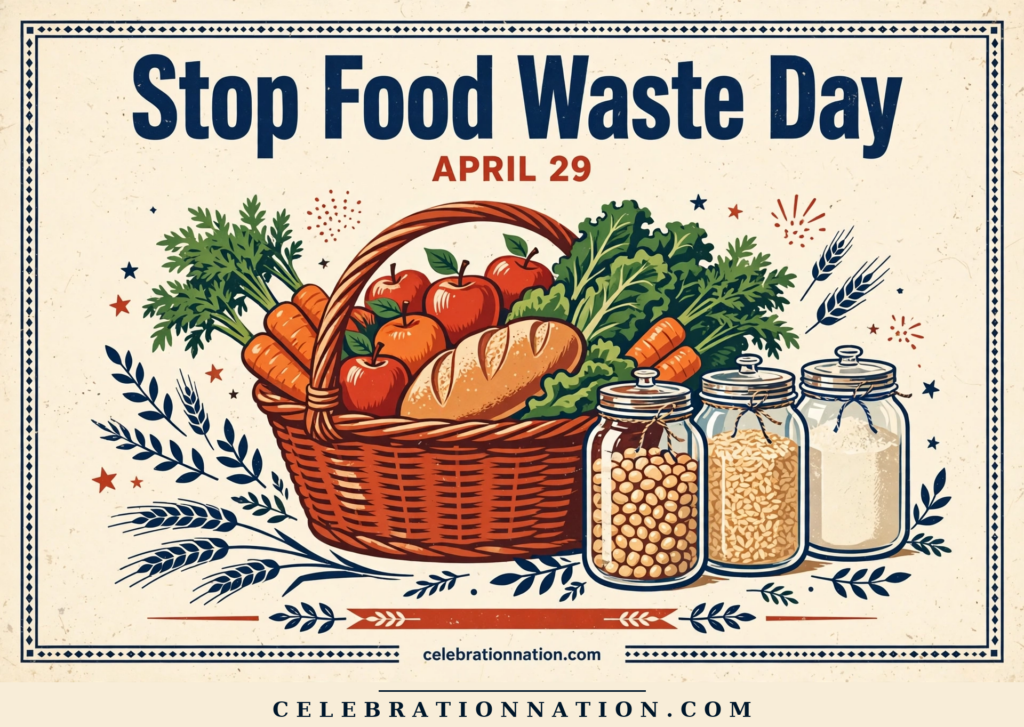
One-third of the world's food is never eaten. Stop Food Waste Day on April 29 is one of the most quietly urgent holidays on the American calendar — a single day to notice what you throw away and do something about it.
- Vibe
- Lovingly Thrifty
- Also on Apr 29
- International Guide Dog Day · Denim Day · International Dance Day
- Hashtag
- #StopFoodWasteDay
Ways to celebrate
Small habits, outsized impact:
- 📋 Meal plan for the week. One of the most effective food-waste reductions there is. 10 minutes on Sunday saves $20-50 / week.
- 🍅 Use your freezer. Any vegetable about to turn can be frozen. Soft fruit = smoothies. Bread = French toast. Near-expired meat = soup.
- 🥣 Love your leftovers. A designated "leftover night" each week normalizes eating down the fridge. Most Americans throw away more on Sunday than they cook on Monday.
- 🌱 Start composting. Even an apartment can handle a small kitchen composter or a service pickup. Food waste in a landfill emits methane; compost doesn't.
- 🛒 Shop smart. Make a list. Stick to it. Buy less than you think. You can always go back; you can't un-waste.
Make it your kind of celebration
Family
Family "use it up" night: one meal a week made entirely from fridge leftovers. Kids help plan. Surprisingly fun; always different.
Kids
Teach the "eat it or we lose it" framing. Kids respond well to this. Less about waste than about respect for food and effort.
Couples
The biggest two-person food waste source is aspirational produce. Talk through what you'll ACTUALLY cook before shopping.
Office
Office kitchen audit. Most break rooms have three coffees, six condiments, and a $200-a-month waste stream. Simple fixes save real money.
School
Food waste audits in school cafeterias are incredibly eye-opening. Great student project; real-world data; actionable outcome.
Community
Community composting programs are everywhere now. Check your city; often it's just a signup and $5-10/month.
Just me
Single-person households have the highest per-capita food waste rates. One-pot cooking, smart shopping, and a good freezer are the fix.
Plan ahead
Stop Food Waste Day is observed on the last Wednesday in April. Here is where it lands for the next ten years, handy for planners, marketers and party people.
Fast facts
The story
Americans throw away more food than any other country, and more than any civilization in human history. Stop Food Waste Day exists to make that statistic personal.
Read the full story
Stop Food Waste Day was founded in 2017 by Compass Group, the world's largest food-service company. Compass serves over 5 billion meals a year across schools, hospitals, corporate cafeterias, and sports arenas. Their internal sustainability team had been tracking food waste for years and realized the scale was unthinkable, and also fixable. April 29 was chosen as the campaign day to draw attention.
The numbers are arresting. Americans waste ~40% of the food produced in the country about 80 million tons per year. That's $218 billion in lost value annually. A family of four throws away ~$1,500 in food per year. And uneaten food in landfills produces methane, a greenhouse gas 25x more potent than CO₂. If global food waste were a country, it would be the third-largest greenhouse gas emitter after the U.S. and China.
The causes are household-scale and systemic both. Households waste about a third of what they buy, aspirational produce that rots, portion sizes that overshoot appetite, "best by" dates that get mis-read as "unsafe after." Restaurants and supermarkets waste another third to appearance standards (slightly-bruised apples get tossed) and oversized portions. Farms waste the last third to labor shortages, cosmetic rejection, and market oversupply.
The good news: household food waste is the most solvable piece, and the interventions are genuinely simple. Meal planning, using your freezer, composting, shopping with a list, respecting leftovers. Each cuts household waste by 10-30%. If every American family did even half of these, we'd hit the national 50%-by-2030 reduction goal. Stop Food Waste Day is the nudge to start.
Four proven high-impact changes. Each cuts household food waste 10-30%:
Six household categories where American food waste concentrates:
Did you know?
France banned supermarket food waste in 2016.
French law requires grocery stores to donate unsold food to charities. Tossing edible food is illegal. Modeled by several European countries since.
"Best by" ≠ "unsafe after".
In the U.S., most "best by" and "sell by" dates are manufacturer quality suggestions, not safety dates. Only infant formula has federally regulated dating.
Wasted food = wasted water.
The water used to grow uneaten American food would fill Lake Erie. Food waste is also water waste; the most resource-intensive loss you can make.
Too Good To Go reaches 85 million users.
The app lets restaurants sell end-of-day food at deep discounts. Reduced millions of tons of restaurant waste globally. Download it; save money; save food.
Keep the party going
See the calendar

Celebrate every day, all year
Official gear from the people who track 1,700+ celebrations.
Browse the shop 2027 Wall Calendar, signed by Marlo AndersonSigned by the founder of National Day Calendar.
Never miss a reason to celebrate.
One quick morning email with today's celebrations, ideas and posters. Free, unsubscribe anytime.
🎉 You're on the list! Watch your inbox for The Daily Confetti.