




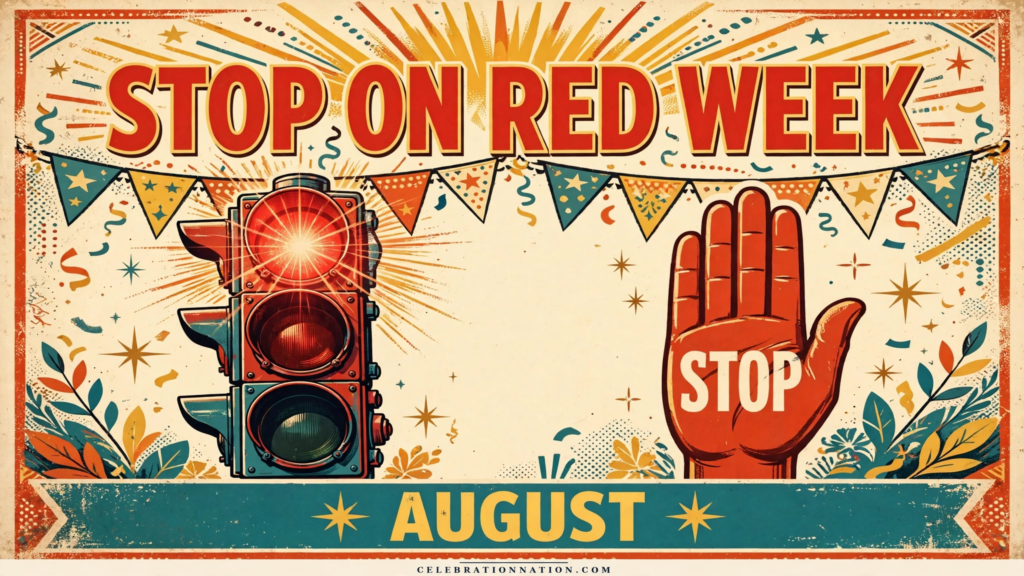
Stop on Red Week
Join us in recognizing Stop on Red Week for safer roads everywhere.
- Roots
- Established by the National Safety Council in 2007
- Vibe
- Community-driven focus on safety and awareness
- Hashtag
- #StopOnRedWeek
Fast facts
The story
As we observe Stop on Red Week, it is essential to reflect on the importance of adhering to traffic signals. Red lights serve as a critical warning for drivers, signaling them to stop and ensure safety for themselves and others. The week-long campaign, initiated by the National Safety Council in 2007, promotes awareness about the dangers of running red lights and the consequences that can arise from such actions.
Read the full story
Statistics reveal that nearly 40% of accidents occur at intersections, with a significant number attributed to red light violations. The National Highway Traffic Safety Administration reported over 1,000 fatalities each year due to red light running. This alarming figure underscores the need for continuous education and community engagement to prevent such tragedies. Awareness campaigns, like Stop on Red Week, aim to change driver behavior and instill a culture of safety.
Communities across the United States are invited to participate in various activities during this week. From educational workshops to community drives, the goal is to foster a dialogue about traffic regulations and the shared responsibility of road safety. Local law enforcement agencies often collaborate with schools and organizations to distribute materials that educate the public about the significance of stopping on red.
As we engage in discussions about Stop on Red Week, let us remember that traffic safety is a collective effort. By working together, we can create safer roads for everyone. Whether you are a driver, pedestrian, or cyclist, awareness of red lights is vital in preventing accidents and saving lives. This week, take the time to reflect on your driving habits and encourage others to do the same.
Worth knowing
Traffic Signals Matter
Understanding traffic signals is essential for road safety.
Drive Responsibly
Always obey traffic laws to ensure everyone's safety.
Stop for Safety
Stopping at red lights saves lives, make it a habit.
Community Support
Engage with local law enforcement for safety initiatives.
Did you know?
First Red Light
The first electric traffic signal was installed in Cleveland on August 5, 1914.
Traffic Accidents
Red light running is a leading cause of urban accidents.
Safety Campaigns
Many countries have similar campaigns to promote road safety.
Intersection Safety
Intersections are among the most dangerous spots on roads.
Red Light Cameras
Some cities use cameras to enforce red light compliance.
Global Awareness
Traffic safety is recognized worldwide as a critical issue.
Youth Education
Teaching children about traffic lights can reduce accidents.
Around the world
Every culture celebrates a little differently.
- USUnited StatesThe primary focus of Stop on Red Week.
- CACanadaAlso participates in traffic safety awareness.
- GBUnited KingdomPromotes similar road safety campaigns.
- AUAustraliaEngages in traffic safety initiatives.
- DEGermanyRecognizes the importance of traffic signals.
- NZNew ZealandAdvocates for road safety measures.
Coming up next
See the calendar

Celebrate every day, all year
Official gear from the people who track 1,700+ celebrations.
Browse the shop 2027 Wall Calendar, signed by Marlo AndersonSigned by the founder of National Day Calendar.
Never miss a reason to celebrate.
One quick morning email with today's celebrations, ideas and posters. Free, unsubscribe anytime.
🎉 You're on the list! Watch your inbox for The Daily Confetti.