

Victoria Day
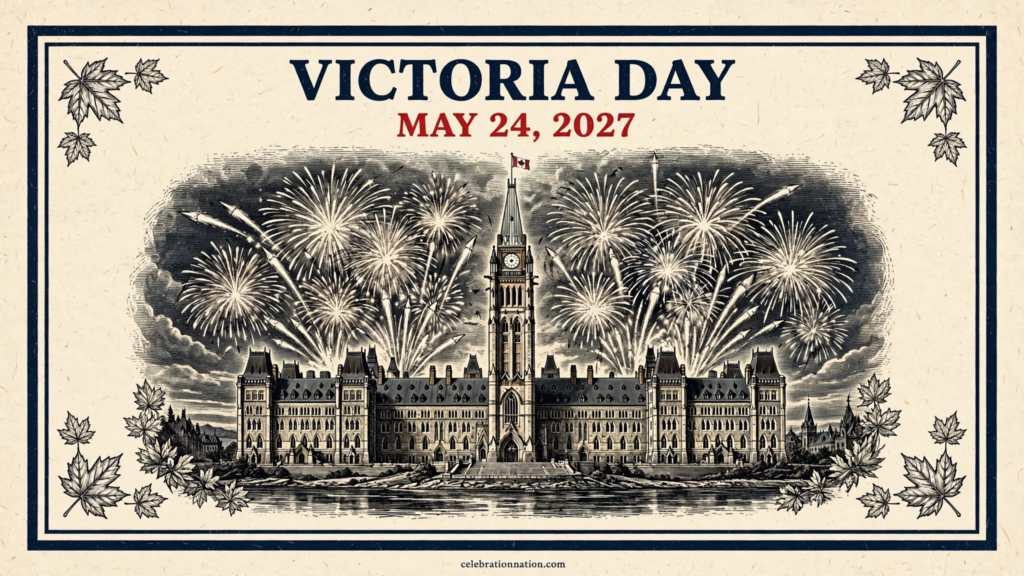
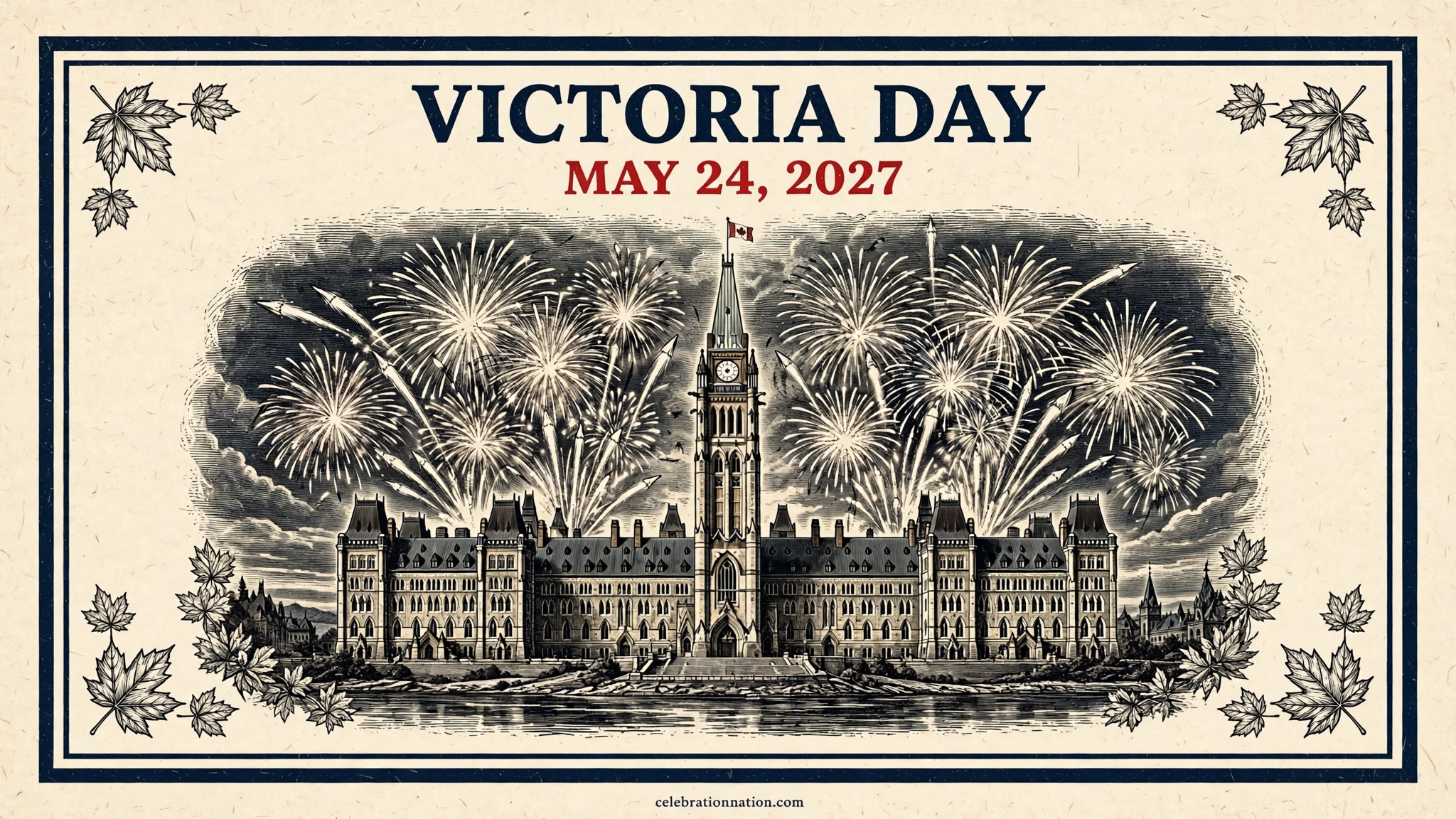
Every year on the Monday before May 25, an entire country tips its crown to the queen who helped build it. Victoria Day honors Queen Victoria, the monarch whose long reign saw Canada grow from colony to nation. In 2027, Canadians mark the day on Monday, May 24, with fireworks, parades, and the first long weekend of summer.
- Hashtag
- #VictoriaDay
VICTORIA DAY
Every year on the Monday before May 25, an entire country tips its crown to the queen who helped build it. Victoria Day honors Queen Victoria, the monarch whose long reign saw Canada grow from colony to nation. In 2027, Canadians mark the day on Monday, May 24, with fireworks, parades, and the first long weekend of summer.
On Monday, May 24, 2027, Victoria Day arrives as one of Canada’s oldest public holidays. Celebrated since 1845 and made a national holiday in 1901, it honors Queen Victoria’s birthday and marks the unofficial start of summer across the country. Fireworks light up city skies, parades wind through downtown streets, and families unpack the barbecue for the first long weekend of the warm season.
Queen Victoria was born on May 24, 1819, and took the throne at eighteen in 1837. She reigned for more than sixty-three years, until her death in 1901, and her era reshaped industry, science, and politics around the world. Canadians remember her as the “Mother of Confederation” for her support of the young dominion: she signed the British North America Act in March 1867, formally establishing the Dominion of Canada, and she chose Ottawa as the national capital.
The holiday itself has evolved with the country. First declared in 1845 on the queen’s actual birthday of May 24, it became a national holiday after her death in 1901. In 1952, the date shifted to the Monday before May 25, giving Canadians a proper long weekend. Since 1957, the day has also served as the official birthday of the reigning sovereign in Canada, a role confirmed by proclamation in May 2023 for all future monarchs. Today the day blends royal reflection with pure seasonal joy, and many simply call it the “May Two-Four” weekend, a playful nod to both the May 24 date and the cases of twenty-four so often enjoyed at its barbecues.
Her name is written across the map of the country she helped create. Cities and towns called Victoria dot Canada from coast to coast, and streets, parks, and schools bearing her name appear in nearly every community. Victoria, the capital of British Columbia, carries her name as a permanent honor, and statues of the queen still stand in city squares, including Ottawa. Victoria Day invites Canadians to look up at those monuments with fresh eyes and remember the young queen who signed a new country into being.
The woman at the center of the holiday lived a life as remarkable as her legacy. Born on May 24, 1819, she was baptized Alexandrina Victoria, named for her godfather Tsar Alexander I and for her mother, but she dropped her first name upon taking the throne in 1837 because she preferred Victoria and wanted a fresh start. She married her first cousin Prince Albert and bore nine children, who married into royal families across the continent, earning her the nickname the “Grandmother of Europe.” Her descendants carried the gene for hemophilia into several of those royal houses, a poignant footnote to a reign defined by duty, family, and an empire at its zenith. To celebrate Victoria Day is to remember both the monarch and the person: a teenager who became queen, a mother of nine, and the sovereign under whom Canada took its first steps as a nation.
THE STORY BEHIND VICTORIA DAY
👑 The Mother of Confederation
Queen Victoria earned her Canadian nickname through real support for the young dominion. She signed the British North America Act in March 1867, the legislation that formally created the Dominion of Canada, and she selected Ottawa as its capital. During her reign, Canada evolved from a colony into a self-governing nation within the British Empire. That legacy is why her birthday has been a Canadian holiday since 1845, longer than Canada has been a country. Her support gave the young dominion legitimacy in the eyes of the empire, and Canadians repaid that faith by naming their grandest spring holiday for her. Her reign lasted sixty-three years, seven months, and two days, a span surpassed only by her great-great-granddaughter Elizabeth II in 2015.
📜 From a Birthday to a Long Weekend
The first Victoria Day was celebrated on May 24, 1845, the queen’s actual birthday. After her death in 1901, Parliament made it a national holiday in her honor. In 1952, the date moved to the Monday before May 25, trading the fixed birthday for a guaranteed long weekend. The holiday now always falls between May 18 and May 24, and in 2027 it lands on Monday, May 24. The Monday placement also aligned the holiday with the unofficial start of summer, and families quickly turned it into the season’s first great getaway. The shift also meant the holiday would never again fall on a weekend, protecting the long weekend Canadians had come to love.
🎆 The May Two-Four Weekend
For most Canadians, Victoria Day means fireworks, parades, camping trips, and the first barbecue of the year. The weekend marks the unofficial start of summer: cottages open, gardens get planted, and parks fill with picnickers. The nickname “May Two-Four” winks at both the May 24 date and the case of twenty-four beers that often accompanies the festivities. It is a celebration as much about the season as the sovereign. Summer cottages traditionally open this weekend, gardens go into the ground, and the first picnic of the year tastes better for the wait. Fireworks remain the signature of the night, with major displays drawing crowds to waterfronts and parks in cities across the country.
🤝 A Birthday for Every Sovereign
Since 1957, Victoria Day has doubled as the official birthday of Canada’s reigning monarch, currently King Charles III. In May 2023, a proclamation confirmed that the holiday would mark the sovereign’s birthday for all future monarchs, not only Charles. Where arrangements allow, the Royal Union Flag flies beside the National Flag on federal buildings from sunrise to sunset, and a 21-gun royal salute sounds in each provincial capital at noon. The Royal Union Flag flies only where a second pole exists, and the Canadian flag always takes precedence: a small, precise piece of living history. In May 2023, a proclamation deliberately framed the day around the sovereign’s birthday in general terms, so the tradition will outlast any single reign.
WAYS TO CELEBRATE
🎆 Catch the Fireworks
Find a local Victoria Day fireworks display and gather friends or family to watch the sky light up. Many cities pair the show with parades, concerts, and street festivals that run all weekend.
🏕 Open Summer Early
Plant the garden, fire up the grill, or open the cottage for the season. Victoria Day is Canada’s traditional signal that warm weather has truly arrived, so celebrate it outdoors.
📖 Learn the Story
Share the history behind the holiday: the 1845 declaration, Confederation in 1867, and the 1952 move to the Monday before May 25. A little history makes the long weekend even sweeter.
Celebrate Victoria Day
Whether you spend it under fireworks, around a campfire, or in a garden just waking up for spring, Victoria Day is a chance to honor a remarkable queen and welcome the brightest season of the year. Raise a toast to history, to summer, and to the country she helped shape.
Plan ahead
Victoria Day moves each year. This year it is Monday, May 24, 2027. Check back for future years.
Keep the party going
See the calendar



Celebrate every day, all year
Official gear from the people who track 1,700+ celebrations.
Browse the shop 2027 National Day Desk CalendarA new celebration every morning. Daily tear-off.
Never miss a reason to celebrate.
One quick morning email with today's celebrations, ideas and posters. Free, unsubscribe anytime.
🎉 You're on the list! Watch your inbox for The Daily Confetti.