


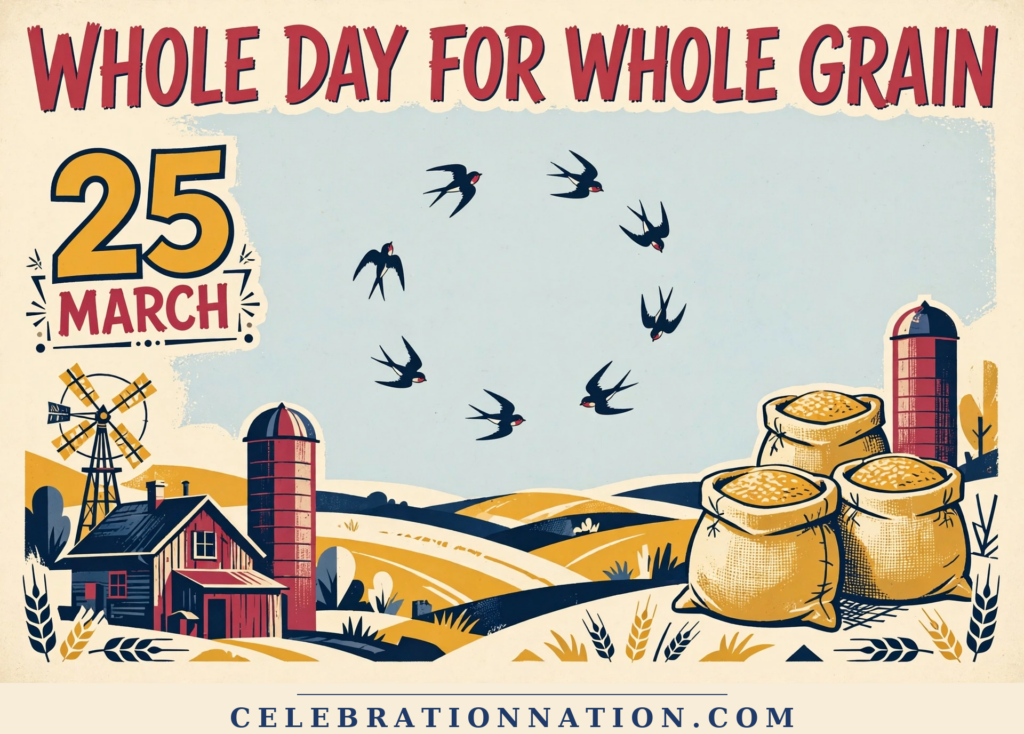
Whole Day for Whole Grain
Whole Day for Whole Grain highlights the nutritional benefits of whole grains in our diets.
- Roots
- Started by the Whole Grains Council in 2012; observed on the last Wednesday in March
- Vibe
- Community-focused and health-oriented
- Also on Mar 25
- Manatee Appreciation Day · Little Red Wagon Day · Lobster Newburg Day
- Hashtag
- #WholeDayForWholeGrain
3 ways to celebrate
Swap to whole
Cook brown rice or whole-wheat pasta for dinner tonight.
Grain potluck
Everyone brings a whole-grain dish to share.
Healthy snack bin
Stock the break room with whole-grain snacks.
Plan ahead
Whole Day for Whole Grain is observed on the last Wednesday in March. Here is where it lands for the next ten years, handy for planners, marketers and party people.
Fast facts
The story
Whole Day for Whole Grain, observed on the last Wednesday in March, serves as an important reminder of the health benefits associated with incorporating whole grains into our diets. Started by the Whole Grains Council in 2012, this day aims to educate consumers on the differences between whole grains and refined grains and inspire healthier eating habits. Despite the proven benefits of whole grains, many Americans fall short of recommended amounts, making this observance even more vital.
Read the full story
Whole grains, which include foods like brown rice, quinoa, and whole wheat, are packed with fiber, vitamins, and minerals. These nutrients not only support heart health but also aid in digestion and weight management. Research indicates that consuming whole grains can lower the risk of chronic diseases such as diabetes and obesity. By participating in Whole Day for Whole Grain, individuals can explore various recipes that showcase these nutritious ingredients, ranging from hearty grain salads to wholesome baked goods.
Communities across the country embrace this day through events like farmer's markets, cooking demonstrations, and educational workshops. Local chefs often showcase innovative ways to incorporate whole grains into everyday meals, making it easier for families to adopt healthier eating habits. Schools also play a pivotal role, promoting whole grain options in lunch programs and encouraging children to learn about nutrition through interactive activities.
As we celebrate Whole Day for Whole Grain, it is essential to recognize the cultural significance of whole grains worldwide. Different countries have their unique whole grain staples, such as farro in Italy, barley in Japan, and amaranth in Mexico, each contributing to diverse culinary traditions. By integrating these grains into our diets, we not only enhance our health but also celebrate the rich tapestry of global food culture.
Did you know?
Whole Grain vs. Refined
Whole grains contain the entire grain kernel, while refined grains are processed.
Fiber Power
Whole grains are an excellent source of dietary fiber.
Ancient Grains
Quinoa, barley, and farro are considered ancient grains still enjoyed today.
Health Guidelines
The USDA recommends at least half of all grains consumed be whole grains.
Global Staple
Whole grains are a staple in diets around the world.
Whole Grain Day
Whole Day for Whole Grain promotes awareness and consumption of whole grains.
Culinary Versatility
Whole grains can be used in salads, soups, and baked goods.
Around the world
Every culture celebrates a little differently.
- USUnited StatesWhole Day for Whole Grain is celebrated nationwide, with various events and promotions.
- CACanadaCanadian communities also recognize the importance of whole grains in their diets.
- GBUnited KingdomThe UK promotes whole grain education through various health campaigns.
- AUAustraliaWhole grains are highlighted in Australian dietary guidelines.
- INIndiaIndia incorporates various whole grains like millet and barley in traditional meals.
- DEGermanyGermany emphasizes whole grain breads in its culinary heritage.
Keep the party going
See the calendar

Celebrate every day, all year
Official gear from the people who track 1,700+ celebrations.
Browse the shop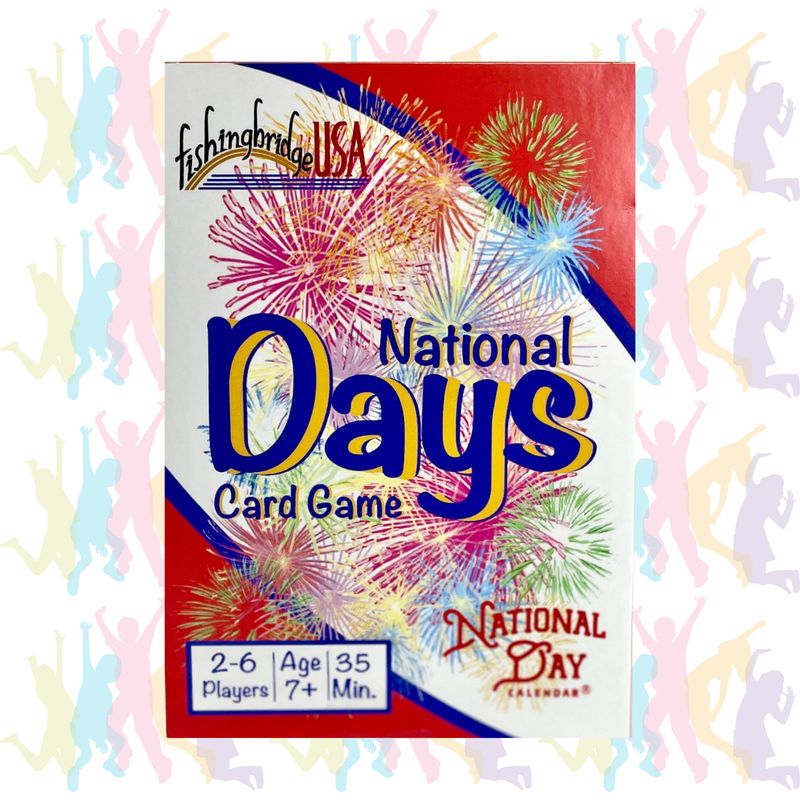 National Day Celebration Card GameA party in a box, any day of the year.
Never miss a reason to celebrate.
One quick morning email with today's celebrations, ideas and posters. Free, unsubscribe anytime.
🎉 You're on the list! Watch your inbox for The Daily Confetti.